
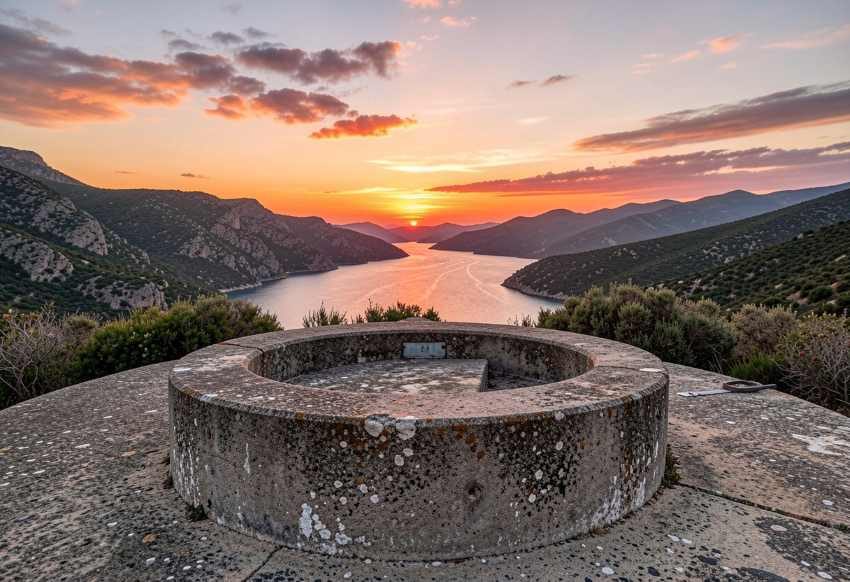
Buried beneath centuries of salt air and overgrown coastal terrain, a network of First World War bunkers and maritime fortifications in Senj, Croatia, is finally being brought back into the light — and opened to the public for the first time.
Senj sits at one of the most dramatic intersections on the Adriatic coast, where the towering Velebit mountains drop sharply toward the sea. The town has long been defined by its punishing bora winds and the legendary Uskok warriors — fierce medieval soldiers who made this stretch of coastline nearly impenetrable for centuries. But beneath that well-known history lies a more recent military layer that has remained largely hidden, until now.
A restoration effort currently underway is bringing the town’s First World War defensive infrastructure back to life, revealing a side of Senj that even many Croatians have never seen. The project centers on a long-forgotten WWI bunker and an interconnected system of maritime fortifications that once guarded the town’s harbour and urban core.
Why Senj’s Coastal Defenses Matter More Than Most People Realize
Senj’s strategic importance is not a new discovery — it has been recognized for centuries. The town’s position along the Adriatic made it a natural chokepoint, and successive powers throughout history invested heavily in its defense. The Nehaj Fortress, whose stone walls still dominate the hillside above the town, stands as the most visible symbol of that legacy.

But the WWI-era fortifications represent a different kind of military thinking — one shaped by modern naval warfare, artillery, and the threat of seaborne attack. Where the medieval Uskok defenders relied on speed and surprise, the early twentieth century brought concrete, camouflage, and coordinated coastal batteries designed to repel an entirely different kind of enemy.
These structures were not simply built and forgotten. They were integrated into the town’s geography so effectively that they essentially disappeared into the landscape over the decades that followed the war. The restoration project is now peeling back that concealment to reveal what was hidden in plain sight.
What the Restoration Is Uncovering in Senj
The work in Senj focuses on returning these coastal military structures to a state where visitors can safely explore and understand them. The fortifications once formed part of an extensive defensive system designed to protect both the harbour and the residential heart of the town.
| Feature | Details |
|---|---|
| Location | Senj, Croatian Adriatic coast, where Velebit mountains meet the sea |
| Primary structure | Long-lost First World War bunker, previously inaccessible to the public |
| Defensive network | Maritime fortifications that historically protected the harbour and urban core |
| Historical context | Built during WWI era, layered on top of centuries of Uskok and fortress-era defenses |
| Current status | Active restoration underway, with structures being prepared for public exploration |
| Existing landmark | Nehaj Fortress — the town’s most prominent historical defensive structure |
The project represents a significant shift in how Senj presents its own identity to visitors. For years, the town’s tourism narrative has leaned heavily on its medieval past — the Uskoks, the fortress, the bora wind. The WWI fortifications add an entirely new dimension to that story, one that connects Senj to a broader European conflict that reshaped the entire region.
What This Means for Travelers and History Enthusiasts
For anyone drawn to off-the-beaten-path historical sites, Senj is becoming increasingly compelling. Croatia’s Adriatic coast is crowded with well-known destinations, but the restoration of these WWI structures gives Senj something genuinely rare: military heritage that has not been commercialized, sanitized, or overrun.
Visitors who make the trip will be able to explore a site that connects multiple layers of Croatian coastal history — from the medieval Uskok warriors who held the town against Ottoman and Venetian threats, to the early twentieth century defenders who adapted the same strategic landscape for modern warfare.
The bora wind, which can reach extreme speeds in this corridor between the mountains and the sea, is itself part of the Senj experience. It shaped how defenders thought about the coastline, influenced the placement of fortifications, and remains a defining feature of the town’s character today.
What Happens Next for the Senj Fortifications Project
The restoration is actively ongoing, with the goal of making the bunker and maritime defensive network accessible to the public. The project signals a broader cultural ambition: to reframe Senj not just as a town with a dramatic medieval past, but as a layered historical site where multiple eras of European conflict left their mark on the same stretch of coastline.
As the work continues, the hope is that Senj will attract a new kind of visitor — one interested in military history, coastal heritage, and the kind of authentic, unpolished experience that is increasingly difficult to find along the Adriatic. The town’s combination of natural drama, medieval legacy, and newly recovered WWI history makes it a genuinely distinctive destination.
Whether the project will be accompanied by interpretive exhibits, guided tours, or broader heritage programming has not yet been confirmed, but the restoration itself marks a clear turning point in how the town engages with its own past.
Frequently Asked Questions
Where exactly is Senj located?
Senj is a historic coastal town on Croatia’s Adriatic coast, situated where the Velebit mountains meet the sea.
What WWI structures are being restored in Senj?
The restoration involves a long-forgotten First World War bunker and a network of maritime fortifications that once protected the town’s harbour and urban core.
Who were the Uskoks?
The Uskoks were legendary medieval warriors who defended Senj for centuries, known for their fierce resistance against Ottoman and Venetian forces.
Is the Nehaj Fortress also part of the restoration?
When will the restored fortifications be open to the public?
The restoration is currently underway, but a confirmed opening date has not been specified in available information.
Why has it taken so long for these WWI structures to be rediscovered?
The fortifications were integrated so effectively into the coastal landscape that they were essentially hidden in plain sight for decades following the end of the First World War.




Leave a Reply