
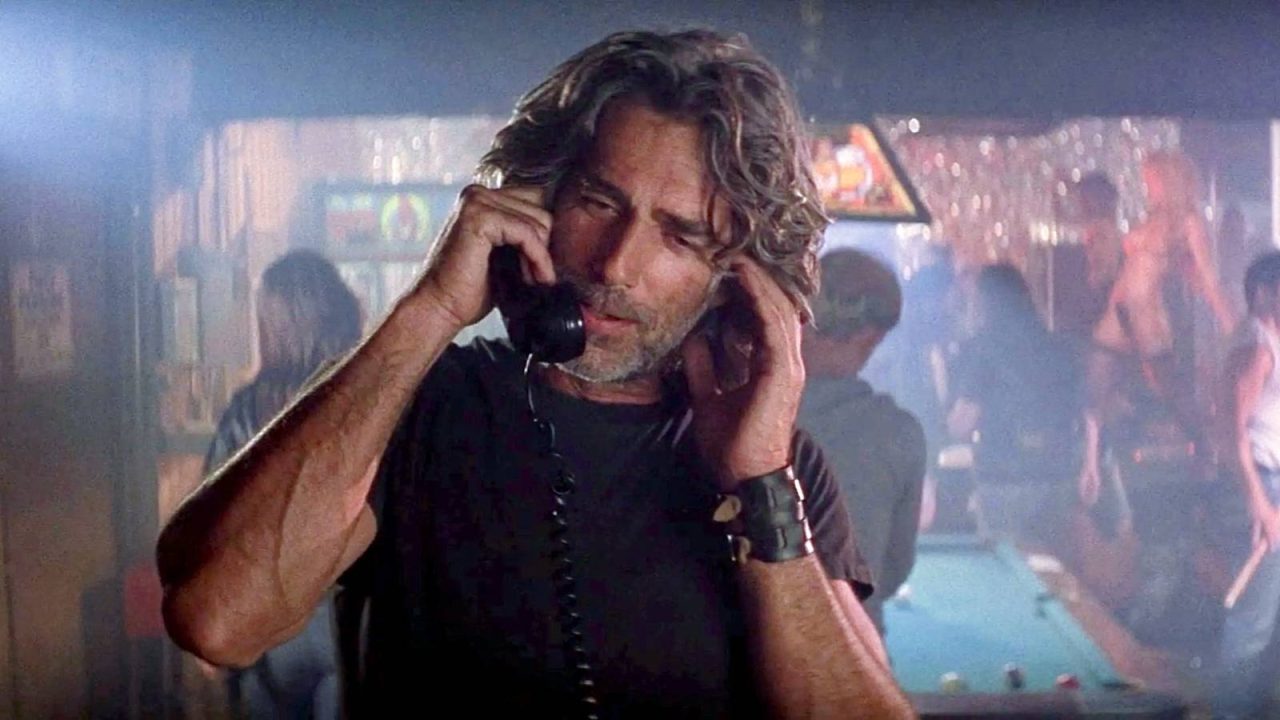
Before the Jack Reacher franchise became one of Amazon Prime Video’s biggest streaming successes, there was another wandering American loner who traveled from town to town, righting wrongs with his fists and his wits. His name was Travis McGee — and in 1983, a TV movie starring Sam Elliott tried to turn him into a television franchise. It didn’t work. Looking back now, the reasons why are surprisingly instructive about what makes the modern Reacher series click so well with audiences.
The comparison between Travis McGee and Jack Reacher isn’t just superficial. Both characters are large, physically imposing men without permanent homes. Both operate outside the system, solving problems through a combination of intelligence and controlled violence. Both have a philosophical streak that sets them apart from typical action heroes. McGee predates Reacher by decades, and some observers have long considered him a clear prototype for the kind of character Lee Child would later create. Yet the 1983 adaptation stumbled where Amazon’s Reacher has thrived — and the gap between the two reveals something important about what audiences actually want from this type of story.
Who Was Travis McGee, and Why Did Sam Elliott’s Version Fail?
Travis McGee was created by novelist John D. MacDonald, appearing in 21 novels published between 1964 and 1985. He lived on a houseboat called The Busted Flush in Fort Lauderdale, Florida, and described himself as a “salvage consultant” — someone who recovered things that had been stolen or lost, keeping half the value as his fee. He was smart, cynical, and deeply skeptical of modern American consumer culture. In many ways, he was ahead of his time as a literary character.
The 1983 TV movie, simply titled Travis McGee, cast Sam Elliott in the lead role. Elliott was a credible choice on paper — tall, rugged, with the kind of quiet intensity the character required. But the adaptation made a critical miscalculation. Rather than leaning into what made McGee distinctive as a character, it defaulted to generic detective-thriller conventions. The philosophical depth that defined MacDonald’s novels got sanded down into something far more conventional, leaving viewers with a handsome leading man and not much else to hold onto.
The project never moved forward into a series. Without a compelling reason to follow this particular man across multiple stories, there was no foundation to build on.
What Amazon’s Reacher Gets Right That Travis McGee Got Wrong
The Amazon Prime Video series Reacher, starring Alan Ritchson, has been a consistent hit since its debut. Ritchson physically matches the character Lee Child described in the novels — something the Tom Cruise films conspicuously did not — but physical casting alone doesn’t explain the show’s success.
What the Reacher series understands is that the character’s internal logic is the engine of the whole thing. Reacher isn’t just a big guy who beats people up. He’s a man with a coherent worldview, a specific moral code, and a way of processing the world that audiences find genuinely compelling to spend time with. The show lets viewers inside his reasoning. His calm, methodical approach to problems — whether he’s figuring out who the bad guys are or calculating exactly how to win a fight — gives the series its distinctive rhythm.
The Travis McGee TV movie, by contrast, treated its protagonist’s inner life as an inconvenience. The result was a character who looked the part but didn’t feel like anyone in particular.
The Key Differences Between the Two Adaptations
| Element | Travis McGee (1983) | Reacher (Amazon, 2022–present) |
|---|---|---|
| Lead Actor | Sam Elliott | Alan Ritchson |
| Format | TV movie (single installment) | Ongoing streaming series |
| Character’s inner life | Largely absent from the adaptation | Central to every episode |
| Franchise outcome | Never became a series | Multiple successful seasons |
| Source material fidelity | Generic thriller tone | Close to the novels’ spirit |
Why the “Wandering Loner” Formula Only Works With Real Character Depth
There’s a reason this particular type of hero keeps getting reinvented. The appeal of a man with no permanent address, no institutional loyalty, and no one to answer to taps into something deep in popular storytelling — the fantasy of total freedom combined with unimpeachable competence. But that fantasy only sustains audience interest when the character has a genuine inner world.
Without that, the wandering loner becomes just another action figure moving through plot mechanics. Audiences can feel the difference. They stay for the character, not the choreography.
The McGee novels had that inner world in abundance. MacDonald gave his hero a running commentary on everything from Florida real estate development to the hollowness of American ambition. That voice was one of the things readers loved most. Stripping it out of the adaptation left a shell where a person should have been.
Reacher’s creative team made the opposite choice. They preserved the character’s perspective — his dry observations, his military precision, his refusal to be rattled — and built the show around it. That decision is the single biggest reason one of these franchises exists and the other doesn’t.
What This Means for Future Adaptations of Similar Characters
The Travis McGee story is a useful case study for anyone thinking about why certain adaptations succeed and others quietly disappear.
Audiences watching Reacher aren’t just watching a man solve crimes and win fights. They’re spending time inside a specific way of seeing the world. That’s what keeps them coming back season after season. It’s also, arguably, what John D. MacDonald built Travis McGee to offer — and what the 1983 TV movie never gave viewers the chance to experience.
Sam Elliott was a fine choice for the role. The adaptation just didn’t give him — or the audience — the most important thing the character had to offer.
Frequently Asked Questions
Who played Travis McGee in the 1983 TV movie?
Sam Elliott starred as Travis McGee in the 1983 television movie adaptation of John D. MacDonald’s novels.
Did the Travis McGee TV movie lead to a series?
No. The 1983 TV movie did not result in an ongoing series, making it a single failed attempt to launch the franchise.
Who created the Travis McGee character?
Travis McGee was created by novelist John D. MacDonald, appearing across 21 novels published between 1964 and 1985.
Who plays Jack Reacher in Amazon’s series?
Alan Ritchson plays Jack Reacher in the Amazon Prime Video series, a casting choice widely praised for matching Lee Child’s physical description of the character.
What is considered the main reason the Travis McGee adaptation failed?
The adaptation is considered to have failed primarily because it stripped away the character’s distinctive inner life and philosophical depth, replacing it with generic thriller conventions that gave audiences no compelling reason to follow the character.
Is there any connection between Travis McGee and Jack Reacher as characters?
Both characters share the “wandering loner” archetype — large, physically capable men with no permanent home who travel and solve problems outside the system — leading some observers to consider McGee a prototype for the kind of character Lee Child later created with Reacher.



Leave a Reply