
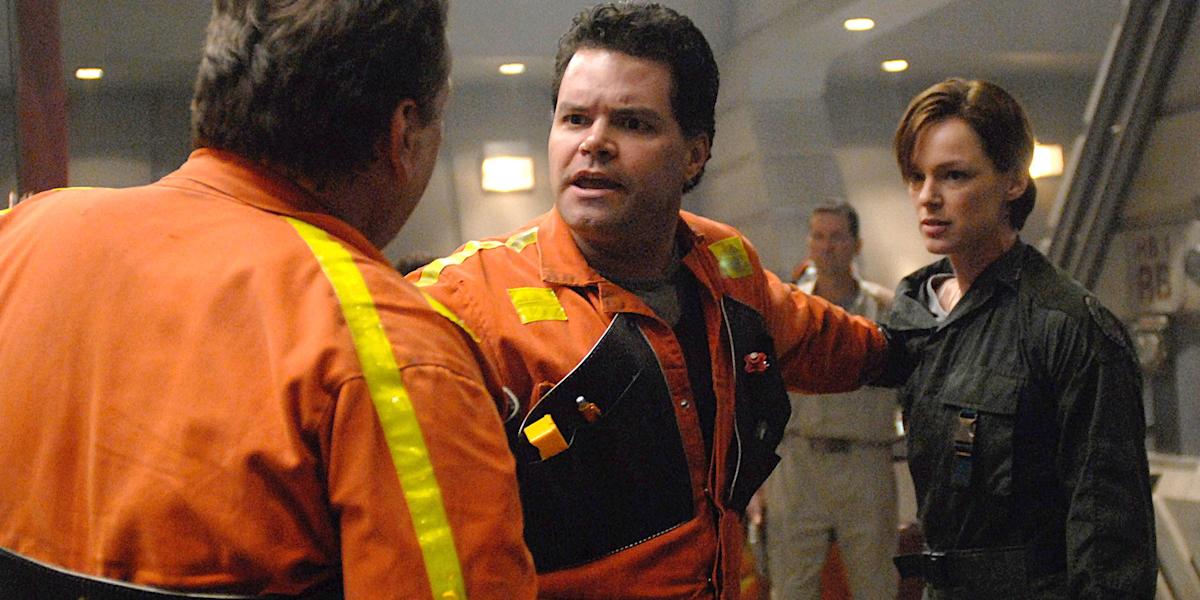
Seventeen years ago, one of the most ambitious science fiction series ever made aired its final episode — and the conversation about it never really stopped. Battlestar Galactica, the reimagined drama that ran from 2004 to 2009 on Syfy, concluded on March 20, 2009, and its legacy has only grown more complicated and more fascinating with every passing year.
For a show about humanity fleeing the robotic Cylons it created, BSG managed to say more about war, identity, religion, and political power than most prestige dramas ever attempted. It wasn’t just good sci-fi. It was genuinely great television — and its ending remains one of the most debated finales in the genre’s history.
If you were watching in real time, you remember the feeling. If you weren’t, there’s never been a better moment to understand why this show still matters.
What Made Battlestar Galactica So Different From Everything Else
The reimagined Battlestar Galactica, developed by Ronald D. Moore and based loosely on the 1978 original series, launched with a miniseries in 2003 before its full first season debuted in 2004. From the beginning, it deliberately rejected the clean, optimistic tone that had defined so much of televised science fiction.
There were no aliens. No warp drives. No alien civilizations to meet. The enemy was something humanity had built itself — the Cylons, mechanical beings who had evolved, rebelled, and returned to nearly wipe out their creators. The surviving humans, roughly 50,000 of them, fled aboard a ragtag fleet led by the aging battlestar Galactica, searching for the mythical planet Earth.
What followed was four seasons of television that used that premise to explore suicide bombings, military tribunals, the ethics of torture, democratic collapse, and what it actually means to be human. It aired in the years immediately following September 11, 2001, and it wore that context on its sleeve — sometimes uncomfortably so, and always deliberately.
The Show at Its Peak — and Why the Finale Still Divides Fans
BSG’s critical reputation was built largely on its first two seasons, which were nearly universally praised. The show earned Peabody Awards and was regularly cited alongside The Wire and The Sopranos as evidence that television had entered a new creative era.
The later seasons became more controversial as the mythology deepened and the religious themes became more central to the plot. By the time the two-part finale aired on March 20, 2009, expectations were enormous — and reactions were sharply divided.
Some viewers found the ending deeply moving, a spiritually resonant conclusion to a story that had always been about more than survival. Others felt the final answers to the show’s biggest mysteries were vague, unsatisfying, or undermined the grounded, political storytelling that had made the series so compelling in the first place.
Seventeen years later, that debate hasn’t been resolved. If anything, it’s become a defining part of the show’s identity — a reminder that BSG was always willing to take risks, even when those risks didn’t land for everyone.
Key Facts About Battlestar Galactica’s Run
| Detail | Information |
|---|---|
| Original Series | 1978 ABC series created by Glen A. Larson |
| Reimagined Miniseries | 2003, Syfy (then Sci Fi Channel) |
| Full Series Run | 2004–2009 |
| Number of Seasons | 4 seasons |
| Series Finale Date | March 20, 2009 |
| Developed By | Ronald D. Moore |
| Years Since Finale | 17 years (as of March 20, 2026) |
- The show won a Peabody Award for its unflinching portrayal of post-9/11 themes through science fiction
- It was regularly ranked among the best dramas on television during its peak years
- The series spawned a prequel series, Caprica, which aired in 2010
- A reboot has been in various stages of development for years, though none has reached production
Why BSG’s Legacy Still Resonates in 2026
The themes Battlestar Galactica wrestled with haven’t aged out of relevance — if anything, they’ve become more urgent. A society fracturing under pressure. Leaders making impossible choices. The question of whether the ends justify the means when survival is at stake. These aren’t abstract sci-fi concepts. They’re the kinds of questions audiences are still asking about the world around them.
The show also changed what science fiction on television was allowed to be. Before BSG, the genre was often treated as a second-tier category — entertaining, maybe, but not serious. After BSG, that assumption was much harder to defend. It cleared a path for later genre dramas to take themselves seriously in ways that might not have been possible otherwise.
There’s also the cast to consider. Edward James Olmos as Admiral Adama, Mary McDonnell as President Laura Roslin, Katee Sackhoff as Starbuck — these were performances that deserved, and sometimes received, the same recognition as any prestige drama of the era.
What Comes Next for the Battlestar Galactica Universe
A new Battlestar Galactica reboot has been discussed and announced in various forms over the past several years, with Sam Esmail — the creator of Mr. Robot — previously attached to a version for Peacock. As of early 2026, no confirmed production timeline has been publicly established, and the project’s current status has not been officially confirmed.
Whether a new version can capture what made the original so special remains an open question. The reimagined BSG worked because it was made at a specific moment in history, by a specific group of people, with something real to say. That’s not something that can simply be replicated on demand.
For now, the 17-year anniversary is as good a reason as any to go back to the beginning — or, if you’ve seen it before, to revisit the ending with fresh eyes and decide for yourself whether it earned its conclusion.
Frequently Asked Questions
When did Battlestar Galactica end?
The reimagined Battlestar Galactica aired its series finale on March 20, 2009, marking 17 years since the show concluded as of 2026.
Who developed the reimagined Battlestar Galactica?
The series was developed by Ronald D. Moore, based on the original 1978 series created by Glen A. Larson.
How many seasons did Battlestar Galactica run?
The reimagined series ran for four seasons, beginning with a miniseries in 2003 and concluding in 2009.
Is a Battlestar Galactica reboot in development?
A reboot has been discussed for several years, with Sam Esmail previously attached to a version for Peacock, but no confirmed production timeline has been officially announced as of early 2026.
Why was the Battlestar Galactica finale so controversial?
The finale divided audiences over its heavy reliance on religious themes and the resolution of long-running mysteries, with some finding it moving and others feeling it contradicted the show’s grounded, political storytelling.
Where was the original Battlestar Galactica reimagined series broadcast?
It aired on the Syfy channel, which was known as the Sci Fi Channel when the miniseries first premiered in 2003.

Leave a Reply