
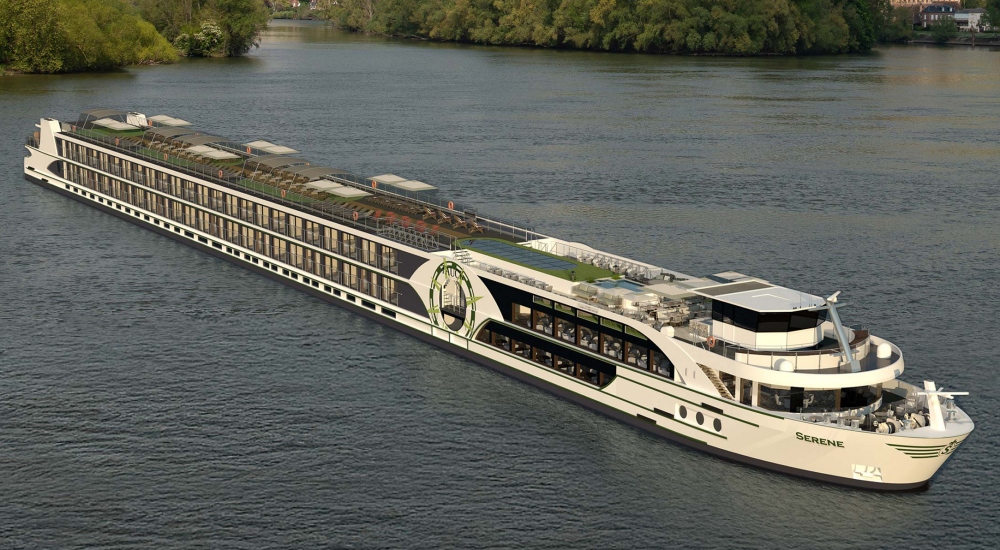
A river cruise ship that can navigate without a human at the helm — that’s no longer a concept confined to science fiction. Scylla, a leading river cruise company, has unveiled the Lumière, a new vessel purpose-built as a test platform for autonomous navigation technology, marking what the company describes as a pivotal step toward the future of river travel.
The announcement signals something larger than a single ship launch. As the cruise industry faces growing pressure to modernize, reduce operational costs, and improve safety, the Lumière represents a deliberate bet that autonomous systems will eventually become standard on Europe’s waterways — and Scylla wants to be the company that proves it works.
River cruising has long been one of the more conservative corners of the travel industry. What makes this development notable is that Scylla isn’t just talking about the technology — they’ve built a vessel specifically designed to test it in real-world conditions.
What the Lumière Is Actually Built to Do
The Lumière isn’t a passenger ship that happens to have some smart features bolted on. It was designed from the ground up as a testing environment for autonomous navigation systems. According to Scylla, the vessel is equipped with advanced AI systems, sensors, and GPS technology that work together to enable autonomous operation.
The goal is to use the Lumière as a live proving ground — a place where autonomous navigation can be tested, refined, and validated under actual river conditions rather than in a lab or simulation. That distinction matters enormously. River navigation involves constantly shifting variables: weather, water levels, river traffic, lock systems, and tight passages that would challenge even experienced captains.
By running the Lumière as an active test platform, Scylla can gather the kind of real-world performance data that no simulation can replicate. The intention, as the company frames it, is to pave the way for autonomous navigation to become a practical reality in the river cruise industry — not just a proof of concept.
The Technology Behind the Vision
The core systems aboard the Lumière reflect where autonomous vehicle technology broadly has been heading for years, now applied to water. The combination of AI, sensor arrays, and GPS creates a navigation stack designed to perceive the vessel’s environment, process that information in real time, and make or assist with operational decisions.
Scylla has positioned the Lumière around three central promises for the future of river travel: greater efficiency, improved sustainability, and enhanced safety. These aren’t incidental benefits — they’re the primary arguments the company is making for why autonomous navigation deserves serious investment from the broader industry.
| Feature | Detail |
|---|---|
| Vessel Name | Lumière |
| Operator | Scylla |
| Primary Purpose | Autonomous navigation test platform |
| Key Technologies | Advanced AI systems, sensor arrays, GPS technology |
| Stated Goals | Efficiency, sustainability, and safety improvements |
| Announcement Date | March 26, 2026 |
Why This Matters Beyond One Ship
The river cruise industry has grown significantly over the past decade, with more ships, more routes, and more passengers than ever before. But it’s also an industry built on tight margins, complex logistics, and a premium on safety. Any technology that can meaningfully address those pressure points is going to attract serious attention.
Autonomous navigation, if it delivers on its promise, could reduce human error — still one of the leading factors in maritime incidents. It could also allow for more precise fuel management, cutting emissions on routes that pass through some of Europe’s most environmentally sensitive river corridors. And over time, it could reshape the economics of operating a river cruise vessel.
Scylla’s approach — building a dedicated test ship rather than retrofitting an existing passenger vessel — also signals a level of commitment that goes beyond a marketing announcement. It suggests the company is prepared to invest in the long, methodical process of proving that this technology is ready for commercial deployment.
For travelers, the implications are less immediate but worth watching. Autonomous systems don’t necessarily mean ships without crew — at least not in the near term. More likely, the first practical applications will involve AI-assisted navigation that supports human captains, reducing fatigue and improving response times in complex situations.
What Comes Next for Scylla and the Lumière
The immediate next step is operational testing. The Lumière needs to accumulate real performance data across a range of river conditions before any conclusions about commercial readiness can be drawn. That process will take time — autonomous navigation in any transport sector has proven to be a longer road than early optimists predicted.
Scylla has framed the Lumière as the beginning of a journey rather than a finished product. The company appears to be positioning itself as the industry leader in this space, which means the testing phase will be closely watched by competitors, regulators, and the broader maritime technology sector.
What the Lumière represents most clearly right now is a statement of intent: that Scylla believes autonomous navigation is coming to river cruising, and they intend to be the ones who make it happen. Whether the technology delivers on that ambition is something only time — and a lot of river miles — will answer.
Frequently Asked Questions
What is the Lumière?
The Lumière is a new river cruise vessel unveiled by Scylla that is designed specifically as a test platform for autonomous navigation technology.
What technology does the Lumière use?
The vessel is equipped with advanced AI systems, sensor arrays, and GPS technology intended to enable autonomous operation on river routes.
Is the Lumière carrying passengers right now?
The Lumière has been described as a test platform, not a commercial passenger vessel — its primary role is to gather real-world data on autonomous navigation systems.
What are the stated goals of the Lumière project?
Scylla has identified greater efficiency, improved sustainability, and enhanced safety as the three core objectives driving the autonomous navigation program.
When was the Lumière announced?
Scylla unveiled the Lumière on March 26, 2026.
Will autonomous ships replace human crews on river cruises?
This has not yet been confirmed — Scylla’s current focus is on using the Lumière to test and validate the technology before any decisions about commercial deployment are made.




Leave a Reply