
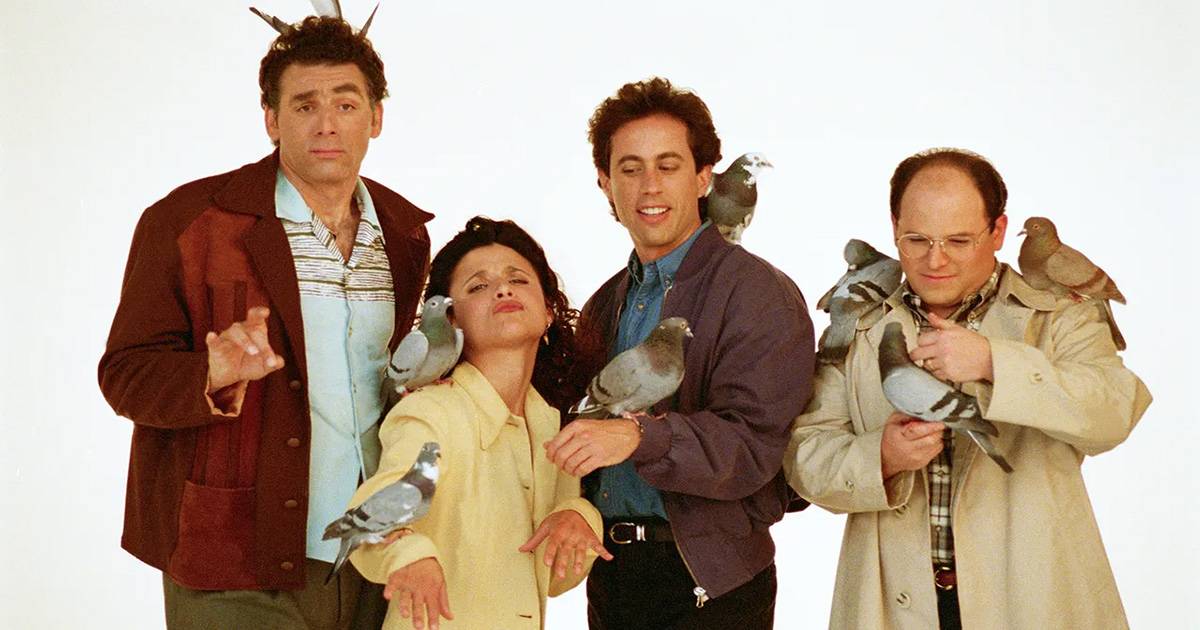
Ask a room full of Seinfeld fans to name the greatest episode of the show, and you’ll get a dozen different answers. Some will say “The Soup Nazi.” Others will argue for “The Opposite” or “The Parking Garage.” But if you pressed most serious fans and critics hard enough, one episode tends to rise above the rest: “The Contest.” And here’s the thing — an episode like that almost certainly could not get made on network television today.
Seinfeld, the legendary ’90s sitcom created by Larry David and Jerry Seinfeld, ran for nine seasons and became one of the most influential comedies in television history. Its willingness to push the boundaries of what network TV would discuss — and how explicitly — was central to its identity. “The Contest” stands as perhaps the sharpest example of that willingness. It was bold, it was uncomfortable, and it worked precisely because of the cultural moment it occupied.
Decades later, fans are still talking about it. And the conversation has shifted from “can you believe they did that?” to something more pointed: “could anyone do that now?”
What Made “The Contest” So Remarkable
“The Contest,” which aired during the show’s fourth season, revolves around a competition between Jerry, George, Elaine, and Kramer to see who can go the longest without masturbating. The word itself is never spoken in the episode. The entire premise is conveyed through euphemism, implication, and the reactions of the characters — and it works brilliantly because of that restraint.
The episode was written by Larry David and won him an Emmy Award for Outstanding Writing in a Comedy Series. It is widely regarded as one of the greatest single episodes in the history of American television, not just within the sitcom genre.
What made it land was a combination of factors that are genuinely difficult to replicate: a writers’ room willing to go there, a network that allowed it under the cover of plausible deniability, and a cultural climate that was simultaneously more restrictive and, paradoxically, more permissive in certain creative ways.
Why the Same Episode Wouldn’t Work on Television Today
This is where the conversation gets genuinely interesting. The instinct might be to assume that today’s television — where prestige dramas explore every conceivable taboo and streaming platforms have essentially no content guardrails — would make it easier to produce an episode like “The Contest.” But the argument is actually the opposite.
The genius of “The Contest” was rooted in what it couldn’t say. Network standards in the early 1990s forced the writers to be creative. You couldn’t just put the subject matter on screen directly — you had to find a way to make the audience understand exactly what was happening without ever stating it plainly. That creative constraint produced something genuinely funny and clever.
On a modern streaming platform, there would be no such constraint. A writer’s room tackling the same premise today would likely just… say it. And saying it removes the tension, the wit, and the craft that made the original so memorable. The joke only works when the audience has to do a little work themselves.
There’s also the broader cultural climate to consider. Network television in 2025 operates in an environment of intense public scrutiny, advertiser sensitivity, and social media reaction cycles that simply did not exist in 1992. A premise that requires the audience to sit with something slightly transgressive — to laugh at something that makes them a little uncomfortable — is a much harder sell when any given episode can become a controversy flashpoint within hours of airing.
The Specific Ingredients That Can’t Be Recreated
Breaking down what made “The Contest” work reveals just how specific the conditions were:
- Network censorship as creative fuel: The restriction on explicit language forced the writers to find a more elegant solution. The result was funnier than anything explicit would have been.
- Audience trust built over seasons: By season four, viewers trusted these characters completely. The premise worked because the audience believed these four people would genuinely make this bet.
- Larry David’s voice: The episode was written by a singular creative voice at the peak of his powers, channeling something personal and specific into a universal comedic premise.
- A different relationship between TV and controversy: In 1992, a controversial episode might generate water-cooler conversation. Today, it generates think-pieces, advertiser calls, and social media pile-ons before the credits finish rolling.
- The ensemble chemistry: Jerry Seinfeld, Julia Louis-Dreyfus, Jason Alexander, and Michael Richards had developed a comedic shorthand that let the episode breathe. The pauses and reactions carried as much weight as the dialogue.
What This Says About Television Then and Now
| Factor | Early 1990s Network TV | Modern Television |
|---|---|---|
| Content restrictions | Strict — forced creative workarounds | Minimal on streaming; heavy on broadcast |
| Controversy cycle | Slow — word of mouth, next-day press | Instant — social media within minutes |
| Advertiser pressure | Present but slower to mobilize | Highly reactive to public sentiment |
| Audience patience for subtext | High — TV required active engagement | Lower — competition for attention is fierce |
| Creative risk tolerance | Higher within specific genre conventions | Risk-averse on major platforms |
The irony is sharp. Television has never been more “free” in terms of what it can technically depict — and yet the specific kind of creative freedom that produced “The Contest” has arguably narrowed. The constraints that once felt like obstacles turned out to be the engine.
Why This Still Matters to Anyone Who Loves Great TV
Seinfeld is still streaming, still being discovered by new audiences, and still generating exactly these kinds of conversations. That staying power is itself a testament to what the show accomplished. But the discussion around “The Contest” is more than nostalgia — it’s a genuine question about what conditions allow great, boundary-pushing comedy to exist.
The episode won its writer an Emmy. It is taught in film and television courses. It changed what audiences expected from network sitcoms. And it did all of that by never once saying the thing it was obviously about.
That kind of disciplined, intelligent transgression is rare in any era. The argument that it couldn’t happen today isn’t a complaint about modern television — it’s an acknowledgment of how specific, and how lucky, the conditions were that made it possible in the first place.
Frequently Asked Questions
What is “The Contest” episode of Seinfeld about?
“The Contest” revolves around Jerry, George, Elaine, and Kramer competing to see who can go the longest without masturbating — a subject the episode famously never states explicitly, relying entirely on implication and euphemism.
Who wrote “The Contest”?
The episode was written by Larry David, co-creator of Seinfeld, and it earned him an Emmy Award for Outstanding Writing in a Comedy Series.
Why is “The Contest” considered one of the greatest TV episodes ever?
It is widely praised for its creative use of language restrictions, its comedic restraint, and its ability to make audiences laugh about a taboo subject without ever directly naming it — a feat that required significant craft and timing.
Could an episode like “The Contest” be made on streaming today?
Many argue it could not achieve the same effect today, because streaming platforms have no content restrictions, removing the creative constraint that made the episode’s wordplay and subtext so effective.
When did “The Contest” air?
The episode aired during the fourth season of Seinfeld, which ran in the early 1990s on NBC.
Is Seinfeld still available to watch?
Yes, Seinfeld is currently available for streaming and continues to attract new viewers decades after its original run.




Leave a Reply