
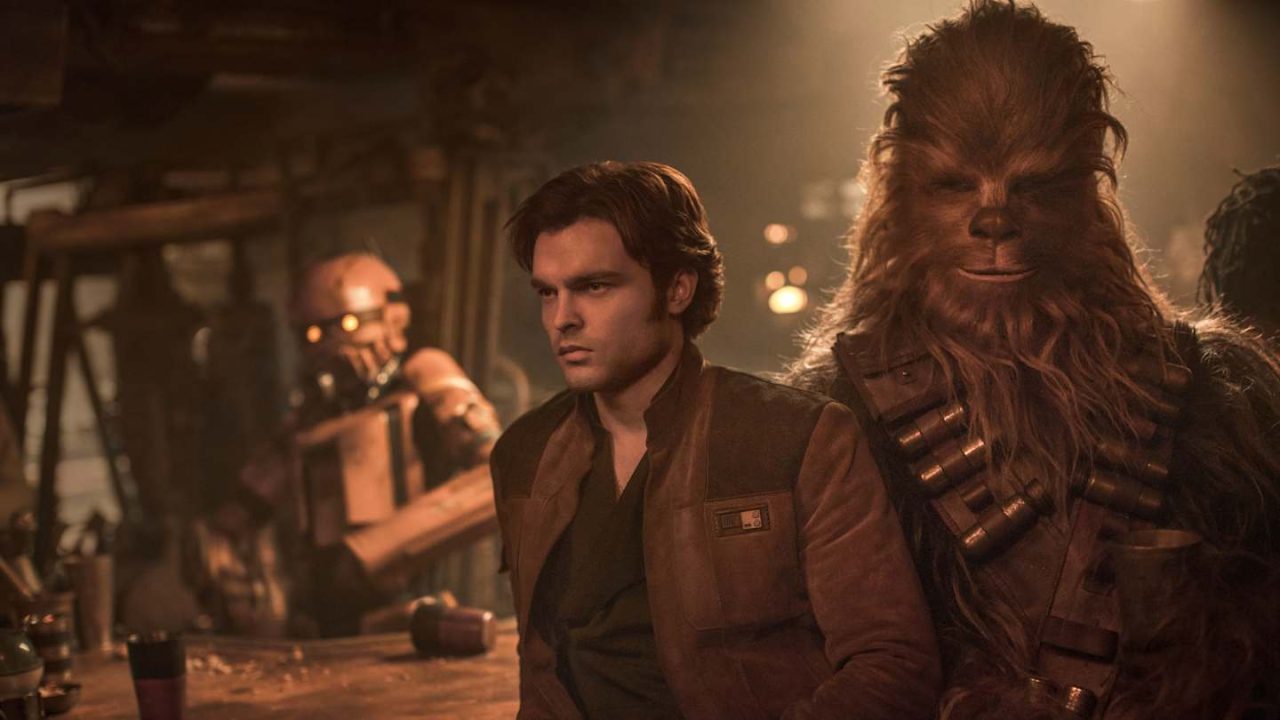
When Solo: A Star Wars Story hit theaters in May 2018, the reception was… complicated. Critics were lukewarm, audiences were divided, and the box office numbers were genuinely painful for a Star Wars film. Many people wrote it off as a misfire — a movie nobody asked for, made under famously troubled production circumstances, arriving at exactly the wrong moment in franchise fatigue. Eight years later, something interesting has happened: the film keeps getting better the more time passes.
That’s not a common trajectory for blockbusters. Most films that underperform theatrically stay underperformed in cultural memory. Solo is doing something different. It has quietly become one of the most rewatched and reassessed entries in the entire Star Wars saga — and the reasons why say something genuinely interesting about how we consume franchise films in the streaming era.
So what changed? And why does a movie that once felt like a disappointment now feel like one of the more purely enjoyable things Lucasfilm has ever made?
What Made Solo Feel Like a Failure at the Time
Context matters enormously here. Solo opened in May 2018, just five months after The Last Jedi — a film that had genuinely fractured the Star Wars fanbase in a way no previous entry had managed. Audiences were exhausted, some were actively angry, and the idea of yet another Star Wars film so soon felt like too much. The marketing struggled to generate excitement. The recasting of Han Solo, one of cinema’s most beloved characters, was always going to be a hard sell.
The production history didn’t help either. Original directors Phil Lord and Christopher Miller were famously replaced mid-shoot by Ron Howard, generating headlines that framed the entire project as chaotic and compromised before anyone had seen a single frame. That narrative stuck.
The film earned around $393 million worldwide — significant money in any other context, but a genuine stumble for a Star Wars release. Lucasfilm shelved its planned anthology series almost immediately after the results came in.
Why Solo: A Star Wars Story Holds Up Better Than Almost Anyone Expected
Strip away all the baggage, and what you actually have is a remarkably well-crafted, unpretentious adventure film. Ron Howard — whatever the circumstances of his arrival — delivered something that knows exactly what it wants to be. It’s a heist movie. It’s a western. It’s a buddy film. It doesn’t carry the weight of galaxy-saving stakes, and that lightness turns out to be one of its greatest strengths.
Alden Ehrenreich’s performance as Han Solo, widely criticized at the time, looks considerably better on reassessment. He was never trying to do a Harrison Ford impression — he was playing a younger, more naive version of the character who hasn’t yet been hardened by the events of the original trilogy. That’s a legitimate and interesting creative choice. Audiences have gradually come around to it.
Then there’s Donald Glover as Lando Calrissian. Even the film’s harshest critics conceded that Glover was magnetic, effortlessly charming, and completely at home in the role. That performance has only grown in stature over time.
The supporting cast — including Woody Harrelson, Emilia Clarke, and Paul Bettany — gives the film a texture that many Star Wars entries lack. These feel like real people with real motivations, not just figures moving through plot.
The Moments That Actually Land on Rewatch
Part of what makes Solo rewatchable is how densely packed it is with small pleasures. The Kessel Run sequence is genuinely thrilling. The train heist in the opening act is inventive action filmmaking. The relationship between Han and Chewbacca is given actual emotional grounding — their first meeting, in particular, is one of the better origin moments in any prequel story.
The film also takes real risks. The Maul cameo — which genuinely shocked audiences who saw it in theaters — has aged into something that feels more meaningful now, especially for viewers familiar with The Clone Wars and Rebels animated series. And the ending, which refuses to give Han Solo a clean heroic victory, is darker and more honest than most franchise films dare to be.
| Element | Original Reception (2018) | Reassessment (2026) |
|---|---|---|
| Alden Ehrenreich as Han Solo | Widely criticized, seen as miscast | Increasingly appreciated as a distinct take |
| Donald Glover as Lando | Near-universally praised | Remains a highlight of the entire franchise |
| Tone and stakes | Criticized as too lightweight | Now seen as a refreshing contrast to saga films |
| Maul cameo | Shocking but divisive | Appreciated more by fans of animated series |
| Production chaos narrative | Dominated the conversation | Less relevant as the film speaks for itself |
The Bigger Picture: What Solo’s Reassessment Tells Us About Franchise Films
There’s a broader lesson here that goes beyond one movie. Franchise films are almost impossible to evaluate fairly at the moment of release. They arrive carrying so much external weight — fan expectations, production gossip, release timing, marketing campaigns — that the actual film often gets buried under all of it.
Solo is a case study in how streaming and time can rehabilitate a film that was judged in the wrong conditions. On Disney+, without the pressure of a theatrical event, it plays beautifully as exactly what it is: a fun, well-made Star Wars adventure with genuine heart and a few genuinely great performances.
It also makes the absence of a sequel feel more frustrating with each passing year. The ending of Solo sets up threads that have never been resolved. There’s a story left to tell, and the appetite for it has only grown as the film’s reputation has risen.
Where Solo Stands in the Star Wars Conversation Now
Eight years out, Solo: A Star Wars Story sits in an interesting place. It’s not a masterpiece, and nobody is seriously arguing that it is. But it’s a genuinely good film that deserved a better fate — and increasingly, that’s exactly how fans and critics are treating it.
In a franchise that has produced some genuinely troubled recent entries, Solo looks better and better by comparison. It knew what it was. It delivered what it promised. And it did so with a level of craft and warmth that holds up on every rewatch.
Sometimes the movies that take the longest to find their audience end up being the ones people love the most. Solo might be heading exactly there.
Frequently Asked Questions
Why did Solo: A Star Wars Story underperform at the box office?
The film opened just five months after The Last Jedi, during a period of significant franchise fatigue, and its troubled production history generated negative press that affected audience enthusiasm before the film even released.
How much did Solo make at the worldwide box office?
Solo earned approximately $393 million worldwide — a number that would be considered strong for most films but represented a notable stumble for a Star Wars release.
Who replaced the original directors of Solo?
Ron Howard stepped in to complete the film after original directors Phil Lord and Christopher Miller were replaced mid-production, a development that dominated headlines and shaped early perceptions of the movie.
Is a Solo sequel still possible?
No sequel has been officially confirmed. Lucasfilm shelved its planned anthology series following the film’s box office performance, though fan interest in a continuation has grown alongside the film’s improving reputation.
Where can you watch Solo: A Star Wars Story now?
Solo is available to stream on Disney+, where many viewers have discovered or rediscovered it away from the pressures of its original theatrical release.
What is the Maul cameo in Solo?
The film’s ending features a surprise appearance by Darth Maul, which shocked theatrical audiences in 2018. The moment has become more appreciated over time, particularly among fans familiar with his story in the Star Wars: The Clone Wars and Rebels animated series.


Leave a Reply