
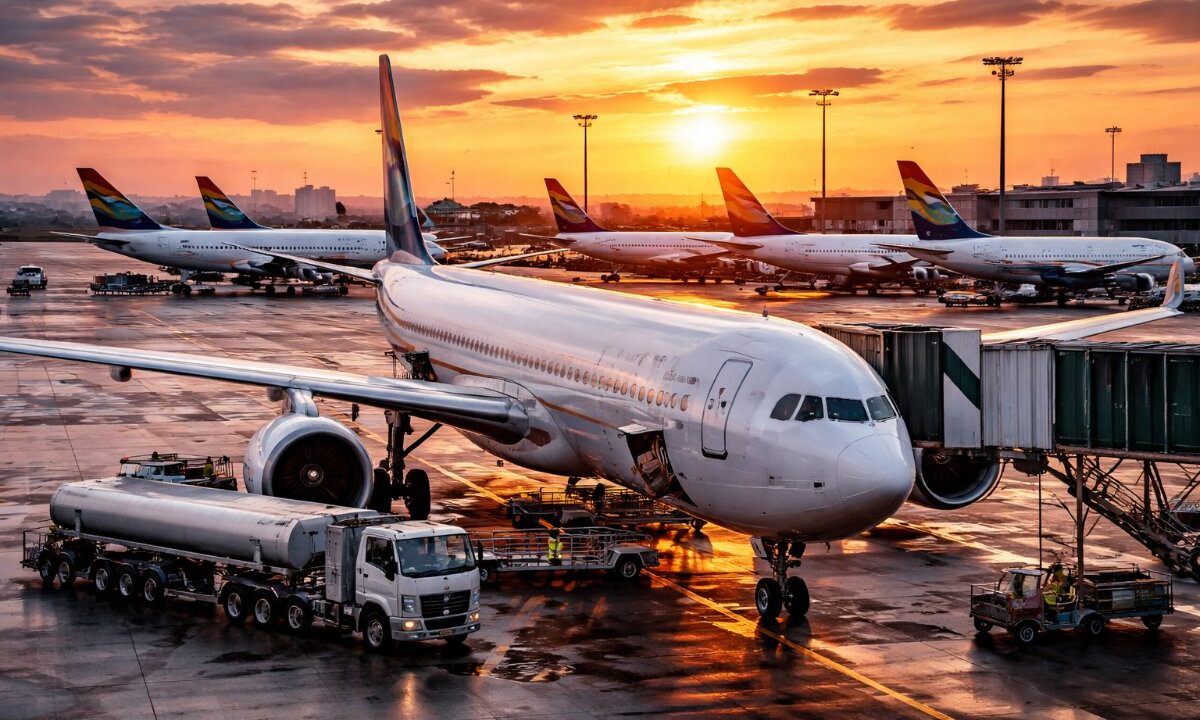
A flight that once felt like a manageable expense is now stretching household budgets across South Africa — and the reasons behind the surge go far beyond anything happening locally. The forces pushing airfare prices higher are global, interconnected, and showing no signs of easing any time soon.
For South African travelers, the timing couldn’t be more difficult. Whether you’re booking a domestic route or planning an international trip, the cost of getting airborne has climbed noticeably — and understanding why matters if you want to make smarter decisions about when and how you fly.
At the heart of the issue is a chain reaction that starts with geopolitical instability in oil-producing regions, particularly the Middle East, and ends with higher numbers on your flight booking screen. It’s a domino effect, and South Africa sits squarely in its path.
Why Events Thousands of Miles Away Are Raising Your Airfare
It might seem counterintuitive that a conflict in the Middle East would directly affect what you pay to fly from Johannesburg to Cape Town, or from OR Tambo to London. But the connection is more direct than most people realise.
The global oil market operates as a single, tightly linked system. When instability flares in major oil-producing regions, supply uncertainty drives crude oil prices upward almost immediately. Jet fuel — the single largest operating cost for any airline — is derived from crude oil, which means every spike in oil prices translates quickly into higher costs for carriers.
South African airlines, like all carriers worldwide, cannot simply absorb those increases indefinitely. The additional costs are passed along to passengers through higher base fares, fuel surcharges, and reduced promotional pricing. The result is what travelers are experiencing right now: airfare that feels noticeably more expensive than it did even a year ago.
The aviation market was already described as volatile before the latest round of geopolitical tensions added further pressure. That underlying instability makes the current surge even harder to predict or plan around.
The Key Factors Driving Flight Prices Higher in South Africa
While rising jet fuel costs are the primary driver, they don’t act alone. Several interconnected pressures are compounding the problem for South African travelers:
- Global oil price volatility: Geopolitical tensions in the Middle East are pushing crude oil prices upward, directly increasing jet fuel costs for airlines operating in and out of South Africa.
- Fuel as a dominant operating cost: Jet fuel represents one of the largest single expenses for any airline, meaning even modest rises in oil prices have an outsized effect on ticket pricing.
- Market volatility in aviation: The aviation sector was already navigating an uncertain environment, and external shocks like rising energy costs amplify existing instability.
- Pass-through pricing: Airlines cannot absorb sustained fuel cost increases indefinitely, so higher costs are ultimately passed on to passengers through fare increases and surcharges.
- Local economic pressures: South Africa’s own economic conditions — including currency fluctuations — add a further layer of cost pressure on top of global factors.
| Cost Driver | Origin | Impact on Airfare |
|---|---|---|
| Crude oil price spike | Middle East geopolitical tensions | Raises jet fuel costs directly |
| Jet fuel surcharges | Airlines passing on fuel costs | Added to ticket price at booking |
| Aviation market volatility | Global economic uncertainty | Reduces availability of low-fare seats |
| Local economic factors | South African currency and economy | Amplifies impact of global cost increases |
What This Means for South African Travelers Right Now
The practical reality for anyone planning to fly is straightforward: budget more, book earlier, and expect less flexibility on pricing than you may have had in the past.
Domestic travelers are not immune. While international routes feel the pressure most acutely — particularly those involving long-haul fuel-intensive journeys — domestic fares inside South Africa are also rising as carriers recalibrate their pricing across the board.
For families planning holidays, business travelers managing travel budgets, and anyone who relies on air travel for regular commuting between cities, the financial burden is real and growing. The uncertainty in the aviation market also makes it harder to predict when — or whether — prices will ease.
Travelers who lock in fares early are generally better positioned than those who wait, since market volatility tends to push last-minute prices higher rather than lower when underlying costs are elevated. Flexibility on travel dates, where possible, can also help identify lower-cost windows within the same booking period.
When Could Prices Start to Come Down?
The honest answer is that a clear timeline is difficult to establish. Airfare prices in South Africa are tied to global oil markets, which are in turn tied to geopolitical developments that remain unpredictable. Until tensions in key oil-producing regions stabilise — or until alternative fuel cost structures become more viable for airlines — the upward pressure on fares is likely to persist.
What travelers can do in the meantime is stay informed about fare trends, use price alert tools to monitor route costs, and avoid assuming that waiting will produce a better deal in a volatile market. The current environment rewards planning over spontaneity.
Longer term, structural shifts in aviation — including greater adoption of fuel-efficient aircraft and alternative energy sources — could eventually reduce the direct link between oil prices and ticket costs. But those changes will take years to meaningfully affect what South Africans pay at the booking stage.
Frequently Asked Questions
Why are flight prices rising in South Africa right now?
The primary driver is rising jet fuel costs, which are linked to global oil price increases triggered by geopolitical tensions in the Middle East. These costs are passed on to passengers through higher fares.
Are domestic South African flights affected as well as international routes?
Yes. While international routes feel the impact most directly, domestic fares inside South Africa are also rising as airlines adjust pricing across all routes in response to higher operating costs.
Is this purely a South African problem?
No. The root causes are global — rising crude oil prices and aviation market volatility affect airlines worldwide. South Africa is experiencing the same pressures as other countries, compounded by local economic factors.
What can travelers do to manage higher airfare costs?
Booking earlier, setting price alerts for specific routes, and staying flexible on travel dates where possible are practical ways to find lower fares in a volatile pricing environment.
Will flight prices come down any time soon?
A specific timeline has not been confirmed. Prices are likely to remain elevated as long as global oil market uncertainty persists, which is tied to ongoing geopolitical developments that are difficult to predict.
Is jet fuel really the biggest factor in airline ticket prices?
Yes. Jet fuel is one of the single largest operating costs for airlines, which is why movements in global oil prices have such a direct and significant effect on what passengers are charged.



Leave a Reply