
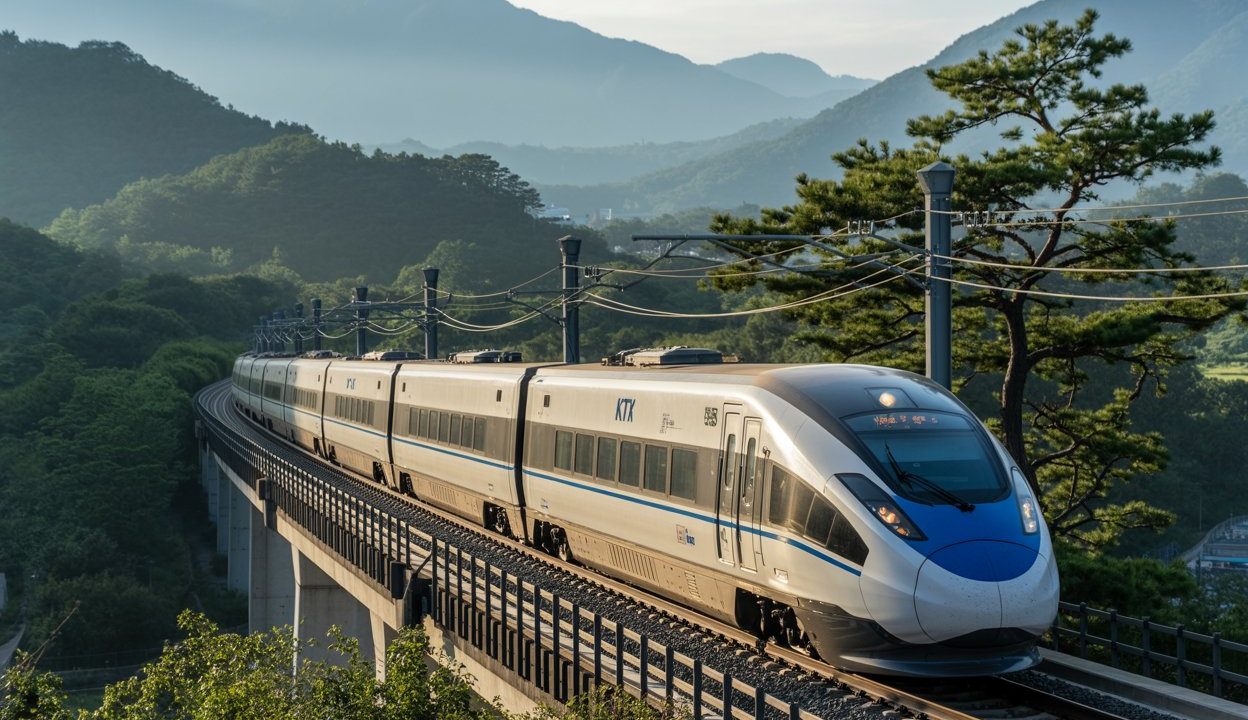
Forty-two million train journeys in just three months. That is the milestone South Korea’s rail network crossed in the first quarter of 2026, marking a historic high for the country’s public transport system and signaling a clear shift in how people are choosing to get around.
Data from the Korea Railroad Corporation and SR Corporation confirms the surge, covering services including the high-speed KTX and SRT trains alongside conventional rail lines. The numbers cover January through March 2026 — a period when fuel costs were biting hard and rail networks were more connected than ever before.
For a country that has long invested heavily in rail infrastructure, this is more than a statistical milestone. It reflects a genuine behavioral shift: commuters and travelers are actively moving away from private cars and toward trains, driven by economic pressure and improved service.
(function(){var wrp=document.getElementById(“paap_stat_69ddecbb157e23.64482750”);if(!wrp)return;var ids=[“paap_stat_69ddecbb157e23.64482750_c0″,”paap_stat_69ddecbb157e23.64482750_c1”];var dur=1800;function ease(t){return 1-Math.pow(1-t,3);}function anim(){ids.forEach(function(id){var el=document.getElementById(id);if(!el)return;var tgt=parseFloat(el.getAttribute(“data-target”))||0;var pfx=el.getAttribute(“data-prefix”)||””;var sfx=el.getAttribute(“data-suffix”)||””;var dec=parseInt(el.getAttribute(“data-decimals”))||0;var st=null;function step(ts){if(!st)st=ts;var p=Math.min((ts-st)/dur,1);var v=ease(p)*tgt;el.textContent=pfx+v.toFixed(dec)+sfx;if(p<1)requestAnimationFrame(step);}requestAnimationFrame(step);});}if("IntersectionObserver" in window){var obs=new IntersectionObserver(function(e){e.forEach(function(en){if(en.isIntersecting){anim();obs.disconnect();}});},{threshold:0.2});obs.observe(wrp);}else{anim();}})();
Why South Korea’s Rail Ridership Just Hit an All-Time High
Two forces appear to be driving this record simultaneously: the rising cost of petrol and diesel, and a meaningful expansion of public transit services across the country.
When fuel prices climb, the economics of car ownership shift quickly. Suddenly, a train ticket starts looking like the smarter financial decision — especially for regular commuters making the same journey five days a week. High oil prices have historically pushed ridership numbers upward in markets around the world, and South Korea is following that same pattern in 2026.
At the same time, expanded rail connectivity means more people actually have access to a viable train option. When services improve — more routes, better frequency, more convenient station locations — ridership tends to follow. Both factors appear to be working together here, compounding the effect on overall numbers.
Government transport agencies have pointed to this Q1 figure as a definitive benchmark for sustainable mobility — a signal that the country’s long-term investments in public transit infrastructure are producing measurable results.
The Services Behind the Numbers
South Korea’s rail network is not a single service — it is a layered system of high-speed and conventional options that together serve an enormous range of journeys.
- KTX (Korea Train Express): The flagship high-speed service operated by the Korea Railroad Corporation, connecting major cities at speeds that make rail genuinely competitive with air travel for domestic routes.
- SRT (Super Rapid Train): A high-speed service operated by SR Corporation, offering an alternative high-speed corridor and adding competitive capacity to the network.
- Conventional rail services: Slower but widely used regional and intercity lines that serve communities not on the high-speed network.
| Service Type | Operator | Type |
|---|---|---|
| KTX | Korea Railroad Corporation | High-Speed Rail |
| SRT | SR Corporation | High-Speed Rail |
| Conventional Rail | Korea Railroad Corporation | Regional/Intercity |
The high-speed services — KTX and SRT — are where demand appears to be growing most sharply. When people are making cost-conscious decisions about travel, fast trains that genuinely compete with the time and expense of flying or driving become an obvious choice.
What This Means for Commuters and Travelers Right Now
If you are someone who regularly travels between South Korean cities, this ridership surge has real practical implications for your experience on the network.
Record passenger numbers mean trains are busier. Booking in advance becomes more important, particularly on popular KTX and SRT corridors during peak hours and holiday periods. Seats that might have been easy to grab last-minute a year ago may now require earlier planning.
On the positive side, high ridership numbers tend to strengthen the case for continued investment in rail services. When passenger data shows this kind of growth, it provides transport authorities with a compelling argument to expand capacity, improve frequency, and extend connectivity to underserved areas.
For the broader public, the shift away from private cars also carries environmental implications. Every commuter who replaces a car journey with a train trip reduces their personal carbon footprint — and at 42 million journeys in a single quarter, the aggregate effect is significant.
Where South Korea’s Rail Network Goes From Here
A record Q1 ridership figure creates momentum — and pressure. Government transport agencies treating this as a sustainability benchmark suggests they are watching these numbers closely and using them to shape future planning decisions.
If oil prices remain elevated through the rest of 2026, the economic incentive to take the train will persist. That could mean Q2 and beyond sustain or even exceed the Q1 numbers, potentially making 42 million not a ceiling but a new floor for quarterly ridership expectations.
Expanded public transit services were cited as a contributing factor to the Q1 surge, which suggests the network has been actively growing. Whether that expansion continues — and how quickly — will determine whether South Korea’s rail system can absorb the increased demand without service quality suffering.
For now, the data paints a clear picture: South Korean commuters and travelers are choosing trains at a rate the country has never seen before, and the combination of economic pressure and better services shows no sign of reversing course.
Frequently Asked Questions
How many people used South Korea’s rail network in Q1 2026?
Official data shows 42 million passengers used South Korean rail services between January and March 2026, a historic record for a single quarter.
Which train services are included in the 42 million figure?
The figure covers KTX and SRT high-speed services as well as conventional rail lines, based on data from the Korea Railroad Corporation and SR Corporation.
What is driving the surge in rail ridership?
High petrol and diesel prices are making train travel more economically attractive, while expanded public transit services have increased access and convenience for more passengers.
Is high-speed rail specifically seeing increased demand?
Yes, government transport data indicates a particular surge in high-speed train demand, with KTX and SRT services among those recording strong passenger growth.
How are government agencies responding to the ridership milestone?
Officials have described the 42 million figure as a definitive benchmark for sustainable transport, suggesting it will inform future planning and investment decisions.
Will ridership numbers remain this high for the rest of 2026?
This has not yet been confirmed, but sustained high oil prices and continued service expansion could support similarly strong numbers in subsequent quarters.




Leave a Reply