
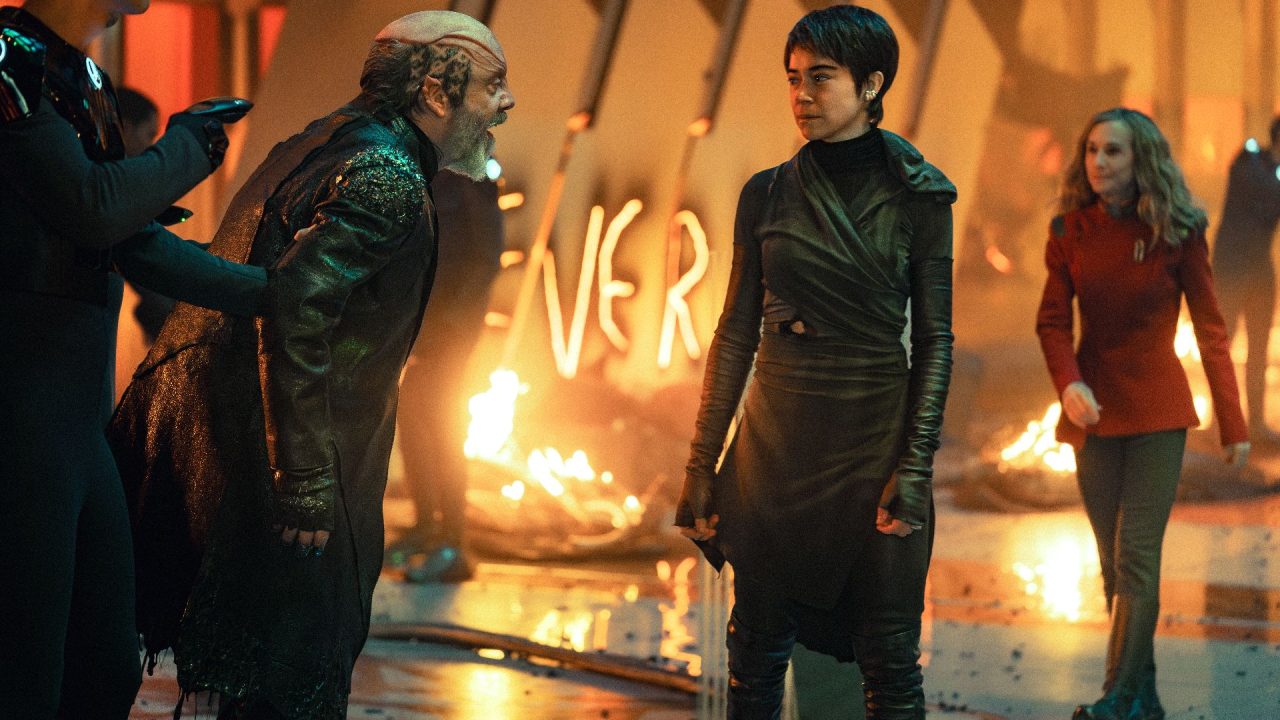
For six decades, Star Trek has returned again and again to one of its most enduring dramatic devices — the formal trial. It happened in the original series. It happened in The Next Generation. And now, according to reporting on the Season 1 finale of Star Trek: Starfleet Academy, it has happened again. The tradition, it seems, is not going anywhere.
The finale episode, titled “Rubicon,” reportedly continues this long-running franchise storytelling tradition, connecting the newest entry in the Star Trek universe to a lineage that stretches all the way back to Gene Roddenberry’s original vision. For fans of the franchise, that continuity carries real weight.
Note: This article contains general spoiler discussion for the Star Trek: Starfleet Academy Season 1 finale, “Rubicon.”
Why Star Trek Has Always Loved a Trial
There is something about the courtroom — or its Starfleet equivalent — that keeps drawing Star Trek writers back. Trials create high stakes in a contained setting. They force characters to defend not just their actions, but their values. In a franchise built around ethics, exploration, and what it means to be a decent being in a complicated universe, that format fits like a glove.
The trial as a narrative device allows the show to do what Star Trek does best: put its characters under pressure and see what they’re made of. A phaser fight can reveal courage. A trial reveals character — and ideology.
This is part of why the tradition has persisted across so many different series, crew configurations, and centuries of fictional history. It isn’t a gimmick. It’s a structural tool the franchise has leaned on because it consistently delivers.
A 60-Year Tradition Across the Star Trek Franchise
The use of trials and formal proceedings in Star Trek storytelling is one of the franchise’s most consistent threads. From the original series onward, these moments have served as pivot points — episodes where the entire premise of the show is put on the stand and examined.
The tradition spans multiple series and generations of characters, connecting very different versions of Star Trek through a shared belief that justice, accountability, and due process matter — even in the 23rd or 24th century.
| Series | Notable Trial/Formal Proceeding | What Was at Stake |
|---|---|---|
| Star Trek: The Original Series | Court martial and formal proceedings | Character reputation, command ethics |
| Star Trek: The Next Generation | Multiple tribunal episodes | Civil rights, personhood, Starfleet authority |
| Star Trek: Deep Space Nine | Legal and formal hearings | Wartime morality, individual vs. institution |
| Star Trek: Starfleet Academy | Trial in Season 1 finale “Rubicon” | Cadets, Starfleet values, institutional trust |
Each of these moments reflects something the franchise returns to deliberately — not because it has run out of ideas, but because the trial format mirrors the show’s core philosophical questions about law, loyalty, and what Starfleet actually stands for.
What “Rubicon” Represents for the Newest Series
Star Trek: Starfleet Academy is among the newer additions to the franchise, following a younger generation of cadets navigating the earliest stages of their Starfleet careers. Setting a trial at the center of the Season 1 finale is a meaningful creative choice — it roots this newer, younger series in the same storytelling traditions that defined its predecessors.
For a show about cadets still learning what Starfleet values mean in practice, a trial is especially resonant. These are characters who haven’t yet earned their place in the fleet. Putting them through a formal proceeding — where those values are tested in the most direct possible way — is a natural dramatic escalation for a first season.
The title “Rubicon” itself carries weight. Crossing the Rubicon is a phrase meaning a point of no return — a decision made that cannot be undone. As a finale title, it signals that whatever happens in this trial, the characters and the series will not emerge unchanged.
Why This Tradition Matters to Star Trek Fans
For long-time viewers, moments like this carry a particular kind of satisfaction. Star Trek has always been a franchise that rewards loyalty — not just through callbacks and continuity, but through the preservation of its core identity across radically different settings and casts.
When a new series like Starfleet Academy reaches for the same dramatic tools that the original series used 60 years ago, it isn’t just nostalgia. It’s an argument that the franchise’s foundational concerns — justice, accountability, the ethics of authority — remain as relevant as ever.
Fans have watched Star Trek evolve through streaming, through serialized storytelling, through wildly different visual styles and tones. But the trial episode endures. That says something real about what the franchise believes in and what its audience responds to.
What Comes Next for Starfleet Academy
With Season 1 now concluded through the “Rubicon” finale, attention will naturally turn to what the series does next. A trial at the end of a first season typically signals a hard reset — characters changed, relationships tested, the status quo disrupted in ways that open new story possibilities.
Whether Starfleet Academy earns a second season and how it builds on the foundation laid in Season 1 remains to be seen. But by anchoring its finale in one of the franchise’s most durable traditions, the show has made a clear statement about where it sees itself in the larger Star Trek story.
Sixty years in, the tradition is alive. And if history is any guide, it will still be alive sixty years from now.
Frequently Asked Questions
What is the title of the Star Trek: Starfleet Academy Season 1 finale?
The Season 1 finale is titled “Rubicon.”
What Star Trek tradition does the finale continue?
The finale continues the long-running franchise tradition of featuring a formal trial or tribunal as a central dramatic element, a storytelling device used across Star Trek series for approximately 60 years.
Is Star Trek: Starfleet Academy a new series?
Yes, it is one of the newer additions to the Star Trek franchise, focusing on younger cadets in the early stages of their Starfleet careers.
Why does Star Trek keep returning to trial storylines?
Trials allow the franchise to examine its core themes — justice, ethics, accountability, and the nature of Starfleet authority — in a dramatically concentrated format that puts characters’ values directly on the line.
Has a second season of Starfleet Academy been confirmed?
This has not been confirmed in the available source material.
What does the title “Rubicon” mean in context?
“Crossing the Rubicon” is a historical phrase meaning a point of no return, suggesting the finale involves a decisive, irreversible moment for the characters or the series.




Leave a Reply