
▶ Read transcript
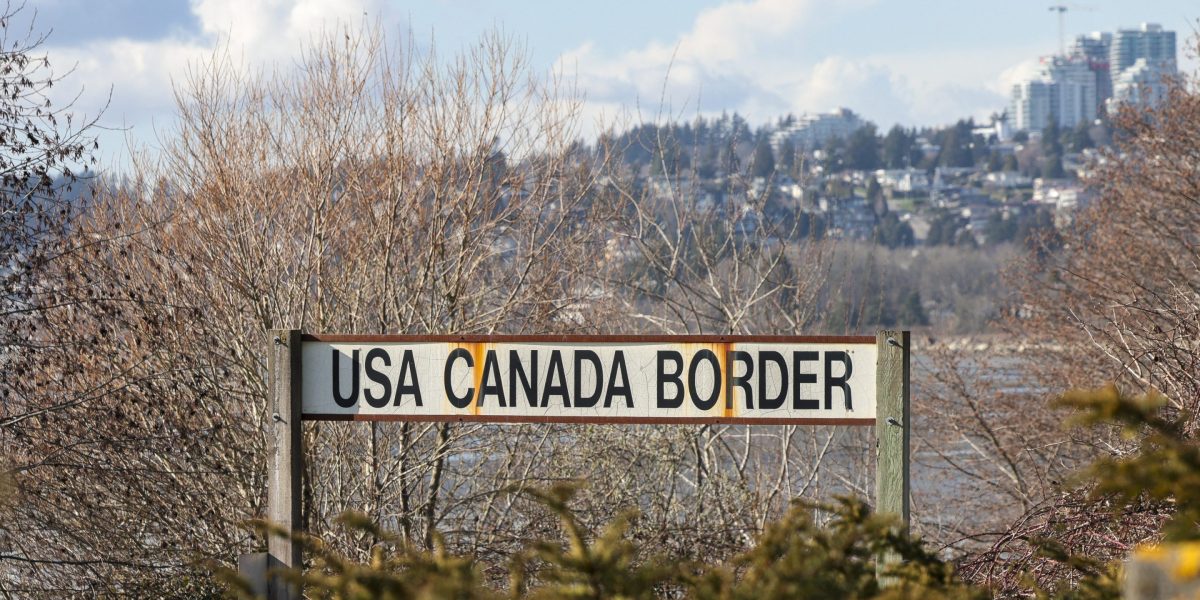
Here’s what you need to know about why Canadians are staying home instead of crossing into the United States. Since President Trump returned to office in January 2025, Canadian visits to the US have dropped by roughly 35 percent across all forms of travel. Car crossings alone fell nearly 20 percent in the first ten months of 2025 compared to the year before. The reasons are layered — viral stories of aggressive border detentions, political rhetoric about annexation, and a growing feeling among ordinary Canadians that they simply aren’t welcome. That emotional shift has real consequences. Border towns, hotels, and restaurants that depend on Canadian visitors are taking a serious hit. Meanwhile, Canadian domestic destinations are seeing a quiet boom as travelers redirect their spending closer to home. Economists at RBC are calling this a structural shift, not a temporary dip. If you’re a business near the US-Canada border, now is the time to pay close attention to how you’re welcoming the customers you still have.
Have you ever stood at a border crossing and wondered whether the country on the other side still wanted you there?
That question, once unthinkable between two of the world’s closest neighbors, has become surprisingly real for millions of Canadians in the past year. The US-Canada border, once among the busiest land crossings on Earth, has grown noticeably quieter. And the silence is telling a complicated story.
A 20% Drop in Car Crossings and the Numbers Behind It
From January to October 2025, the number of passenger vehicles crossing the US-Canada border fell by nearly 20 percent compared to the same period the year before. That is not a rounding error. That is millions of trips that never happened.
Air travel followed the same downward arc. Canadian visitation to the US, across all modes of transport, is down roughly 35 percent since President Trump returned to office in January 2025. The economic consequences for US border communities, hotels, restaurants, and tourist attractions have been described as a massive, sustained blow.
To understand what drove these numbers, you have to follow one traveler’s story. Not a statistic. A person.
Marie’s Drive That Never Happened
Marie Tremblay, a 54-year-old retired teacher from Québec City, had crossed into Vermont every autumn for eleven years. She loved the leaf color, the farm stands, the quiet motels off Route 100. It was her ritual.
In September 2025, she started packing. Then she opened her phone.
The news feed was full of stories she could not ignore: reports of travelers being detained at US ports of entry, social media videos of people describing frightening border experiences, and a political climate that made her feel, for the first time, genuinely unwelcome. She had a valid passport, no criminal record, and decades of easy crossings behind her. None of that felt like enough anymore.
She unpacked her bag. She booked a cabin in the Laurentians instead.
“I didn’t feel unsafe exactly. I felt unwanted. And that’s almost worse, because there’s nothing to argue with.”
— Composite voice reflecting widespread Canadian traveler sentiment, 2025
Marie’s story is not unique. It is, in fact, the pattern that economists and transportation analysts have been tracking with growing concern throughout 2025 and into 2026.
| Travel Category | Change (2024 vs. 2025) | Primary Driver |
|---|---|---|
| Passenger vehicle crossings | Down ~20% | Political climate, border anxiety |
| Air travel (Canada to US) | Significant decline | Deterrence, geopolitical tension |
| Total Canadian visitation to US | Down ~35% since Jan 2025 | Combined political and safety fears |
| Canadian domestic travel spending | Rising | Rebalancing away from US destinations |
Why Canadians Are Choosing to Stay Home in 2026
The causes stack on top of each other. Political rhetoric about annexation, however absurd to most observers, created an emotional wound in Canadian public sentiment. Viral accounts of travelers being detained or questioned aggressively at US entry points spread rapidly on social media through late 2024 and into 2025.
The practical calculus shifted. A weekend trip to upstate New York or a shopping run to Buffalo started to feel like a risk calculation rather than a casual outing. For many Canadians, the math stopped adding up.
Canadian airlines and tour operators noticed the shift in booking patterns by mid-2025. Flights to Florida, a perennial favorite for winter-weary Canadians, saw cancellations and reduced demand. Cross-border shopping trips, once a staple of communities along the Ontario and British Columbia borders, dropped sharply.
Meanwhile, Canadian domestic destinations saw something of a quiet boom. Coastal British Columbia, the Maritimes, and Quebec’s Eastern Townships all reported stronger visitor numbers as Canadians redirected their travel instincts inward.
The Turning Point Nobody Announced
There was no single moment when the trend crystallized. It was cumulative. A news story here, a social media post there, a friend’s unsettling experience at the border, a politician’s offhand comment about sovereignty.
By early 2026, the pattern had become undeniable. Transportation analysts were no longer calling it a blip. The US Joint Economic Committee published findings describing the Canadian tourism drop as a serious economic concern for border-dependent American businesses.
| Travel Category | 2024 Volume (Baseline) | 2025 Change | Primary Driver of Decline | Economic Impact on US Side | Traveler Sentiment |
|---|---|---|---|---|---|
| Passenger Vehicles | ~15M crossings Jan–Oct | Down ~20% | Tariff tensions & political climate | Border town retail & fuel sales hit hard | Cautious, many trips postponed indefinitely |
| Air Travel | ~8M Canadian visitors | Down ~35% | Fear of detention, weak CAD vs USD | Hotels, airports, tourism revenue losses | Strong reluctance, many rerouting abroad |
| Bus & Coach Tours | Steady pre-2025 demand | Down ~40% | Group travel advisories issued | Tour operators report mass cancellations | Organized groups avoiding US entirely |
| Leisure Day Trips | High frequency, low scrutiny | Down ~25% | Uncertainty at border checkpoints | Shopping malls & outlets near border suffer | Spontaneous trips nearly eliminated |
| Business Travel | Essential crossings only | Down ~15% | Tariff uncertainty & visa concerns | Convention & meeting industry impacted | Trips consolidated or shifted to virtual |
For Marie, the turning point came differently. She made it back to Vermont in the spring of 2026, on a trip she had planned carefully and approached with a kind of cautious optimism. The farm stands were still there. The maples were budding. The motel owner recognized her and asked where she had been.
She told him. He nodded slowly and said he had heard the same thing from dozens of Canadian regulars who had simply stopped coming.
What the Decline Means for US Border Communities in 2026
The economic footprint of Canadian visitors to the United States is substantial. Canadians have historically been among the top foreign visitors to the US, spending significantly in border states like New York, Michigan, Washington, and Montana.
A 35% drop in that visitor base is not an abstraction. It shows up in empty restaurant seats in Niagara Falls, New York. It shows up in reduced foot traffic at outlet malls near the Peace Arch crossing in Washington state. It shows up in the occupancy rates of motels that built their entire business model around Canadian snowbirds and weekend shoppers.
Some US business owners near the border have begun adapting, courting domestic American tourists more aggressively or pivoting their offerings. Others are simply waiting, hoping the political climate stabilizes and the familiar rhythm of cross-border life returns.
The transportation sector is watching closely. Reduced demand on cross-border bus routes, ferry services, and regional air corridors between Canadian cities and US hubs has forced operators to reassess schedules and capacity for the 2026 travel season.
A Shift That May Outlast Its Causes
Here is the part that keeps analysts up at night. Travel habits, once broken, do not always reassemble themselves when the original cause disappears.
Canadians who spent 2025 discovering the Cabot Trail, the Okanagan Valley, or the streets of Old Québec may simply keep going back. The rediscovery of domestic travel, nudged into motion by political anxiety, has a momentum of its own.
Marie is a case in point. She went back to Vermont in spring 2026. But she also booked a fall trip to Cape Breton. She is no longer choosing between Canada and the US. She is choosing both, which means the US gets less than it used to.
Multiplied across millions of Canadian travelers, that arithmetic is the real story of 2026’s cross-border transportation trends. Not a wall, not a ban, not a dramatic rupture. Just a quiet recalculation, made one traveler at a time, that is reshaping the geography of North American tourism in ways that may prove surprisingly durable.
The border is still open. But the feeling of crossing it has changed, and feelings, it turns out, are their own kind of infrastructure.
Frequently Asked Questions

You Might Also Like

Germany Warns Citizens About US Travel After ICE Incident Surge
Germany’s Federal Foreign Office has issued a formal travel advisory warning its citizens about rising…

Air Algérie’s 10 Boeing 737 MAX 8s Are Quietly Rewriting Algeria’s Aviation Story
Ten new Boeing 737 MAX 8 aircraft are heading to Algeria — and for anyone…
Panama Costa Rica Railway Could Quietly Reshape How Central America Moves
A direct rail link between Panama and Costa Rica — two of Central America’s most…
Leave a Reply