
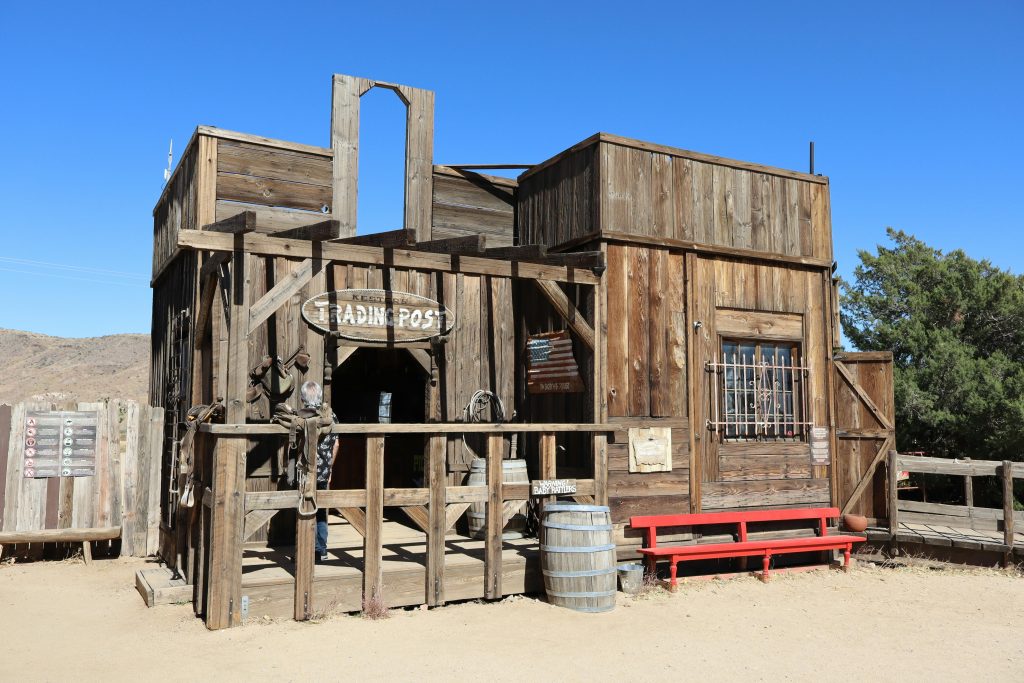
The conventional assumption about America’s frontier trading posts is that they vanished alongside the covered wagon. That assumption is wrong. Several of the Southwest’s original trading posts — some established before Arizona achieved statehood — are still standing, still selling, and in at least one case, still operated on land belonging to the same Native nation that anchored their existence more than a century ago.
These aren’t museums with velvet ropes. They are functioning commercial establishments where turquoise jewelry, Navajo rugs, and dry goods change hands today, much as they did when Ulysses S. Grant was president.
Hubbell Trading Post: The Oldest Continuously Operating Navajo Reservation Trading Post in America
The most documented of the surviving posts is Hubbell Trading Post, located in Ganado, Arizona, approximately 55 miles west of Gallup, New Mexico. According to the National Park Foundation, John Lorenzo Hubbell purchased the trading post in 1878 — ten years after Navajos were permitted to return to their homeland following their forced removal to Bosque Redondo, one of the most devastating episodes of displacement in Southwestern history.
Hubbell’s timing was not coincidental. The post became a critical economic lifeline for Navajo families attempting to rebuild after years of exile. Wool, blankets, silver jewelry, and livestock moved through its counters, while Hubbell supplied coffee, flour, and manufactured goods in return.
The National Park Service now administers the site, but the original adobe buildings, the weaving room, and Hubbell’s personal art collection — including paintings by E.A. Burbank — remain largely intact. According to Park Archives for Hubbell Trading Post, the property retains its original commercial character: visitors can still purchase authentic Navajo textiles directly from weavers who bring their work to the post, continuing a transaction model that is nearly 150 years old.
Santo Domingo Trading Post: A Pueblo-Controlled Property With Deep Pre-Railroad Roots
Roughly 30 miles southwest of Santa Fe, the Santo Domingo Trading Post sits within the Santo Domingo Pueblo — now formally known as Kewa Pueblo — along the Rio Grande corridor. According to the National Park Service, the Pueblo of Santo Domingo controls the property today, and it was added to the National Register of Historic Places in 1998.
The post’s significance is tied directly to the arrival of the Atchison, Topeka and Santa Fe Railway in the late 19th century, which transformed the Pueblo into a major node for the trade of handmade jewelry, pottery, and shell beads. Santo Domingo artisans became particularly renowned for their heishi — hand-ground shell disc beads — that circulated through trading networks stretching across the continent.
Control by the Pueblo itself distinguishes Santo Domingo from federally managed sites like Hubbell. The community retains direct authority over how the property is used and how access is granted, reflecting a broader pattern of Native nations reclaiming stewardship of culturally significant sites in the post-1970s era of federal Indian policy reform.
Bowlin’s Old Crater Trading Post: Route 66 Commerce That Outlasted the Highway
Bowlin’s Old Crater Trading Post presents a different survival story — one tied to the rise and near-death of Route 66. Located at 7650 Old Route 66 in New Mexico, the post was listed on the National Register of Historic Places in 2006, according to the National Park Service.
The property sits near the volcanic badlands west of Albuquerque, a stretch of the old highway that was effectively bypassed when Interstate 40 was completed through the region. That bypass, which devastated dozens of roadside businesses across New Mexico, paradoxically preserved Bowlin’s: without heavy truck traffic and commercial redevelopment pressure, the post retained its original structure and character.
The Bowlin family operated multiple trading posts across New Mexico during the 20th century, functioning as a regional retail network long before chain stores reached rural corridors. The Old Crater location is the most historically preserved of those sites, and its volcanic surroundings — part of the El Malpais region — give it a landscape context unlike any other trading post in the state.
Richardson Trading Post: Over a Century of Commerce in Gallup, New Mexico
In Gallup, New Mexico — a city that has served as a gateway to Navajo and Zuni country for well over a century — Richardson Trading Post has operated for more than 100 years and holds a listing on the National Registry of Historic Places. The post is known for serving not only as a retail outlet but as a supplier of goods to surrounding communities, a dual role that was standard practice for frontier-era trading posts.
Gallup itself is positioned at the intersection of historic trading routes that predate European settlement. The city’s Indian Jewelry and Pawn Shop district — which includes Richardson — represents one of the densest concentrations of Native American arts commerce in the United States. Richardson’s longevity in that market is a product of both geographic advantage and the sustained demand for authentic handmade goods from Navajo, Zuni, and Hopi artisans.
What These Posts Reveal About Commerce, Displacement, and Survival
Taken together, these four properties map a history that goes far beyond retail. Each post was established within a specific political and economic context — the aftermath of Navajo exile, the railroad’s transformation of Pueblo trade, the boom and bust of Route 66 — and each survived by remaining useful to the communities it served.
The National Park Service manages Hubbell directly, while the other three operate under different ownership structures — tribal, private, and family-held. That variation matters: federal management brings preservation funding and visitor infrastructure, while independent ownership can mean more precarious long-term futures, particularly for rural properties that depend on Route 66 tourism or regional foot traffic.
As of March 2026, all four properties remain accessible to the public. For travelers crossing New Mexico and Arizona on I-40 or US-491, these posts are rarely more than an hour’s detour from the interstate — and represent some of the most direct physical contact available with the economic history of the American Southwest.
Related: I Planned a 3-Day Mussoorie Trip for Under ₹5,000 in 2026 — Here’s What Actually Worked


Leave a Reply