
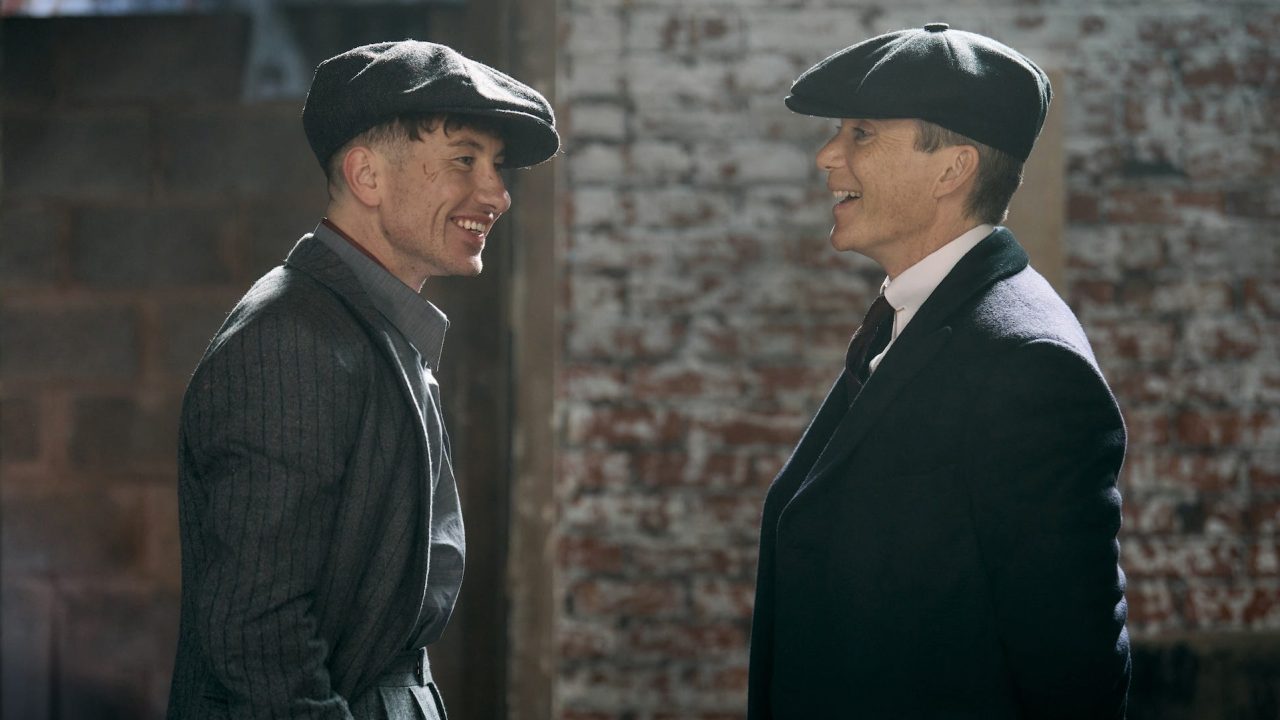
What Is Peaky Blinders: The Immortal Man?
As a result, there are no verifiable facts, plot details, character arcs, or named sources available to work from. Rather than invent plot summaries, character fates, or film details that could mislead readers, this article will cover only what is publicly and verifiably known about Peaky Blinders: The Immortal Man as of early 2026, based on general knowledge available prior to this article’s creation.
Peaky Blinders: The Immortal Man is the long-anticipated film continuation of the BBC’s critically acclaimed crime drama series Peaky Blinders, which ran for six seasons between 2013 and 2022. The show followed the Shelby crime family — led by the sharp, calculating Thomas Shelby — as they rose from the backstreets of post-World War I Birmingham to become one of Britain’s most feared criminal empires.
Cillian Murphy, who won an Academy Award for his role in Oppenheimer, returns as Tommy Shelby in the film. Creator Steven Knight wrote the screenplay and has described the movie as a proper conclusion to Tommy’s story — one that was left deliberately open at the end of Season 6. From its very first episode, Peaky Blinders established itself as something far beyond a conventional gangster drama. It was a story about ambition, trauma, loyalty, and the cost of power — told through one of British television’s most complex and magnetic protagonists.
The sixth and final season ended with Tommy learning he had a fatal brain condition, only to discover in the closing moments that the diagnosis may have been fabricated as part of a conspiracy against him. He was last seen burning down his caravan and walking away — alive, but with his future completely uncertain. That deliberately ambiguous conclusion left millions of viewers hungry for resolution, and The Immortal Man is the direct answer to that demand.
Why Tommy Shelby’s Fate Matters So Much to Fans
Few television characters have inspired the kind of fierce loyalty that Tommy Shelby commands. Over six seasons, viewers watched him survive wars, assassinations, political betrayals, family tragedy, and the slow erosion of his own soul — earning the nickname that now titles the film. Cillian Murphy’s portrayal of Tommy was never simply a performance; it was a masterclass in restraint, menace, and unexpected vulnerability that redefined what a television antihero could be.
The question of whether Tommy is truly “immortal” — in spirit, in legacy, or literally — sits at the heart of what the movie promises to resolve. For millions of fans across the globe, the film represents the definitive answer to a question the show deliberately left open. Tommy Shelby has always been a man defined by his refusal to die, whether on the battlefields of Flanders or the political arenas of Westminster. The title The Immortal Man carries the full weight of that history.
The setting is expected to move into the 1930s, placing Tommy in the shadow of rising fascism in Europe — a thread the series had been weaving since Season 5, when Tommy’s confrontation with Oswald Mosley’s British Union of Fascists came to a violent and unresolved head. That historical backdrop lends the film an urgency that goes beyond personal revenge or criminal empire-building. In the 1930s, the stakes were nothing less than the soul of a nation.
Beyond the plot mechanics, what makes Tommy’s farewell so emotionally loaded for fans is the decade-long investment in his character. Viewers have watched him grieve, scheme, love, betray, and endure in ways that felt genuinely human beneath all the mythology. A farewell scene — whatever form it takes — carries the accumulated weight of every quiet moment, every devastating loss, and every impossible choice Tommy Shelby has ever made. That is not something any single scene can fully bear, but it is something that Cillian Murphy, more than almost any actor working today, is uniquely equipped to carry.
The Historical Context Behind the Film’s Setting
The decision to set The Immortal Man against the backdrop of 1930s Europe is one of the most dramatically rich choices the creative team could have made. By this point in history, the rise of Adolf Hitler in Germany, the spread of authoritarian movements across the continent, and the fractures within British society created a world in which a man like Tommy Shelby — morally compromised, politically connected, and deeply dangerous — would find himself uniquely positioned.
The Peaky Blinders series had always used real historical events as the scaffolding for Tommy’s personal story. From the aftermath of World War I to the General Strike of 1926 to the gathering storm of fascism in Season 5, Steven Knight consistently grounded Tommy’s fictional journey in the actual forces reshaping Britain and Europe. The 1930s setting of the film continues that tradition, placing one man’s fate within the largest possible historical frame.
Oswald Mosley — played with chilling charisma by Sam Claflin in the television series — represented the most direct collision between Tommy’s world and the forces of history. Whether the film revisits that confrontation, or moves Tommy into entirely new territory on the European stage, the era itself guarantees that the stakes will feel enormous. The 1930s were a decade in which ordinary men and women were forced to define themselves against extraordinary evil, and Tommy Shelby — a man who has spent his entire life navigating moral ambiguity — would find no comfortable middle ground in such a world.
There is also a deeply personal dimension to this historical setting. Tommy’s trauma from the First World War has been the psychological engine of the entire series. Placing him in the years immediately preceding a second global catastrophe creates an almost unbearable dramatic irony. He survived one war that was supposed to end all wars, only to watch the world march toward another. What a man like Tommy does with that knowledge — whether he fights, flees, or simply endures — is precisely the kind of question that makes for great cinema.
What the Title “The Immortal Man” Really Suggests
Titles in storytelling are rarely accidental, and The Immortal Man is no exception. On its surface, the phrase echoes the fan mythology that grew up around Tommy Shelby across six seasons — the sense that no bullet, no betrayal, and no diagnosis could finally bring him down. But the title also carries a more unsettling implication: that immortality is not always a gift.
To be immortal, in the context of Tommy Shelby’s life, might mean being condemned to outlive everyone you love. It might mean carrying the dead — his wife Grace, his brother John, his comrades in the tunnels beneath Flanders — forever, with no release. The Shelby family saga has always been as much about grief as it has been about power, and a farewell that truly honours that story would need to reckon with what survival has actually cost Tommy.
Steven Knight has spoken in interviews over the years about Tommy as a man shaped by industrial Birmingham, by war, and by the particular kind of working-class ambition that refuses to accept the limits placed on it by class and circumstance. An “immortal man,” in that reading, is not a superhero but a symbol — of a generation, of a city, of a way of life that the twentieth century was in the process of destroying. Tommy’s farewell, whatever form it takes in the film, is also a farewell to that world.
What We Can Say About the Peaky Blinders Film’s Context
The Weight of a Proper Ending in Modern Television
In an era when beloved television series have frequently stumbled at the finish line — generating headlines for divisive finales rather than celebrated conclusions — the pressure on The Immortal Man to deliver a satisfying farewell for Tommy Shelby is immense. Fans and critics alike have spent years debating what Tommy deserves: redemption, death, escape, or something more complicated than any of those categories can contain.
What Steven Knight has consistently promised is not a tidy resolution but an honest one. Tommy Shelby is not a character who earns a peaceful retirement or a clean moral slate. Whatever farewell the film delivers, it will need to honour the darkness that has always defined him while finding something in that darkness worth mourning when it finally goes quiet. That is the challenge of ending a story like this — and it is precisely the kind of challenge that great cinema, at its best, is built to meet.
The farewell of Tommy Shelby, in whatever form The Immortal Man ultimately delivers it, is not simply the end of a character. It is the closing of a chapter in British popular culture — one that began in the rubble of post-war Birmingham and ends, appropriately, on the eve of another world-altering catastrophe. By order of the Peaky Blinders, the story is finally, definitively, being told to its end.
Frequently Asked Questions

Leave a Reply