
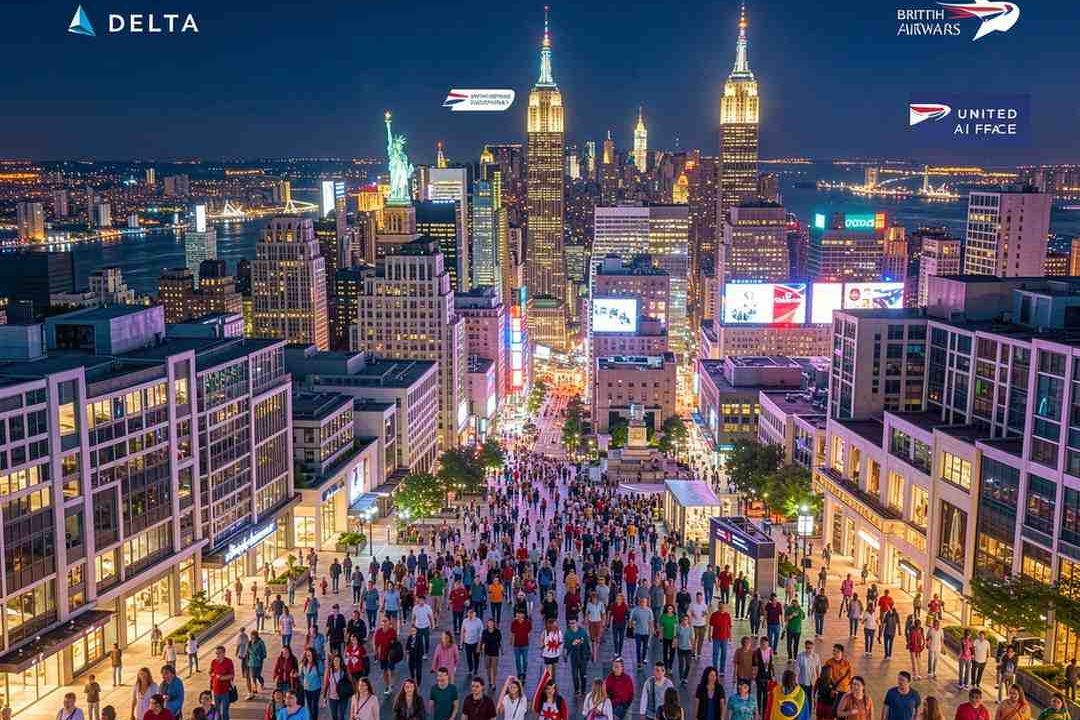
New York City is pulling in $285 million to transform itself into an even more compelling destination for international travelers — and the world is already responding. Visitors from the United Kingdom, Canada, France, Italy, Brazil, and India are arriving in growing numbers in 2026, drawn by a city actively investing in the experiences that make it worth the flight.
That investment isn’t abstract. It’s showing up in upgraded hotels, revitalized Broadway productions, and enhanced exhibits at some of the most recognized cultural institutions on earth. And the airlines are paying attention too — Delta, British Airways, United, and Air France have all moved to boost their flight capacity to meet rising demand.
For anyone planning a trip to New York, or tracking where global tourism is heading, this is a story worth following closely.
Why International Travelers Are Choosing New York City in 2026
New York has always been a magnet for global visitors, but the scale of the city’s current investment signals something more deliberate than usual. The $285 million tourism investment is being directed toward the infrastructure and cultural experiences that international travelers specifically seek out — hotels, performing arts, and world-class museums.
The countries driving the surge — the UK, Canada, France, Italy, Brazil, and India — represent a broad and geographically diverse mix. That kind of spread suggests New York isn’t just benefiting from one regional trend. It’s attracting visitors across multiple markets simultaneously, which points to a city that has positioned itself well across different traveler profiles and budgets.
Officials have noted that the combination of improved air connectivity and on-the-ground investment is creating a compounding effect: better flights mean more arrivals, and better experiences on the ground mean stronger word-of-mouth and repeat interest.
Airlines Expanding Routes to Meet the Surge in Demand
The flight capacity increases from major carriers are a direct response to rising booking numbers. When airlines add routes or increase frequency, it’s typically a signal that demand has already proven itself commercially — not just a speculative bet.
Here’s a look at the airlines confirmed to be boosting flights to New York City:
| Airline | Primary Markets Served | Action Taken |
|---|---|---|
| Delta | Multiple international markets | Boosting flight capacity to NYC |
| British Airways | United Kingdom | Increasing flights to meet UK traveler demand |
| United | Multiple international markets | Expanding service to NYC |
| Air France | France and broader European market | Adding capacity on transatlantic routes |
For travelers, more flights generally means more competitive pricing and greater scheduling flexibility. If you’ve been watching fares from London, Paris, or São Paulo to New York, the expanded competition among carriers is worth tracking over the coming months.
What the $285 Million Is Actually Changing on the Ground
The investment isn’t sitting in a planning document — it’s already reshaping the visitor experience across several key areas of the city.
- Hotels: Properties across the city are undergoing upgrades, improving the quality and range of accommodation available to international guests at various price points.
- Broadway: The city’s theater scene is seeing a revitalization, with new productions and renewed energy in one of New York’s most iconic cultural exports.
- MoMA (Museum of Modern Art): The museum is enhancing its exhibits, offering visitors a stronger and more immersive experience than before.
- The Met (Metropolitan Museum of Art): Similarly, The Met is investing in its collections and visitor experience, reinforcing its status as one of the world’s premier art destinations.
- Cultural hotspots across the city: Beyond the flagship institutions, the broader cultural fabric of New York — neighborhoods, venues, and public spaces — is benefiting from the investment push.
Taken together, these improvements are designed to give visitors more reasons to stay longer, spend more, and return. From a tourism economics standpoint, that’s a smarter approach than simply marketing the city as it already exists.
Who This Affects Most — and What It Means for Your Trip
If you’re traveling to New York from any of the six key markets — the UK, Canada, France, Italy, Brazil, or India — you’re arriving at a moment when the city is actively competing for your experience, not just your arrival.
Practically speaking, that means a few things worth keeping in mind:
- Hotel options are expanding and improving, so it’s worth comparing newer or recently renovated properties alongside established names.
- Broadway availability may be more competitive than in previous years given increased tourism — booking shows in advance is advisable.
- Museum visits to MoMA and The Met are likely to feel more dynamic, with enhanced exhibits making a visit more worthwhile than a simple check-the-box experience.
- Flight options from key international hubs are growing, which should give travelers more scheduling flexibility and potentially better fares as airlines compete.
For travelers who haven’t visited New York in several years, the city being actively upgraded is a genuine reason to reconsider timing a trip for 2026 specifically.
What to Watch as the Year Progresses
The momentum around New York’s tourism investment is still building. The $285 million commitment signals a multi-phase effort rather than a single event, meaning the improvements to hotels, cultural institutions, and visitor infrastructure will likely continue rolling out through the year.
Airlines will also continue adjusting capacity based on actual booking trends. If demand from the UK, India, Brazil, and continental Europe holds or grows, further route expansions from carriers beyond the four already named are a reasonable expectation — though none have been confirmed at this stage.
For travelers, the practical advice is straightforward: New York is investing heavily in the visitor experience right now, airlines are making it easier to get there from more places, and the cultural institutions that define the city are actively raising their game. That combination doesn’t come together all at once very often.
Frequently Asked Questions
How much is New York City investing in tourism in 2026?
New York City has committed $285 million to transform its tourism offering, with funds directed toward hotels, Broadway, and major cultural institutions.
Which countries are sending the most visitors to New York City right now?
According to the source reporting, travelers from the United Kingdom, Canada, France, Italy, Brazil, and India are among those flocking to New York City in 2026.
Which airlines are adding more flights to New York City?
Delta, British Airways, United, and Air France have all been confirmed as boosting their flight capacity to New York to meet rising international demand.
Which museums are being upgraded as part of the investment?
MoMA (Museum of Modern Art) and The Met (Metropolitan Museum of Art) are both enhancing their exhibits as part of the broader tourism investment push.
Is Broadway also benefiting from the investment?
Yes — Broadway is undergoing a revitalization as part of New York’s $285 million tourism investment, with new shows and renewed energy in the theater scene.
Will more airlines add routes to New York beyond those already announced?
This has not yet been confirmed. The four carriers named — Delta, British Airways, United, and Air France — are the ones confirmed to be expanding capacity at this stage.

Leave a Reply