
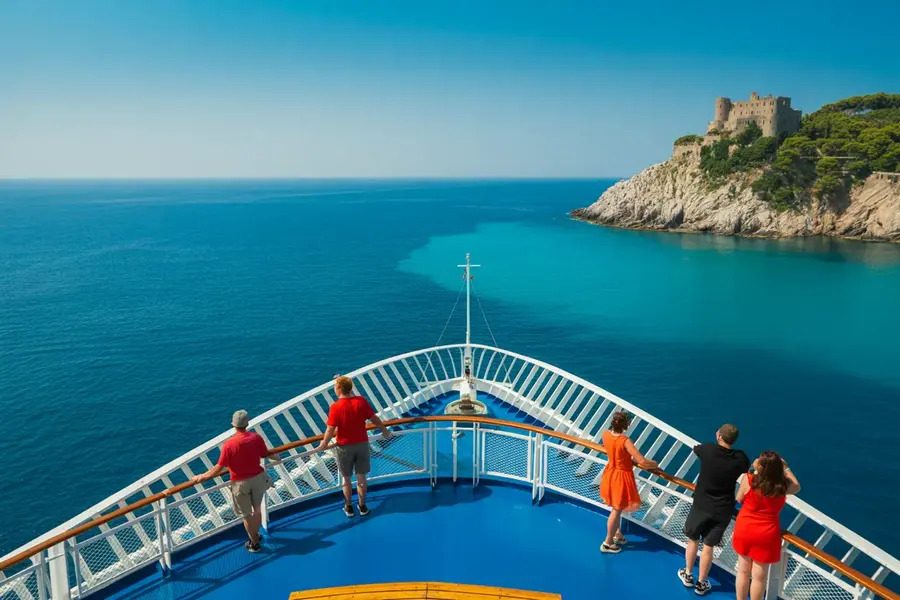
For the first time in 2025, Turkish tourists stepped off a ferry onto the shores of Samos — a moment that quietly marked one of the more meaningful shifts in Eastern Mediterranean travel in recent years. The seasonal ferry connection between Kusadasi, on Turkey’s Aegean coast, and Vathy, the capital of Samos, is now open, and with it comes a new chapter in cross-border tourism between two neighboring countries that have long shared a sea but not always an easy relationship.
The distance between Kusadasi and Samos is just a few nautical miles. Geographically, they are practically neighbors. But until this route opened for the 2025 season, that proximity rarely translated into direct, accessible travel for ordinary Turkish visitors heading to the Greek island. That has now changed.
For the island of Samos and the communities that depend on tourism, the arrival of Turkish travelers represents more than just new visitors. It represents a potential economic lifeline and a broadening of the island’s appeal beyond its traditional visitor base.
What the Kusadasi–Vathy Ferry Route Actually Means
The newly established seasonal ferry service connects Kusadasi — a major Turkish coastal resort town and cruise port — directly to Vathy, the main port and administrative center of Samos. This direct link removes the logistical barriers that previously made it difficult for Turkish tourists to visit the island without traveling through a third country or taking a much longer route.
The route is described as seasonal, meaning it operates during the warmer months when tourism demand across the Aegean peaks. For Samos, this timing is ideal. The island’s tourism industry is heavily concentrated in spring and summer, and the addition of a nearby, high-demand market like Turkey could meaningfully extend the season’s commercial impact.
Officials and tourism observers have noted that this kind of direct ferry connection does more than move passengers — it builds familiarity. When travelers can reach a destination easily and affordably, they tend to return. That repeat-visit dynamic is exactly what island economies need to sustain growth beyond a single strong season.
Why This Route Matters for Greece-Turkey Tourism Relations
Cross-border tourism between Greece and Turkey has always carried a certain symbolic weight, given the complex historical and political relationship between the two countries. Ferry routes along the Aegean have come and gone over the years, often reflecting the diplomatic temperature between Athens and Ankara as much as commercial demand.
The opening of the Kusadasi–Vathy route in 2025 has been described as a significant moment for both regions — one that fosters a new era of cross-border tourism and promises to strengthen ties at the community level, even when broader political relations remain complicated.
For Turkish travelers, Samos offers something genuinely different: Greek island culture, Byzantine and ancient history, local cuisine, and natural landscapes, all within a short ferry ride from a familiar coastal city. For Samos, Turkish tourists represent a large, nearby market that has historically been underserved by direct access.
| Route Detail | Information |
|---|---|
| Departure Point | Kusadasi, Turkey |
| Arrival Point | Vathy, Samos, Greece |
| Route Type | Seasonal ferry service |
| First Year of Operation | 2025 |
| Primary Benefit | Direct cross-border access for Turkish tourists |
| Economic Impact Target | Local hospitality, shops, and cultural sites on Samos |
Who Stands to Benefit on Samos
The economic ripple effect of a new tourism corridor like this tends to spread across multiple sectors quickly. On Samos, the businesses most directly positioned to benefit include hotels, guesthouses, tavernas, and restaurants in and around Vathy, given that the ferry docks there. But the impact is expected to reach further.
- Local hospitality businesses — hotels, pensions, and short-term rentals stand to see increased occupancy, particularly on weekdays and shoulder-season dates when European visitor numbers are lower.
- Retail and local shops — Turkish tourists, like most international visitors, spend money on local products, souvenirs, and everyday goods, supporting small businesses that depend on seasonal foot traffic.
- Cultural and heritage sites — Samos has significant archaeological and historical attractions. New visitors unfamiliar with the island’s cultural offerings are likely to engage with these sites, supporting publicly and privately managed heritage tourism.
- Food and beverage sector — Restaurants and cafes along the Vathy waterfront and throughout the island are well-placed to benefit from an influx of day-trippers and short-stay visitors arriving by ferry.
Supporters of the new route argue that even a modest increase in Turkish visitor numbers could have an outsized effect on a relatively small island economy, where every additional occupied room and every additional meal served contributes meaningfully to local livelihoods.
The Broader Picture for Aegean Cross-Border Travel
Samos is not the only Greek island close to the Turkish coast, but its proximity to Kusadasi — one of Turkey’s busiest and most visited coastal resort areas — makes this particular connection especially commercially promising. Kusadasi is already a well-established international destination, drawing visitors from across Europe and beyond. The ferry link essentially adds Samos to the itinerary options available to anyone already in that part of Turkey.
That positioning matters. It means the potential visitor pool for Samos is not limited to Turkish nationals alone. International tourists already based in Kusadasi or traveling through the region could also make use of the route, adding another layer of demand beyond the immediate cross-border market.
Advocates for Aegean tourism connectivity have long pointed to the underutilized potential of short sea crossings between Greek islands and the Turkish coast. The Kusadasi–Vathy route, if it proves commercially successful through the 2025 season, could encourage investment in similar connections elsewhere along the Aegean.
What Comes Next for the Route and the Island
The 2025 season will serve as the real test. How many Turkish tourists actually make the crossing, how long they stay, and how much they spend will determine whether the route expands, continues in its current form, or faces pressure to adjust schedules and capacity.
For now, the ferry is running, the first Turkish tourists have arrived, and Samos is open for business from a direction it has not welcomed visitors from before — at least not in this direct and structured way. Whether this becomes a lasting feature of Aegean travel or remains a promising experiment will depend on what happens over the coming months.
What is clear is that the appetite for this kind of connection exists on both sides of the water. And for a small Greek island looking to diversify its visitor base and strengthen its economy, that appetite is worth cultivating.
Frequently Asked Questions
What is the new ferry route connecting Turkey and Samos?
The new seasonal ferry service connects Kusadasi on Turkey’s Aegean coast to Vathy, the main port of Samos in Greece, allowing direct cross-border travel between the two destinations.
When did Turkish tourists first arrive in Samos via this route?
Turkish tourists arrived in Samos for the first time via this route in 2025, when the seasonal ferry service between Kusadasi and Vathy was established.
Is the ferry service available year-round?
No. The service is described as seasonal, operating during the warmer months when tourism demand in the Aegean region is at its peak.
How is the new route expected to affect Samos’s economy?
The route is expected to boost the island’s local economy by bringing more visitors to its hospitality sector, local shops, restaurants, and cultural sites, creating broader economic opportunities for residents.
Can international tourists already visiting Kusadasi use this ferry to reach Samos?
This has not been explicitly confirmed in the available reporting, but the nature of the route — connecting a major international resort hub to a Greek island — suggests it could serve travelers beyond Turkish nationals alone.
Has a route like this existed between Kusadasi and Samos before?



Leave a Reply