
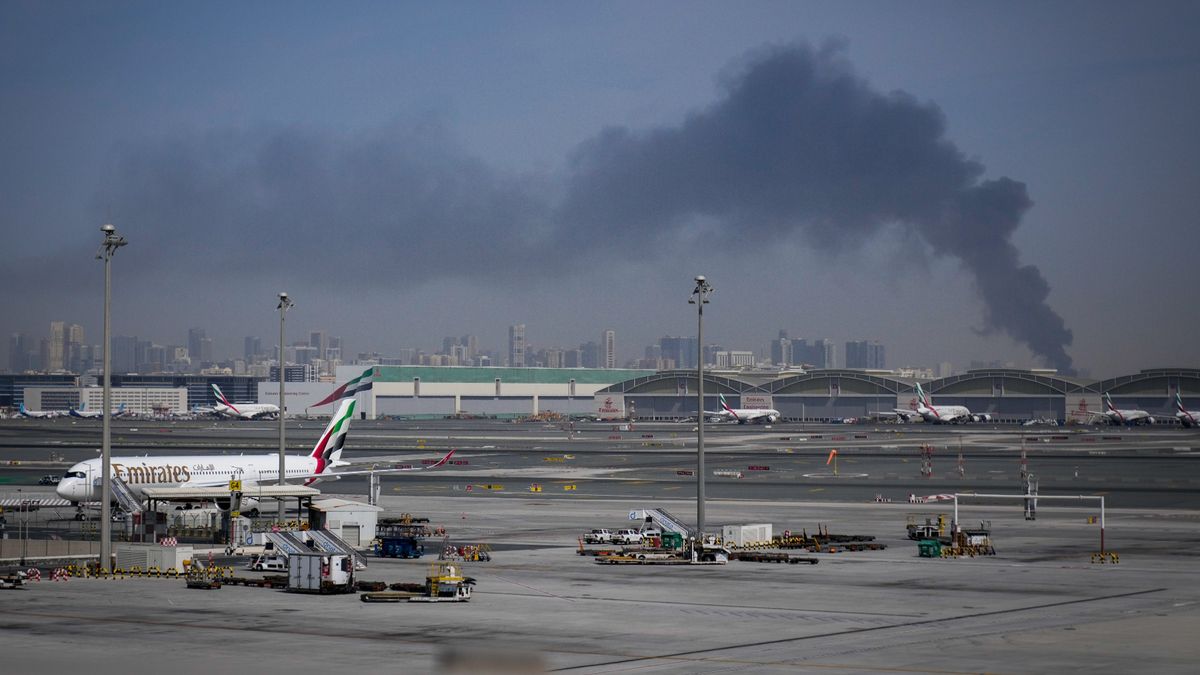
Thousands of travelers are stranded across the Middle East right now — caught mid-journey with cancelled flights, closed air corridors, and no clear timeline for when normal service will resume. What began as localized disruptions has escalated into a full-scale international emergency, prompting governments across Europe and North America to launch coordinated evacuation efforts for their citizens.
The United Kingdom has now joined the United States, Greece, France, Sweden, Spain, and several other nations in a growing multinational response. The affected region spans some of the world’s busiest transit hubs — the UAE, Saudi Arabia, and Qatar — meaning the ripple effects are being felt by passengers far beyond those who had any intention of visiting the Middle East at all.
For anyone with upcoming travel plans through the region, or with family members currently there, the situation is developing rapidly and warrants close attention.
What Is Happening Across the UAE, Saudi Arabia, and Qatar
The crisis centers on a sharp increase in conflict-driven flight disruptions across major Middle Eastern aviation hubs. Airports in the UAE, Saudi Arabia, and Qatar — three of the most heavily trafficked transit points on the planet — have been affected by cancellations, significant rerouting, and growing instability in airspace operations.
The result is a large and growing number of stranded tourists and transit passengers who find themselves stuck mid-journey. Many of these travelers were not even traveling to the Middle East as a destination — they were passing through on connecting flights to Asia, Africa, or elsewhere when the disruptions hit.
That distinction matters. It means the affected population is far broader than regional tourists alone. Anyone whose itinerary touched a Middle Eastern hub is potentially caught up in this.
Which Countries Have Joined the Middle East Evacuation Response
The scale of the multinational response reflects just how many foreign nationals are affected. Governments that have mobilized evacuation efforts or issued urgent travel guidance include:
- United Kingdom
- United States
- Greece
- France
- Sweden
- Spain
These nations, along with others described as part of the broader coalition, have been forced into action by the sheer number of their citizens caught in the disruption. The UK’s involvement is particularly notable given the high volume of British travelers who use Gulf hub airports as transit points on long-haul routes.
| Country Involved | Role in Response | Key Affected Destinations |
|---|---|---|
| United Kingdom | Joined evacuation drive | UAE, Saudi Arabia, Qatar |
| United States | Part of multinational response | UAE, Saudi Arabia, Qatar |
| France | Part of multinational response | UAE, Saudi Arabia, Qatar |
| Greece | Part of multinational response | UAE, Saudi Arabia, Qatar |
| Sweden | Part of multinational response | UAE, Saudi Arabia, Qatar |
| Spain | Part of multinational response | UAE, Saudi Arabia, Qatar |
Why This Crisis Is Bigger Than It First Appears
Dubai, Abu Dhabi, Doha, and Riyadh are not just regional destinations — they are the connective tissue of global long-haul aviation. Emirates, Etihad, and Qatar Airways together operate hundreds of daily routes that link Europe, the Americas, Africa, and Asia. When those hubs experience serious disruption, the knock-on effects spread across virtually every major travel corridor on earth.
That’s what makes this situation different from a typical regional travel advisory. Travelers who never planned to set foot in the Gulf can still find themselves stranded there, simply because their airline routed them through one of these hubs.
Officials have noted that the combination of flight cancellations, rerouting, and broader airport instability has created a compounding problem — each disruption adds to the backlog, making it harder for airlines and governments to move people out efficiently.
Who Is Most Affected and What It Means Practically
The people caught in the middle of this crisis fall into several broad categories:
- Tourists visiting the UAE, Saudi Arabia, or Qatar who cannot depart as planned
- Transit passengers using Gulf hubs as layover points on longer journeys
- Business travelers whose return routes have been cancelled or significantly altered
- Families separated across different legs of disrupted itineraries
For those currently stranded, the practical consequences include extended hotel stays, missed onward connections, significant additional costs, and — in some cases — uncertainty about when a viable route home will become available at all.
Governments involved in the evacuation push have been urging their citizens in the region to register with local embassies or consulates and to monitor official travel advisories closely. Anyone with travel booked through the region in the coming days should check with their airline and their government’s foreign travel guidance before departing.
What Travelers Should Watch for Next
The situation remains fluid. The involvement of multiple governments signals that this is not expected to resolve quickly on its own — if it were, emergency evacuation coordination across six or more countries would not have been triggered.
Travelers should prioritize the following steps if they are affected or have upcoming travel through the region:
- Check your government’s official foreign travel advisory page for real-time updates
- Contact your airline directly about rebooking or refund options
- Register with your nearest embassy or consulate if you are currently in the affected area
- Avoid non-essential travel through UAE, Saudi Arabia, and Qatar until further notice
- Check travel insurance policies for coverage related to conflict-driven disruptions
Advocates for stranded travelers argue that airlines and travel insurers must act quickly to process refunds and alternative routing without the usual bureaucratic delays — given that this is an extraordinary situation driven by factors entirely outside passengers’ control.
The coming days will determine whether the evacuation efforts are sufficient to clear the backlog of stranded travelers, or whether the disruption deepens further across the region’s aviation network.
Frequently Asked Questions
Which countries are involved in the Middle East evacuation effort?
The United Kingdom, United States, Greece, France, Sweden, and Spain have all been identified as part of the multinational evacuation response.
Which Middle Eastern countries are affected by the flight disruptions?
The UAE, Saudi Arabia, and Qatar are the primary affected destinations, according to available reporting.
Why are transit passengers stranded if they weren’t traveling to the Middle East?
Major Gulf airports serve as global transit hubs, meaning many passengers passing through on connecting flights have been caught up in the disruptions even if the region was not their intended destination.
What is causing the flight cancellations and disruptions?
The disruptions are described as conflict-driven, resulting in flight cancellations, rerouting, and increasing airport instability across the region.
What should I do if I am currently stranded in the UAE, Saudi Arabia, or Qatar?
Officials have advised registering with your nearest embassy or consulate and monitoring your government’s official travel advisory for guidance on evacuation assistance.
Is it safe to book travel through Gulf hub airports right now?
Given the ongoing disruptions and active multinational evacuation effort, travelers are advised to check official government travel advisories before booking or departing on any itinerary routing through the affected region.



Leave a Reply