
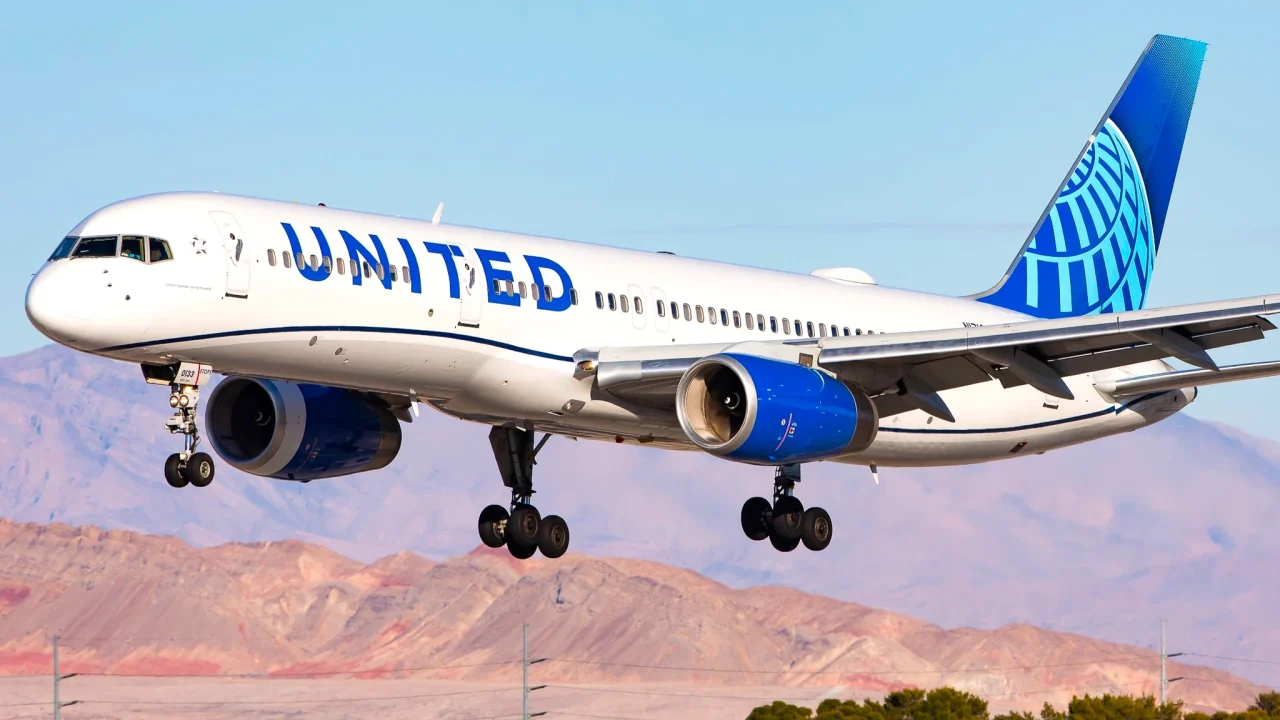
A United Airlines Boeing 757-200 landed safely at Newark Liberty International Airport after its left engine failed during the final approach — a high-stakes moment that put the flight crew, air traffic controllers, and emergency responders to the test all at once.
The flight in question was United Airlines flight UA2011, arriving from San Francisco International Airport. What was scheduled as a routine transcontinental arrival turned into an emergency when the aircraft’s left engine failed just before the crew began their final approach into Newark. Within moments, a coordinated response was already in motion.
Everyone on board landed safely. That outcome, while the only acceptable one, was not guaranteed — and the way it was achieved is worth understanding.
What Happened Aboard United Airlines Flight UA2011
The Boeing 757-200 is a twin-engine, narrow-body aircraft that has been a workhorse of commercial aviation for decades. When one of those two engines fails at a critical stage of flight — particularly during approach — the crew is left with significantly reduced thrust, altered aircraft handling, and a compressed window of time to make decisions.
According to the available details, the left engine on UA2011 failed just before the final approach phase. The flight crew responded by declaring an emergency, which immediately activates a chain of responses on the ground: air traffic control clears the airspace, emergency services are placed on standby, and the airport shifts resources toward the affected runway.
Crucially, the crew made the decision to continue with the landing rather than attempt a go-around. A go-around — essentially aborting the landing and circling back for another attempt — is sometimes the safer option, but it also demands significant thrust from the engines. With one engine already shut down, the crew assessed the risks and determined that continuing to land was the better call.
That judgment proved correct. The aircraft touched down safely at Newark Liberty International Airport, and no injuries have been reported.
The Decisions That Made the Difference
Aviation safety rarely comes down to a single moment. It’s usually a series of well-executed decisions, each one building on the last. The UA2011 incident reflects exactly that.
The flight crew’s quick declaration of an emergency ensured that ground teams were ready before the aircraft even touched down. Air traffic control coordinated the approach, clearing the path and maintaining communication with the crew throughout. Emergency services were positioned and prepared at the airport.
The decision to land rather than go around was described as being based on thorough risk assessments and a careful analysis of the situation. While
Officials have noted that the coordination demonstrated across multiple teams — the cockpit crew, air traffic control, and on-ground emergency services — represents the kind of layered response that aviation safety systems are designed to produce.
Key Facts About the Incident
| Detail | Information |
|---|---|
| Flight Number | United Airlines UA2011 |
| Aircraft Type | Boeing 757-200 |
| Departure Airport | San Francisco International Airport (SFO) |
| Arrival Airport | Newark Liberty International Airport (EWR) |
| Engine Failure Location | Left engine, during final approach |
| Emergency Declared | Yes |
| Landing Decision | Crew chose to continue landing rather than go around |
| Outcome | Safe landing, no injuries reported |
Why This Matters Beyond One Flight
For the passengers aboard UA2011, this was an intensely personal experience. For the aviation industry and the traveling public, it’s a reminder of how much preparation goes into every commercial flight — and how that preparation pays off when something goes wrong.
The Boeing 757-200 is certified to fly and land on a single engine. That certification exists precisely because engine failures, while rare, are not impossible. The aircraft is designed to handle it. The crews are trained for it. The air traffic control system is built to respond to it. What happened at Newark was not luck — it was the system working as intended.
For travelers who regularly fly between the coasts, incidents like this can feel unsettling. But the data consistently shows that commercial aviation remains extraordinarily safe, in large part because of the multi-layered response protocols that UA2011’s crew and controllers demonstrated.
Observers have noted that the crew’s choice to land rather than attempt a go-around with a failed engine reflects the kind of real-time judgment that flight training is specifically designed to build. It’s a decision made under pressure, with incomplete information, in a matter of seconds — and it worked.
What Comes Next After an Incident Like This
When a commercial aircraft declares an emergency and lands with an engine failure, the post-incident process is thorough and mandatory. The aircraft will be taken out of service for a full mechanical inspection. Aviation authorities will review the incident, including cockpit voice recorder and flight data recorder information, to understand exactly what happened to the left engine and when.
Those details are typically released after a formal investigation is completed.
What is confirmed is that the aircraft landed safely, all emergency protocols were followed correctly, and the response from every team involved — from the cockpit to the tarmac — functioned as it should. The investigation will determine the root cause of the failure and whether any systemic changes are needed.
For now, the story of UA2011 is one of a serious situation handled with skill, discipline, and coordination — exactly what passengers expect, and exactly what the system delivered.
Frequently Asked Questions
What flight was involved in this engine failure incident?
The flight was United Airlines UA2011, operated by a Boeing 757-200, traveling from San Francisco International Airport to Newark Liberty International Airport.
Was anyone hurt during the emergency landing?
No injuries have been reported. The aircraft landed safely at Newark Liberty International Airport.
Why did the crew choose to land instead of performing a go-around?
The crew assessed the situation and determined that continuing to land was safer than attempting a go-around with the left engine shut down, based on thorough risk assessment of the circumstances.
Can a Boeing 757-200 land safely with only one engine?
Yes. The Boeing 757-200, like all commercial twin-engine aircraft, is certified and designed to operate and land on a single engine in emergency situations.
What happens to the aircraft and crew after an incident like this?
The aircraft is typically removed from service for inspection, and aviation authorities will review the incident using flight data to determine the cause of the engine failure.
Which airport did the emergency landing take place at?
The aircraft landed at Newark Liberty International Airport (EWR) in New Jersey.



Leave a Reply