
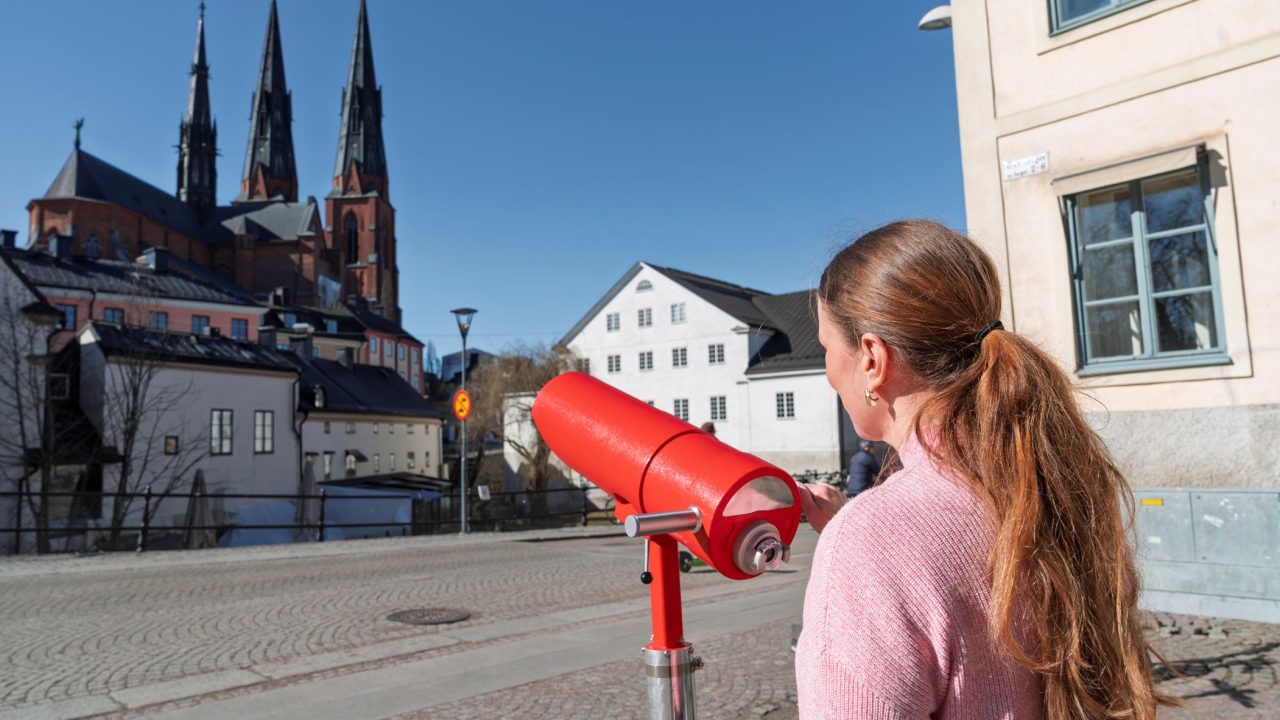
Uppsala has just made history — and it’s doing so not with a new museum wing or a flashy tourist attraction, but with an entirely new philosophy of travel. The Swedish city has launched what it calls IQ Tourism, positioning itself as the first destination in the world to formally introduce this transformative approach to exploring a place.
The concept is a direct challenge to the way most people travel. Instead of rushing between landmarks with a checklist in hand, IQ Tourism invites visitors to slow down, engage with ideas, and leave with something more than photographs. It’s a bold statement from a city that has long been associated with intellectual life, and it signals a growing shift in what travelers are actually looking for.
For anyone who has ever felt vaguely hollow after “doing” a city in two days — ticking off the cathedral, the old town, the obligatory café — Uppsala’s new initiative speaks directly to that feeling. There may be a better way to travel, and one ancient university city thinks it has found it.
What IQ Tourism Actually Means
At its core, IQ Tourism is about replacing passive sightseeing with active intellectual and cultural engagement. The initiative encourages visitors to connect with Uppsala’s heritage, stories, and innovations in ways that prompt genuine reflection rather than surface-level observation.
The philosophy deliberately moves away from what organizers describe as the “checklist mentality” — the familiar pattern where tourists rush through popular spots, snap a photo, and move on without absorbing anything meaningful. Instead, IQ Tourism frames the city as a place where travel becomes a form of personal growth.
Uppsala is well-suited for this kind of positioning. The city is home to Scandinavia’s oldest university, founded in 1477, and has historically been a center of scientific and philosophical thought. That intellectual identity now forms the backbone of a tourism strategy that wants visitors to engage with the city’s ideas, not just its architecture.
Supporters of the concept argue that this kind of travel is more rewarding for visitors and more sustainable for the destination itself. When people come to genuinely learn and explore rather than simply consume, they tend to stay longer, spend more thoughtfully, and carry a deeper connection to the place they visited.
The Key Principles Behind Uppsala’s IQ Tourism
The initiative rests on several defining characteristics that separate it from conventional tourism offerings. Here’s what sets IQ Tourism apart:
- Curiosity-driven experiences replace standard guided tours, encouraging visitors to ask questions and seek understanding rather than just observe
- Intellectual and cultural heritage forms the foundation of every experience, drawing on Uppsala’s deep history as a center of learning
- Reflection and personal growth are treated as genuine travel outcomes, not just marketing language
- Meaningful engagement over speed — the model explicitly rejects the rush-through approach common to mass tourism
- Storytelling and innovation are woven into how the city presents itself, connecting historical significance to contemporary ideas
| Traditional Tourism Model | Uppsala’s IQ Tourism Model |
|---|---|
| Checklist of landmarks to visit | Curiosity-driven exploration with no fixed checklist |
| Passive observation of sites | Active engagement with ideas, stories, and culture |
| Focus on volume — see as much as possible | Focus on depth — understand what you encounter |
| Travel as consumption | Travel as personal growth and reflection |
| Generic visitor experience | Experiences rooted in Uppsala’s specific intellectual heritage |
Why This Matters for How We All Travel
Uppsala’s move arrives at a moment when many travelers are quietly questioning whether conventional tourism is actually satisfying. Social media has made it possible to “experience” any landmark from a screen, which has paradoxically made the physical act of standing in front of it feel less meaningful — unless something deeper is on offer.
IQ Tourism tries to answer that problem directly. By centering the visitor’s intellectual curiosity rather than the destination’s visual appeal, it shifts the value proposition of travel entirely. You’re not coming to Uppsala to see Uppsala. You’re coming to think, to learn, and to engage with centuries of ideas still alive in the city’s streets and institutions.
This approach also has practical implications for how destinations compete globally. Cities that offer only their physical beauty or historical monuments face increasing pressure as travelers grow more discerning. A destination that can offer genuine intellectual and cultural depth — and frame it clearly — has a meaningful advantage.
For individual travelers, IQ Tourism offers permission to slow down. It validates the instinct to linger in a library, to have a long conversation with a local expert, or to spend an afternoon exploring a single idea rather than covering ground. That reframing alone could change how millions of people plan their trips.
- Visitors move quickly between landmarks, prioritizing coverage over understanding or connection.
- The experience ends when the trip ends, leaving little lasting intellectual or cultural impact.
- Destinations compete primarily on visual appeal, historical monuments, and physical attractions.
- Visitors engage slowly and deliberately with ideas, stories, and the city's intellectual heritage.
- The experience is designed to spark ongoing reflection and personal growth beyond the visit itself.
- Uppsala competes on depth of engagement, positioning curiosity and learning as the core travel value.
What Comes Next for Uppsala and IQ Tourism
Uppsala has claimed the distinction of being the first destination anywhere in the world to formally launch this kind of model. Whether other cities follow will depend largely on how the concept performs in practice — and how clearly its results can be measured and communicated to the broader travel industry.
The initiative is still in its early stages, and specific programs, partnerships, or scheduled experiences under the IQ Tourism banner have not yet been fully detailed publicly. What is clear is that Uppsala intends this to be a lasting repositioning of its identity as a travel destination, not a short-term campaign.
Observers in the travel sector will be watching closely. If Uppsala can demonstrate that intellectual tourism drives meaningful visitor engagement and economic benefit, the model could influence how cities worldwide think about attracting travelers in the years ahead. The idea that a city’s greatest asset might be its ideas — rather than its skyline — is one worth taking seriously.
Frequently Asked Questions
What is IQ Tourism?
IQ Tourism is a travel concept launched by Uppsala, Sweden, that replaces conventional sightseeing with curiosity-driven experiences designed to spark reflection, learning, and personal growth in visitors.
Is Uppsala the first city in the world to introduce IQ Tourism?
Yes, according to the initiative’s launch, Uppsala is positioned as the first destination in the world to formally introduce this transformative approach to travel.
What makes IQ Tourism different from regular tourism?
It deliberately moves away from the “checklist mentality” of rushing through landmarks, instead inviting travelers to engage deeply with a city’s intellectual heritage, stories, and culture.
Why is Uppsala specifically suited for this kind of tourism?
Uppsala has a long history as a center of intellectual and academic life, making its cultural and scholarly heritage a natural foundation for experiences built around curiosity and learning.
Are specific IQ Tourism experiences or programs already available to book?
Detailed programs and bookable experiences under the IQ Tourism initiative have not yet been fully confirmed publicly — further details are expected as the concept develops.
Could other cities adopt the IQ Tourism model?
This has not yet been confirmed, but Uppsala’s launch as the world’s first IQ Tourism destination suggests the concept could influence how other cities position their travel offerings if the model proves successful.




Leave a Reply