
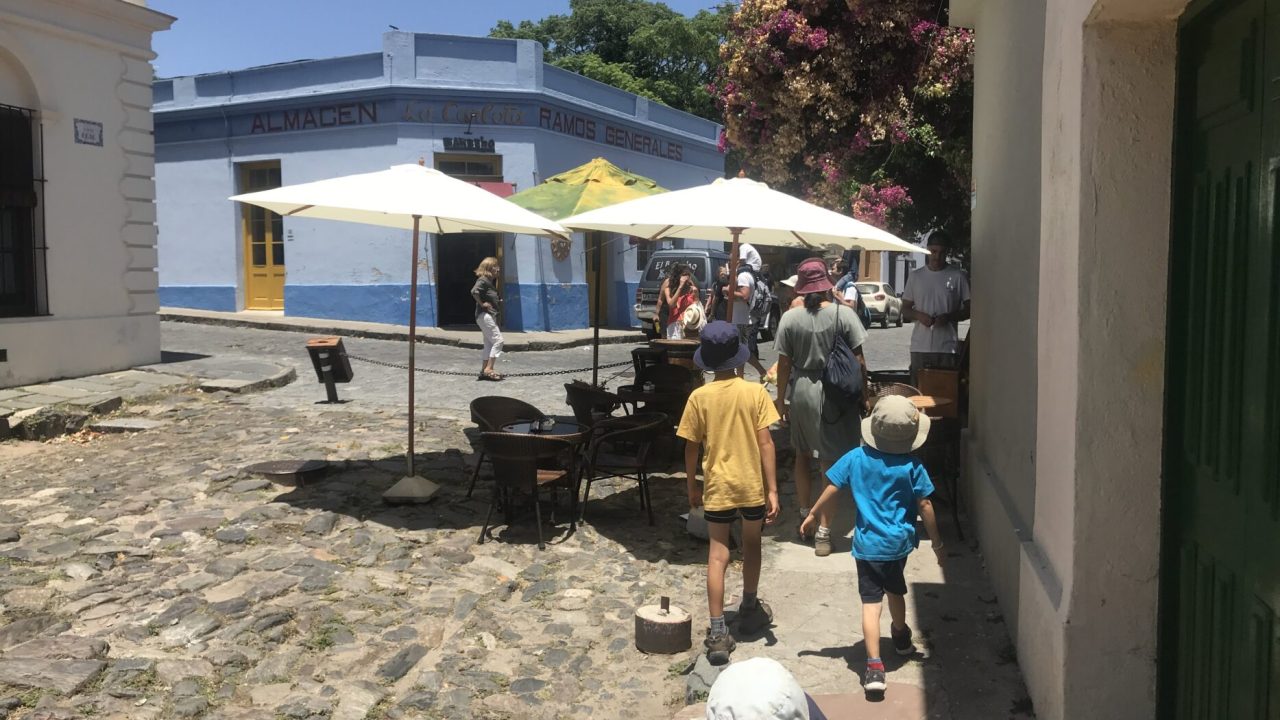
What if the most exciting luxury travel destination in South America wasn’t the one everyone was already talking about? Uruguay is quietly making a case that smaller, smarter, and greener is the new definition of premium travel — and in 2026, that bet appears to be paying off.
The Oriental Republic of Uruguay has entered what officials describe as the full implementation phase of its national sustainable high-value tourism strategy. According to reporting citing Uruguay’s Ministry of Tourism and Uruguay XXI, the country has made a deliberate break from the volume-driven tourism models common across neighboring South American nations. The goal isn’t to fill airports and resorts — it’s to attract a specific kind of traveler willing to pay more, stay longer, and leave a lighter footprint.
It’s a counterintuitive approach in an industry that usually measures success in raw visitor numbers. But Uruguay appears to be rewriting that playbook entirely.
Why Uruguay Is Choosing Quality Over Quantity
The economic logic behind Uruguay’s strategy is rooted in a simple but powerful idea: fewer visitors who spend more money can generate greater national benefit than mass tourism ever could — without the environmental and cultural costs that come with overcrowding.
Officials have noted that rather than chasing a 4-million-visitor benchmark, Uruguay is focused on cultivating a niche market. The target audience is described as travelers who prioritize ecological integrity and cultural depth over generic resort experiences. Think less all-inclusive beachfront sprawl, more immersive, conservation-minded stays in protected natural landscapes.
This dual commitment to exclusivity and sustainability is being positioned as the country’s defining competitive advantage — a way to remain a sanctuary for both high-net-worth individuals and environmentally conscious globetrotters at the same time.
For a small nation of roughly 3.5 million people sandwiched between Brazil and Argentina, that positioning is not just a tourism strategy. It’s a national identity statement.
What Uruguay’s Eco-Tourism Strategy Actually Looks Like
The strategy, as reported through Uruguay XXI and the Ministry of Tourism, centers on a clear set of priorities that separate it from conventional tourism development models. Rather than building out mass infrastructure, the focus is on protecting ecological integrity while offering high-end access to it.
- Ecological integrity as a selling point: Natural environments are being preserved and marketed as premium experiences, not exploited for volume traffic.
- Cultural depth over generic experiences: Travelers are being drawn to authentic local culture rather than internationally standardized resort offerings.
- High-net-worth traveler targeting: The strategy explicitly prioritizes visitors who bring higher per-capita spending, reducing the need for sheer numbers.
- Sustainability as infrastructure: Environmental protection isn’t framed as a constraint on tourism — it’s framed as the product itself.
- Departure from volume-driven models: Uruguay is consciously distancing itself from the approach taken by larger regional neighbors.
| Tourism Model | Uruguay’s 2026 Approach | Traditional Regional Approach |
|---|---|---|
| Primary Goal | High-value, low-volume travelers | Maximum visitor numbers |
| Target Traveler | Eco-conscious, high-net-worth individuals | Mass market, budget to mid-range |
| Core Experience | Ecological and cultural immersion | Generic resort and beach tourism |
| Environmental Priority | Central to the product offering | Secondary to capacity growth |
| Implementation Phase | Full implementation as of early 2026 | Ongoing volume-based expansion |
Who This Strategy Is Really For — and Why It Matters to Travelers
If you’re the kind of traveler who has grown tired of overcrowded hotspots, homogenized luxury hotel chains, and destinations that feel like they were designed for an Instagram feed rather than a real experience, Uruguay’s pivot speaks directly to you.
The country is signaling that it wants visitors who come with intention. Travelers who are drawn to wildlife, open landscapes, local food culture, and authentic human connection — and who are willing to spend accordingly. This is eco-tourism at its upper end, where sustainability and luxury aren’t in tension but are actively reinforcing each other.
For high-end travelers, this also means something practical: less crowding, more personalized experiences, and destinations that haven’t yet been worn smooth by mass tourism. Uruguay’s relatively low international profile compared to Brazil or Argentina is, in this context, a genuine feature rather than a flaw.
Advocates of this model argue that sustainable luxury travel done right creates a virtuous cycle — conservation funding flows from premium tourism revenue, which protects the very landscapes that make the destination worth visiting in the first place.
The Bigger Shift This Reflects in Global Travel
Uruguay’s strategy doesn’t exist in a vacuum. It reflects a growing global conversation about what responsible tourism actually means in practice — not just carbon offsets and reusable water bottles, but fundamentally rethinking who travels, how much they spend, and what they leave behind.
A number of destinations worldwide have begun experimenting with visitor caps, premium pricing, and deliberate niche positioning. What makes Uruguay’s approach notable is that it appears to be a coordinated national strategy backed by government economic planning bodies, rather than a piecemeal response to overtourism pressure.
The Ministry of Tourism and Uruguay XXI are both described as central to this effort, suggesting institutional alignment at a level that many destinations struggle to achieve. When tourism policy, economic development strategy, and environmental priorities move in the same direction at the same time, the results tend to be more durable than marketing campaigns alone.
Whether Uruguay can maintain that alignment as international interest grows — and resist the temptation to scale up in ways that undermine the very exclusivity it’s selling — will be the real test of this strategy over the next several years.
What Comes Next for Uruguay’s Tourism Ambitions
As of early 2026, the strategy is described as having reached its full implementation phase, meaning the foundational policy and infrastructure decisions are largely in place. The focus now shifts to execution, international positioning, and attracting the right traveler profiles to validate the economic model.
Officials have indicated the country is not chasing headline visitor numbers as a benchmark of success. Instead, the metrics that matter are tied to the quality and spending profile of arrivals, and to the long-term preservation of the ecological and cultural assets that underpin the entire offering.
For travelers considering South America in 2026 and beyond, Uruguay has quietly positioned itself as one of the most thoughtfully designed luxury eco-tourism destinations on the continent — and it’s doing so with a deliberateness that’s hard to ignore.
Frequently Asked Questions
What is Uruguay’s tourism strategy for 2026?
Uruguay has entered the full implementation phase of a national sustainable high-value tourism strategy, prioritizing ecological integrity and cultural depth over mass visitor numbers, according to the Ministry of Tourism and Uruguay XXI.
Who is Uruguay targeting as its ideal traveler?
The strategy is designed to attract high-net-worth individuals and environmentally conscious travelers who prioritize authentic ecological and cultural experiences over generic resort stays.
Is Uruguay trying to increase its total number of tourists?
No — officials have indicated the country is deliberately not chasing a 4-million-visitor target, instead focusing on fewer travelers who spend more and align with the country’s sustainability values.
Which government bodies are behind this strategy?
Uruguay’s Ministry of Tourism and Uruguay XXI are both cited as central to developing and implementing the national sustainable high-value tourism approach.
How does Uruguay’s approach differ from other South American countries?
Uruguay has made a deliberate departure from the volume-driven tourism models common in neighboring South American nations, positioning sustainability and exclusivity as its core competitive advantages.
Is this strategy new in 2026 or has it been building for some time?
The source describes early 2026 as the full implementation phase, suggesting the strategy has been in development for some time and has now reached the stage of active, coordinated execution.


Leave a Reply