
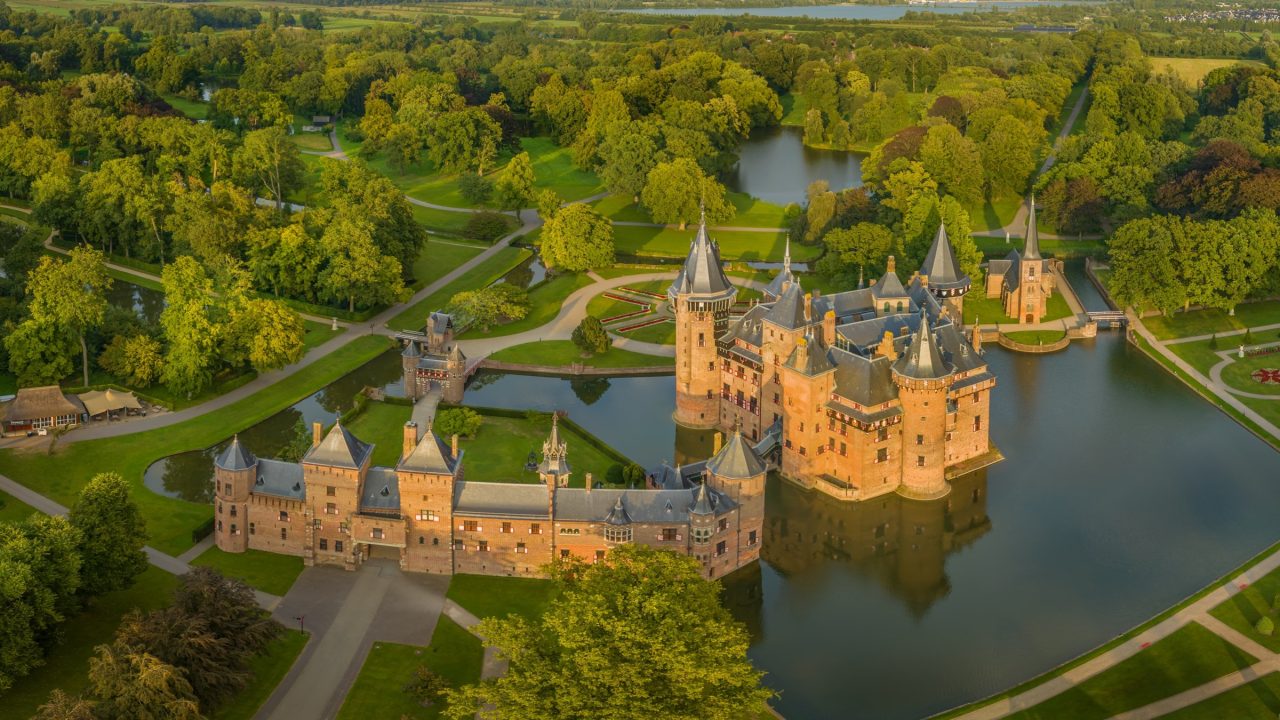
▶ Read transcript
Here’s what you need to know about Utrecht, the Dutch city that might actually be better than Amsterdam.
Just thirty minutes by train from Amsterdam, Utrecht is quieter, cheaper, and arguably more authentically Dutch. It’s been the religious center of the Netherlands since the eighth century, and the Union of Utrecht was signed here in 1579, helping establish the Dutch Republic itself. That’s serious history, without the selfie crowds.
The city’s most unique feature is its two-level canal system. You can sit in a medieval cellar café right at water level, watching boats pass at eye height while the rest of the city moves above you. Nothing else in Europe quite matches it.
Utrecht is also more affordable than Amsterdam for both food and accommodation, making it a smarter base for exploring the Netherlands overall.
If you’re planning a Dutch trip, book a train to Utrecht for at least one full day and build your itinerary around the canal-level werfkelders.
Have you ever arrived somewhere famous, looked around at the crowds, and quietly wondered whether the real version of that country was hiding somewhere else entirely?
That feeling has a specific answer when it comes to the Netherlands. The answer is Utrecht.
Just thirty minutes by train from Amsterdam, Utrecht operates at a different pace and a different emotional frequency. Its canals are older, its streets are quieter, and its university population keeps the whole city humming with the kind of energy that doesn’t need to perform for tourists. Every corner tells a story, from the High Middle Ages to last Tuesday’s art opening.
This countdown ranks the five experiences that define Utrecht, building toward the one that will genuinely change how you think about Dutch cities. Whether you have a weekend or a single afternoon, this order matters.
Why Utrecht Has Been Overlooked for So Long
Utrecht’s relative obscurity isn’t an accident. Amsterdam absorbs international attention the way a black hole absorbs light. It has the Rijksmuseum, the Anne Frank House, and decades of marketing momentum behind it.
Utrecht, by contrast, has been content to exist. It has been the religious center of the Netherlands since the eighth century. In 1579, the Union of Utrecht was signed here, laying the legal and philosophical foundations for the Dutch Republic. That’s a city with serious historical weight, quietly going about its business while Amsterdam collects the selfies.
The result is a place that rewards travelers who show up curious rather than camera-ready. Here are the five experiences that make Utrecht worth the detour, ranked from excellent to unmissable.
| Experience | Best For | Time Needed | Cost Level |
|---|---|---|---|
| Oudegracht Canal Walk | First-time visitors | 2–3 hours | Free |
| Museum Speelklok | Families, music lovers | 1.5–2 hours | Low |
| Rietveld Schröder House | Design and architecture fans | 1.5 hours | Low–Medium |
| Café Culture and Werfkelders | Solo travelers, couples | Half day | Low–Medium |
| Dom Tower Climb | Everyone | 1 hour | Low |
Number 5: Museum Speelklok and the Sound of Mechanical Wonder
Most cities have a quirky museum tucked somewhere off the main drag. Utrecht’s version is genuinely extraordinary.
Museum Speelklok is dedicated entirely to self-playing musical instruments, from delicate eighteenth-century music boxes to enormous fairground organs that could rattle windows three streets away. The collection is housed in a medieval church, which adds an almost surreal layer of acoustic drama to every demonstration.
The guided tours run throughout the day, and the guides actually play the instruments for you. Hearing a mechanical orchestra built in 1890 fill a Gothic nave is the kind of sensory experience that travel writing usually overpromises. This one delivers.
For families traveling with children, this is a rare museum where the kids will pull the adults forward rather than the other way around. The combination of sound, scale, and mechanical spectacle holds attention across every age group.
Number 4: The Rietveld Schröder House and Dutch Design Genius
In 1924, a furniture designer named Gerrit Rietveld built a small house on the edge of Utrecht that would eventually be recognized as one of the most important buildings of the twentieth century.
The Rietveld Schröder House is now a UNESCO World Heritage Site. Its radical design, all primary colors, movable partitions, and deliberate rejection of traditional room boundaries, was a physical manifesto for De Stijl, the Dutch art movement that influenced everything from Mondrian’s paintings to modern graphic design.
Visits are by guided tour only, which keeps the experience intimate and prevents the space from feeling like a museum. You move through rooms that were actually lived in, understanding how a building can be both a philosophical argument and a home.
“Utrecht’s ancient city centre features many buildings and structures, several dating as far back as the High Middle Ages. It has been the religious centre of the Netherlands since the 8th century.”
— People Also Ask, Utrecht historical context
The house sits at the edge of the city, a short bike ride from the center. That journey through Utrecht’s residential neighborhoods is itself a pleasure, giving you a sense of how the city actually lives rather than how it performs for visitors.
Number 3: The Werfkelders and Utrecht’s Unique Canal-Level Life
Amsterdam has canals. So does Venice. So does half of northern Europe. What Utrecht has that almost no other city can claim is a two-level canal system, and the lower level changes everything.
The werfkelders are the vaulted cellars that line the Oudegracht canal at water level. Originally built in the medieval period for storing goods unloaded directly from boats, they were repurposed over centuries into cafés, restaurants, and studios. Today, sitting at a canal-level terrace in Utrecht means you are below street level, looking up at bridges, watching boats pass at eye height, and eating Dutch cheese while the city flows above you.
This is the experience that separates Utrecht from every other canal city in the world. It’s not just scenic; it’s architecturally unique. No other city in the Netherlands, and arguably in Europe, offers this specific relationship between pedestrian life and waterway.
The café culture here reflects Utrecht’s dual identity as a historic city and a university town. Students, professors, tourists, and locals share the same canal-side benches. The conversation at the next table might be about medieval theology or next week’s thesis defense. Both feel equally at home.
Number 2: Oudegracht Canal and the Medieval Heart of the City
The Oudegracht, which translates simply as Old Canal, is the spine of Utrecht’s historic center. It was dug in the twelfth century, redirecting the Rhine to bring trade through the city’s heart. For over 800 years, it has been the organizing principle around which Utrecht arranges itself.
Walking its length takes roughly two hours if you stop to look at things, which you will. The canal is lined with medieval townhouses, Romanesque churches, and bridges that have been photographed from every conceivable angle without losing their power to stop you mid-stride.
Kayak tours are available and genuinely recommended. Seeing the city from water level, paddling under stone bridges that were old when the Dutch Republic was young, reframes the entire urban landscape. The perspective from a kayak reveals architectural details invisible from the street, corbels, water gates, and medieval stonework that centuries of foot traffic have trained people to overlook.
The canal also anchors Utrecht’s seasonal rhythms. In summer, the werfkelders spill onto floating terraces. In winter, the stone walls and bare trees create a spare, Nordic beauty that feels nothing like the postcard version of the Netherlands and everything like the real one.
The Number One Experience: Climbing Dom Tower and Understanding Utrecht’s Entire History in 112 Meters
Dom Tower is the tallest church tower in the Netherlands, standing at 112 meters. It has dominated Utrecht’s skyline since 1382, when construction was finally completed after more than a century of work. It is not simply the most recognizable landmark in the city. It is the reason Utrecht exists in the shape it does.
The climb involves 465 steps and three distinct stopping points, each offering a different relationship with the city below. The first stop takes you through the bell chamber, where you can examine the carillon bells up close. The second opens onto a terrace with views across the historic center. The third, at the top, gives you the Netherlands as a geographic argument: flat, green, threaded with water, and organized around this single vertical point that has served as a navigational landmark for centuries.
What makes the Dom Tower climb the definitive Utrecht experience is not the view, though the view is extraordinary. It’s the guided tour that accompanies it. The guides weave together the tower’s construction history, the religious and political upheavals that shaped Utrecht, and the specific stories of the people who built, maintained, and occasionally hid inside this structure across seven centuries.
You learn that the nave connecting the tower to the Dom Cathedral collapsed in a catastrophic storm in 1674 and was never rebuilt, which is why the tower stands detached from the church today. That gap in the city center, now a public square called Domplein, is itself a piece of history made physical. Utrecht doesn’t hide its wounds. It turns them into plazas.
The tower also anchors the story of Utrecht’s liberation. Canadian troops arrived in the city on May 7, 1945, ending five years of German occupation. The Dom Tower, which had survived the war intact, became the focal point of celebration. Standing at its summit, knowing that history, changes the quality of the view.
Why This Order Matters and What to Do With It
The ranking above isn’t arbitrary. It moves from the specific to the structural, from individual attractions toward the experience that gives all the others meaning.
Museum Speelklok delights. The Rietveld house provokes. The werfkelders seduce. The Oudegracht orients. But the Dom Tower explains. It tells you why this city is here, why it mattered, and why it still does. Every other experience in Utrecht makes more sense after you’ve stood at 112 meters and looked down at the whole thing.
Utrecht rewards travelers who resist the pull of Amsterdam’s greatest hits and instead ask what the Netherlands actually looks like when it’s not performing for an international audience. The answer, it turns out, looks a lot like a medieval canal city with a university in it, a tower that survived seven centuries, and cafés built into the foundations of history.
The most interesting cities are rarely the most famous ones. They’re the ones that have been quietly accumulating history, character, and good coffee while everyone else was looking somewhere else.
Utrecht has been doing exactly that since the eighth century. It can afford to wait a little longer for you to arrive — but you probably shouldn’t make it wait much more.
Frequently Asked Questions

You Might Also Like

Florida’s Steam-Powered US Sugar Express Is Running Again and People Are Booking Fast
A steam locomotive hasn’t turned heads in Florida quite like this in decades. The return…

Ryanair Flight RK3226 Turns Back to Manchester and Passengers Want Answers
A Ryanair Boeing 737-800 bound for Norway turned back to Manchester Airport shortly after departure,…
Saudi Arabia and Russia Open Visa-Free Travel in a Move Few Saw Coming
Starting May 11, 2026, citizens of Saudi Arabia and Russia will be able to visit…
Leave a Reply