
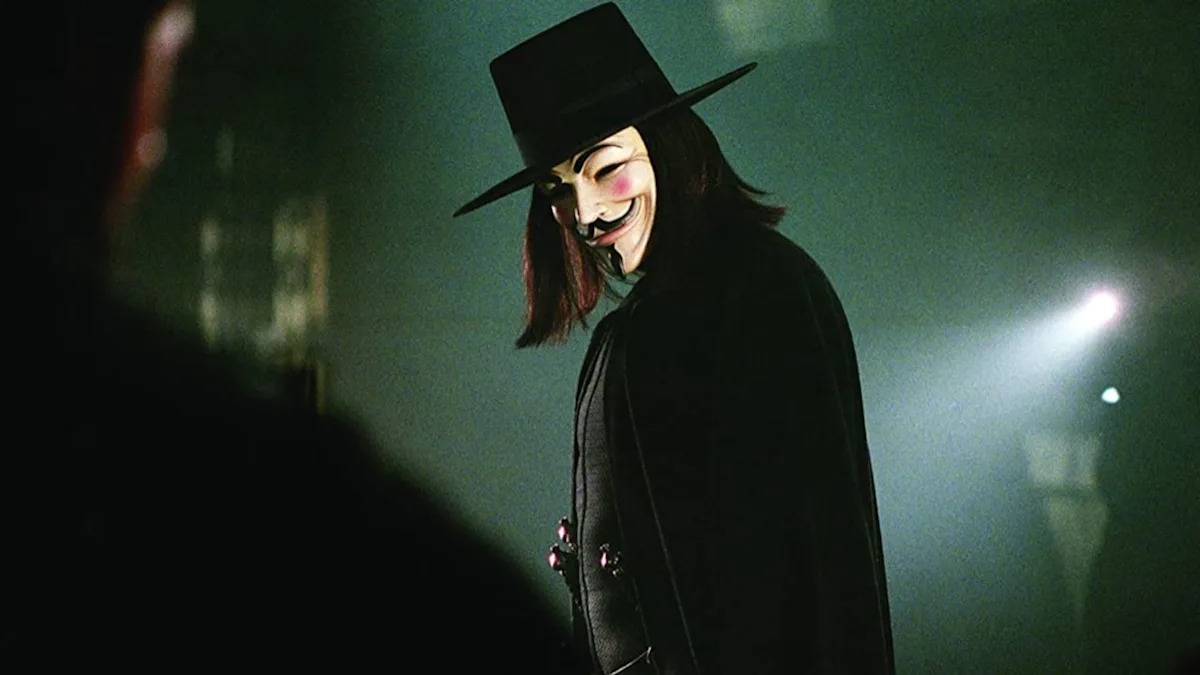
Twenty years after V for Vendetta hit theaters and planted a Guy Fawkes mask permanently in the cultural imagination, the film’s director is opening up about the choices that shaped it — and why the movie you watched is meaningfully different from the graphic novel that inspired it.
Director James McTeigue recently sat down with Screen Rant to mark the film’s 20th anniversary 4K re-release, and the conversation turned to something fans of Alan Moore and David Lloyd’s original work have debated for two decades: the changes. There were many, and McTeigue is now explaining the reasoning behind them.
The 2006 dystopian thriller, starring Hugo Weaving as the masked anarchist V and Natalie Portman as Evey Hammond, became a defining film of its era. But the road from page to screen involved significant creative decisions — some of which altered the very soul of the story’s central character.
The Biggest Change: Who V Really Is
The most significant departure McTeigue addressed involves V himself. According to the director, V is described as “a little more nihilistic” in the original graphic novel than the version audiences saw on screen. That’s not a small distinction — it fundamentally changes how viewers relate to the masked revolutionary at the heart of the story.
In Moore and Lloyd’s source material, V is a far more morally ambiguous and genuinely unsettling figure. He’s not a straightforward hero. His methods and worldview sit in genuinely uncomfortable territory, and the reader is never quite sure whether to admire or fear him. The graphic novel doesn’t make that easy for you.
The film softens those edges. Weaving’s V is still theatrical, violent, and operating outside any conventional moral code — but he reads more sympathetically. The audience is guided toward rooting for him in a way the graphic novel resists. McTeigue has acknowledged this as a deliberate adaptation choice, not an oversight.
What Else Was Cut or Changed in the V for Vendetta Adaptation
Beyond V’s characterization, McTeigue confirmed that the film also involved other character changes and cut plotlines from While the source excerpt does not detail every specific alteration, the director’s willingness to discuss these changes 20 years later reflects how significant they were to the overall shape of the story.
Adapting a graphic novel for a mainstream theatrical release almost always requires compression and recalibration. Moore’s original work is dense, politically layered, and written with a very specific British dystopian context in mind — one rooted in Thatcherism and the anxieties of 1980s England. Translating that to a post-9/11 American film production, handled by the Wachowskis as writers and producers, inevitably shifted the political register.
The core elements that survived the transition include:
- The fascist future Britain setting and Norsefire government
- V’s origins in the Larkhill concentration camp and medical experiments
- The Guy Fawkes mask and the November 5th symbolism
- Evey’s transformation and her relationship with V
- The destruction of the Houses of Parliament as a climactic act
What the film recalibrated was the emotional and ideological framing around those events — particularly how much sympathy or moral clarity the audience is offered at any given moment.
Why These Changes Were Difficult to Make
McTeigue described some of the changes as among the more difficult decisions made during production. That language matters. These weren’t throwaway alterations made for convenience — they were deliberate creative calls that the director clearly wrestled with.
Adapting any beloved source material carries its own pressure. Adapting Alan Moore’s work carries considerably more, given the author’s famously strong feelings about Hollywood treatments of his comics. Moore has been publicly critical of adaptations of his work, including V for Vendetta, and had his name removed from the film’s credits.
That context makes McTeigue’s reflections 20 years later particularly interesting. He’s not dismissing the changes or pretending they were easy — he’s acknowledging that translating the graphic novel required real choices about what the film was going to be, and who it was going to be for.
| Element | Graphic Novel Version | Film Version |
|---|---|---|
| V’s characterization | More nihilistic, morally ambiguous | More sympathetic, heroic framing |
| Certain character arcs | Present and developed | Altered or removed |
| Specific subplots | Included in source material | Cut for the film adaptation |
| Political context | Rooted in 1980s British politics | Reframed for post-9/11 audiences |
Why the Film Still Resonates Two Decades On
The 20th anniversary 4K re-release is itself a statement about the film’s staying power. V for Vendetta has aged in unexpected ways — a story about authoritarianism, surveillance, and political resistance that was already striking in 2006 has only gained new audiences as those themes have remained relentlessly current.
The Guy Fawkes mask, in particular, took on a life far beyond the film. It became the face of Anonymous, appeared at Occupy protests worldwide, and embedded itself in the visual language of political dissent globally. That cultural reach is remarkable for any film, let alone one that its original source material’s creator publicly distanced himself from.
McTeigue’s anniversary reflections offer something valuable: an honest accounting of what adaptation requires. Films aren’t graphic novels. The choices made in translating V’s story to screen — including making him less nihilistic, cutting certain plots, and adjusting characters — shaped a version of the story that reached millions of people who never read a page of Moore and Lloyd’s original work.
Whether those changes were the right ones remains a matter of debate among fans. But the fact that the conversation is still happening, 20 years later, says something about how much both versions of this story continue to matter.
Frequently Asked Questions
Who directed the V for Vendetta film?
The film was directed by James McTeigue, who recently discussed the adaptation’s changes with Screen Rant for the movie’s 20th anniversary.
Who played V in the 2006 film?
Hugo Weaving portrayed the masked revolutionary V in the film adaptation.
What is the main difference between V in the graphic novel and the film?
According to director James McTeigue, V is described as “a little more nihilistic” in the original graphic novel compared to the more sympathetic version presented in the film.
Why was V for Vendetta re-released in 2026?
The film received a 4K re-release to mark its 20th anniversary, which prompted McTeigue’s interview discussing the adaptation’s changes.

Leave a Reply