
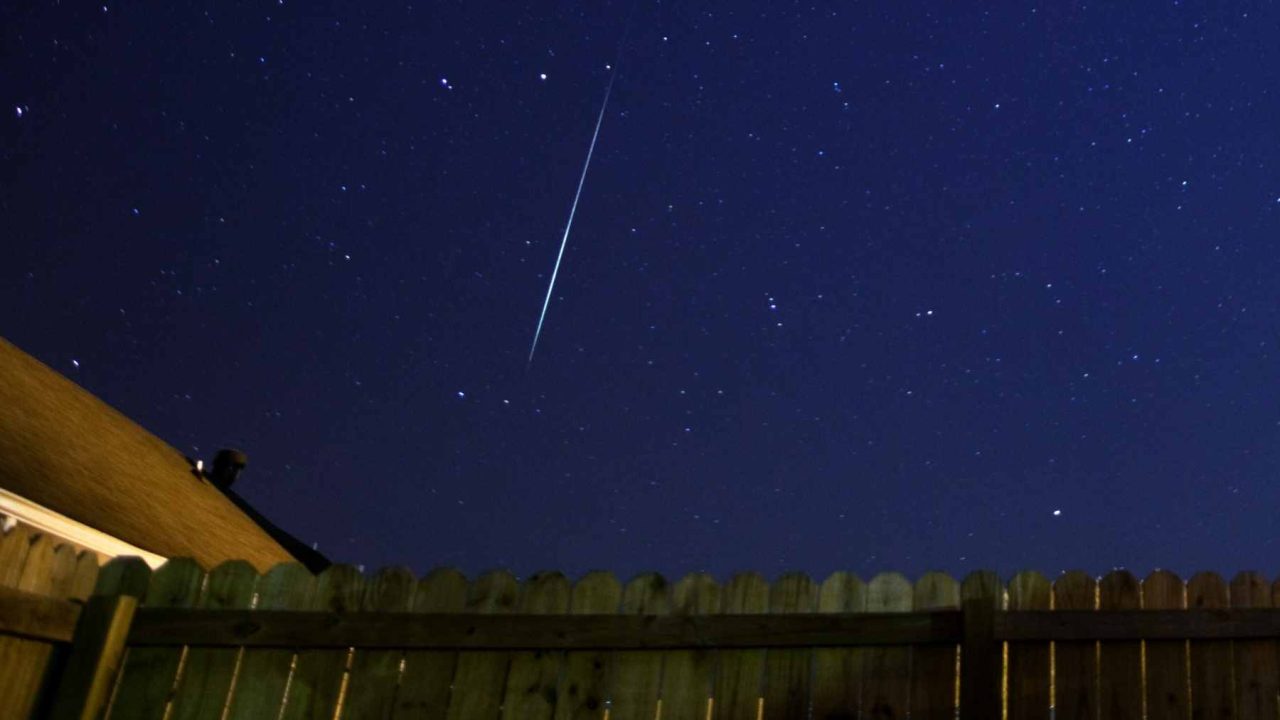
She was walking her dog just after 5 a.m. when the sky turned orange. The light was slow, deliberate, almost lazy compared to the shooting stars she’d seen before. It lasted long enough that she stopped, stared, and pulled out her phone — and she wasn’t alone.
Across Victoria, Australia, on Monday, April 7, 2026, hundreds of people witnessed the same thing: a gigantic, glowing ball of orange light drifting across the pre-dawn darkness. Social media lit up within minutes. The guesses ranged from meteor to UFO to something stranger. Almost everyone was wrong.
What they actually saw was the death of a machine. A very human-made one.
Why This Sighting Matters More Than a Pretty Light Show
Before we get into the five most surprising facts about what happened over Victoria, it’s worth understanding why this event is significant beyond the spectacle. Satellite reentries used to be rare enough to make international news. Now, according to the European Space Agency, intact satellites or rocket bodies reenter Earth’s atmosphere more than three times a day on average.
That number is climbing. ESA’s 2025 Space Environment Report tracks roughly 40,000 objects in orbit, including around 11,000 working spacecraft. The rest? Debris, dead satellites, and spent rocket stages, all slowly losing altitude and eventually falling home.
Victoria’s fireball wasn’t a freak event. It was a preview of a new normal.
| Feature | Starlink 5103 (Satellite) | Typical Meteor |
|---|---|---|
| Visibility Duration | ~30 seconds | 1–5 seconds |
| Color | Bright orange, steady | White/blue, brief flash |
| Speed Appearance | Slow, deliberate drift | Fast streak |
| Fragmentation | Multiple glowing pieces | Usually single streak |
| Origin | Human-made, launched 2022 | Natural space rock |
5. It Was Visible for Nearly Half a Minute
Most meteors last one to five seconds. A fireball might stretch to ten. But Starlink 5103 burned across Victoria’s sky for close to 30 seconds, which is exactly what tipped off astronomers that something different was happening.
Meteors are fast and violent. Satellites reenter at high speed too, but their larger, flatter structures create more atmospheric drag. That drag slows the visual progression across the sky, giving observers an unusually long window to watch, photograph, and film.
Dozens of Victorians did exactly that. The footage spread rapidly across Facebook groups and Instagram reels within hours of the event.
4. A Monash University Astronomer Cracked the Case Quickly
Monash University associate professor Michael Brown identified the object as Starlink 5103 shortly after the sighting. His identification relied on satellite tracking databases that log the orbital paths of thousands of objects.
The timing and trajectory matched perfectly. Starlink 5103 had been launched in 2022 as part of SpaceX’s expanding broadband constellation. By April 2026, it had reached the end of its operational life and begun its inevitable atmospheric descent.
Brown’s quick identification highlights how satellite reentries, unlike meteor strikes, are often predictable — at least in general terms. The exact reentry window can be forecast days in advance, though pinpointing the precise location remains difficult.
3. The Satellite Was Traveling at Over 7 Kilometers Per Second
Satellites reenter the atmosphere at more than 7 kilometers per second. At that velocity, atmospheric friction generates extreme heat, enough to vaporize most of the structure. The glowing orange color observers saw was ionized gas and burning metal.
Starlink 5103 measured roughly 9 meters long and 2 meters wide. That’s about the size of a large van stretched out flat. At 300 kilograms, it was substantial enough to produce a dramatic visual display even as it disintegrated.
The fragmentation pattern, multiple glowing pieces trailing behind the main body, is a classic signature of satellite reentry rather than a single-body meteor.
2. Reentries Now Happen More Than Three Times a Day Globally
ESA’s data makes the scale of this problem concrete. More than three intact satellites or rocket bodies reenter Earth’s atmosphere every single day on average. That’s over 1,000 per year, a figure that would have seemed extraordinary a decade ago.
The driver is the megaconstellation era. SpaceX’s Starlink program alone has launched thousands of satellites. Amazon’s Project Kuiper, OneWeb, and others are adding thousands more. Each satellite has a finite lifespan, typically five to seven years, before it deorbits.
A related study published on February 19, 2026, in Communications Earth & Environment examined the growing chemical and physical impact of satellite reentries on Earth’s upper atmosphere. The researchers raised concerns about metallic particles from burning satellites accumulating at high altitudes, with uncertain effects on atmospheric chemistry and climate.
The Number 1 Revelation: We Are Losing Track of What Falls From the Sky
Here is the fact that puts everything else in context. Of the roughly 40,000 tracked objects in orbit, a significant portion will eventually reenter the atmosphere. Many will do so in ways that are difficult to predict precisely. And most of the public, including people who watched Starlink 5103 burn over Victoria, have no framework for understanding what they’re seeing.
“Keen-eyed observers across Victoria have been stunned by a bright, large object seen blazing through the skies overhead early on Monday morning.”
— ABC Melbourne, April 7, 2026
The confusion is understandable. For most of human history, anything bright falling from the sky was natural: a meteor, a comet, a bolide. The idea that a piece of human engineering could produce the same visual spectacle is genuinely new, and our collective intuition hasn’t caught up.
| Object | Year of Reentry | Mass (kg) | Altitude at Burnup (km) | Visible Duration | Cause of Reentry |
|---|---|---|---|---|---|
| Starlink 5103 | 2026 | 300 | ~80 | ~60 seconds | Controlled deorbit |
| Skylab (NASA) | 1979 | 77,000 | ~70 | Several minutes | Orbital decay |
| UARS (NASA) | 2011 | 5,900 | ~80 | ~90 seconds | Orbital decay |
| Tiangong-1 (China) | 2018 | 8,500 | ~75 | ~2 minutes | Uncontrolled decay |
| ESA's ATV-5 | 2015 | 20,000 | ~75 | ~4 minutes | Controlled deorbit |
This matters for several reasons beyond mere curiosity. First, there is a safety dimension. While most satellites burn up completely, some components, particularly dense metal parts like fuel tanks and reaction wheels, can survive reentry and reach the ground. In 2024, metallic debris believed to be from a SpaceX rocket was found on a farm in Australia. No one was hurt, but the incident underscored that reentry debris is a real, if statistically rare, hazard.
Second, there is an environmental dimension. The February 2026 study in Communications Earth & Environment flagged concerns about aluminum oxide and other metallic compounds deposited in the mesosphere as satellites burn up. With reentry rates increasing year over year, researchers are calling for more systematic study of cumulative atmospheric effects.
Third, and perhaps most importantly, there is a governance dimension. Many controlled reentries are deliberately steered toward the South Pacific Ocean, an area sometimes called the “spacecraft cemetery.” But uncontrolled reentries, like Starlink 5103’s pass over Victoria, happen wherever orbital mechanics dictates. There are no international agreements that give communities advance warning when a satellite is expected to reenter over their region.
What Victoria’s Fireball Tells Us About Space Debris Policy
The people who watched Starlink 5103 cross Victoria’s sky were lucky. They got a spectacular light show at no cost and no risk. But the broader trajectory of low Earth orbit congestion points toward harder questions.
ESA’s tracking data shows the orbital environment is becoming increasingly crowded. With roughly 11,000 working spacecraft already in orbit and thousands more planned, the number of eventual reentries will only grow. The three-per-day average is almost certainly going to increase.
Scientists are pushing for better public communication systems, similar to weather alerts, that could notify communities when a significant reentry is expected over their region. They’re also pushing for stricter design standards requiring satellites to be built from materials that burn up more completely, reducing both debris risk and atmospheric contamination.
For now, though, the most likely outcome is more mornings like April 7, 2026, in Victoria. More dog walkers stopping mid-stride. More phones pointed at orange streaks. More social media debates about meteors and UFOs.
The sky is filling up with our machines, and most of us are only just starting to notice.



Leave a Reply