
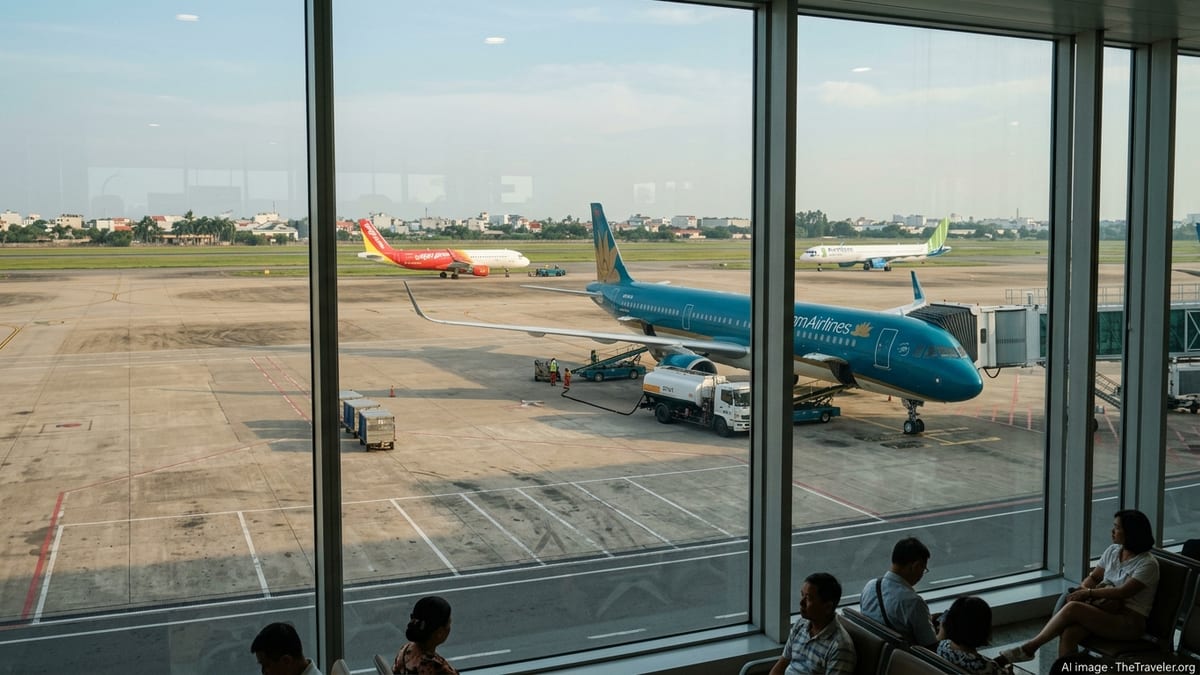
Starting April 1, 2026, travelers flying within Vietnam and on international routes will face a dramatically different landscape — fewer flights, higher fares, and significantly reduced options on dozens of routes. The country’s three major carriers, Vietnam Airlines, Vietjet Air, and Bamboo Airways, are all slashing operations in response to a deepening jet fuel crisis driven by escalating geopolitical tensions in the Middle East.
The disruption is not a minor scheduling tweak. Vietnam Airlines alone is suspending roughly 23 domestic flights per week, with cuts concentrated on secondary and tourism-heavy routes. For anyone planning travel to or within Vietnam in the coming months, the situation is changing fast — and prices are rising to match.
This is the kind of supply shock that ripples well beyond airline balance sheets. When fuel becomes scarce and expensive enough to ground planes, the consequences land squarely on passengers: fewer seats, less flexibility, and fares that reflect the strain.
Why Vietnam’s Airlines Are Cutting Flights Right Now
The trigger is a global oil supply disruption linked to the Iran conflict and broader geopolitical instability in the Middle East. That instability has sent shockwaves through international energy markets, creating severe shortages of jet fuel — the single largest operating cost for any airline.
When fuel supply tightens this sharply, airlines face a brutal calculation: fly fewer routes or hemorrhage cash on every departure. Vietnam’s carriers have chosen to cut operations rather than absorb losses that could threaten their financial stability. The result is a coordinated, industry-wide reduction in capacity that is already affecting route planning and ticket pricing ahead of the April 1 start date.
The crisis is not unique to Vietnam — global aviation is feeling the pressure — but Vietnam’s carriers are particularly exposed given the country’s heavy dependence on domestic air travel to connect a geographically long, narrow nation.
Which Routes Are Being Cut — and by Whom
The specific cuts vary by carrier, but the pattern is consistent: secondary and regional routes are bearing the brunt while high-demand corridors are being protected.
| Airline | Scale of Cuts | Routes Most Affected | Routes Being Protected |
|---|---|---|---|
| Vietnam Airlines | ~23 domestic flights suspended per week | Hai Phong–Phu Quoc, Hai Phong–Cam Ranh, Hai Phong–Can Tho, Ho Chi Minh City–Dien Bien, Ho Chi Minh City–Rach Gia | Hanoi–Ho Chi Minh City corridor; high-demand international routes |
| Vietjet Air | Reductions underway (full scale not yet confirmed) | Regional and lower-demand domestic routes | Core trunk routes |
| Bamboo Airways | Reductions underway (full scale not yet confirmed) | Secondary domestic destinations | High-traffic corridors |
The clearest picture right now is from Vietnam Airlines, which has been the most specific about its cuts. Vietjet Air and Bamboo Airways are also reducing operations, though the precise scope of their individual reductions had not been fully detailed as of the latest available information.
What is consistent across all three carriers is the strategy: protect the routes that fill seats reliably, and suspend the ones where thin demand makes fuel costs impossible to justify.
What This Means for Travelers Planning Vietnam Trips
If you have travel to Vietnam on the horizon — whether for tourism, business, or visiting family — the April 1 changes deserve your attention now, not later.
- Fares are rising. All three airlines are raising prices in response to increased fuel costs. Booking early may lock in lower fares before further increases take effect.
- Some routes are disappearing entirely. If your itinerary includes secondary destinations like Phu Quoc via Hai Phong, or smaller cities like Rach Gia and Dien Bien, your direct flight options may no longer exist after April 1.
- Tourism-heavy destinations are disproportionately affected. The cuts are concentrated on routes serving leisure travelers, not business corridors — meaning holiday trips are more disrupted than corporate travel.
- Connecting itineraries may become necessary. Travelers who previously flew direct to secondary cities may need to route through Hanoi or Ho Chi Minh City, adding time and cost to their journey.
- International routes remain more stable. Vietnam Airlines is prioritizing its high-demand international services, so inbound and outbound international travelers may see less disruption than domestic passengers.
What Happens Next for Vietnam’s Aviation Sector
The April 1 date marks the formal start of these changes, but the situation remains fluid. The underlying cause — Middle East geopolitical instability and its effect on global oil supply — shows no immediate sign of resolution. That means the cuts already announced could deepen if fuel conditions worsen further.
Airlines are expected to continue monitoring fuel availability and pricing on a rolling basis. If the crisis eases, some suspended routes could be reinstated. If it worsens, additional routes may be pulled and fares could climb higher still.
For travelers, the practical advice is straightforward: check your existing bookings against the affected route list immediately, contact your airline about any itineraries touching secondary Vietnamese destinations, and consider flexible fare options given the uncertainty around how long these conditions will persist.
Vietnam’s aviation regulators and the carriers themselves have signaled that protecting the main Hanoi–Ho Chi Minh City corridor and key international services is the priority. Everything else is subject to revision as the fuel crisis evolves.
Frequently Asked Questions
When do the flight cuts take effect?
The major reductions across Vietnam Airlines, Vietjet Air, and Bamboo Airways are set to begin on April 1, 2026.
Which airline is cutting the most flights?
Vietnam Airlines has announced the most specific cuts, suspending approximately 23 domestic flights per week, with the reductions focused on secondary and tourism-heavy routes.
Which specific routes are being suspended by Vietnam Airlines?
Confirmed suspensions include flights from Hai Phong to Phu Quoc, Cam Ranh, and Can Tho, as well as from Ho Chi Minh City to Dien Bien and Rach Gia.
Are international flights to Vietnam affected?
Vietnam Airlines is prioritizing high-demand international routes, meaning international services are expected to face less disruption than domestic secondary routes.
Why are fares going up at the same time flights are being cut?
The same fuel shortage driving the capacity cuts is also raising operating costs for the airlines, which are passing those increased costs on to passengers through higher fares.
Will the suspended routes come back?
This has not yet been confirmed. The reinstatement of cut routes will depend on how the global fuel supply situation develops — particularly whether Middle East tensions ease and oil supplies stabilize.



Leave a Reply