
▶ Read transcript
Here’s what you need to know about Vietnam’s high-speed rail and what it means for northern tourism.
Vietnam has officially launched construction on Southeast Asia’s first true high-speed rail system, a 1,500 kilometer line running from Hanoi all the way to Ho Chi Minh City. The government has set a 10-year construction timeline, and with both Hanoi and Ho Chi Minh City having recently delivered working metro systems, there’s real reason to believe this will actually happen on schedule.
The transformation for northern tourism is enormous. Right now, getting from Hanoi to Ha Long Bay takes three to four hours by road. Rail cuts that to roughly 30 minutes. Sapa, currently an overnight journey, becomes a 90-minute trip. These aren’t just convenient upgrades, they completely change how these destinations function economically and experientially.
And here’s the thing, the Vietnam that draws travelers today won’t look the same on the other side of this project. So your actionable takeaway is this: if northern Vietnam is on your list, plan that trip before the infrastructure catches up.
The clock is ticking on northern Vietnam as travelers know it. The Vietnamese government has officially set a 10-year construction schedule for what will become Southeast Asia’s first true high-speed rail system. The northern tourism corridor sits directly in the path of that transformation.
For anyone who has been putting off a trip to Ha Long Bay, Sapa, or Ninh Binh, that hesitation just became more complicated. Vietnam is entering an infrastructure era that will make it more accessible, more connected, and fundamentally different from the country that drew travelers here for decades.
Vietnam’s Largest Infrastructure Project in History Begins Now
The numbers tell the story plainly. The high-speed rail project is the largest single infrastructure undertaking in Vietnam’s history. The full network will eventually run approximately 1,500 kilometers from Hanoi in the north to Ho Chi Minh City in the south.
The northern segment is the immediate priority. Hanoi serves as the hub, with rail lines extending to key tourism destinations that currently require hours of ground travel. The government’s 10-year construction schedule is aggressive, but recent precedent is encouraging. Both Hanoi and Ho Chi Minh City have successfully launched new metro systems in recent years, demonstrating Vietnam’s improving capacity to deliver complex transit infrastructure.
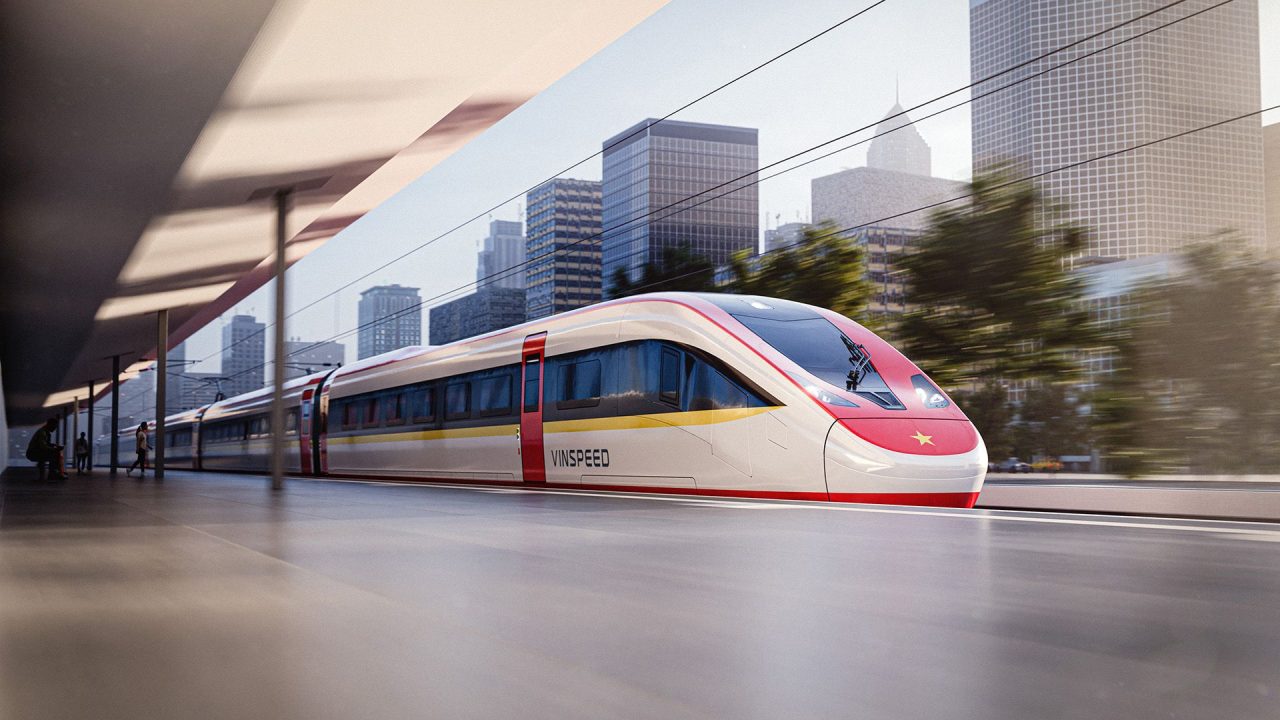
Vingroup, Vietnam’s largest private conglomerate, has separately announced plans to build a high-speed railway also connecting Hanoi to Ho Chi Minh City. The convergence of government and private capital on the same vision signals more than political ambition. Money is moving, and it is moving fast.
Northern Vietnam’s Tourism Corridor: The Distance Problem That Rail Solves
Northern Vietnam already packs an extraordinary density of UNESCO-listed sites, natural wonders, and cultural heritage within a compact geography. Ha Long Bay, with its 1,600-plus limestone islands, ranks among Asia’s most photographed landscapes. Ninh Binh, often called the karst counterpart to Ha Long, draws visitors to its flooded rice paddies and ancient temple complexes. Sapa’s terraced fields in the Hoang Lien Son mountain range attract trekkers from every continent.
The challenge has always been the same: getting between them. The terrain that makes northern Vietnam so visually extraordinary makes it logistically difficult. A traveler connecting Hanoi to Sapa currently faces an overnight sleeper train or a mountain road journey of 8 to 9 hours. Ha Long Bay, closer at roughly 170 kilometers, still takes three to four hours by road.
| Route | Current Travel Time | Projected Rail Time | Tourism Impact |
|---|---|---|---|
| Hanoi to Ha Long Bay | 3–4 hours by road | ~30–45 minutes | Day trips become widely practical |
| Hanoi to Ninh Binh | 2 hours by road or slow rail | ~20–30 minutes | Overnight stays convert to same-day visits |
| Hanoi to Sapa | 8–9 hours by overnight train | ~1–1.5 hours | Transforms a weekend trip into a day excursion |
High-speed rail collapses these distances. What currently requires overnight logistics becomes a morning excursion. That is not only convenient for travelers; it structurally reshapes how the tourism economy around each destination functions.
Why Southeast Asia Has No Bullet Trains After 60 Years
Japan launched the world’s first high-speed rail system, the Tokaido Shinkansen, in 1964. China has since built the world’s largest network, stretching more than 45,000 kilometers across the country. China’s newest bullet train, the CR450, operates at 400 kilometers per hour.
Southeast Asia, one of the world’s fastest-growing tourism regions, has no equivalent. Geographic complexity, political fragmentation across eleven countries, and the cost of building high-speed infrastructure through tropical terrain have all worked against it. The region has watched the technology mature for six decades without replicating it.
Vietnam’s position as a single-party state with centralized infrastructure planning gives it a structural advantage that fragmented democracies in the region lack. The government can acquire land, allocate capital, and enforce timelines in ways that multi-stakeholder systems cannot. The $67 billion project, approved by the National Assembly in November 2024, will run 1,541 kilometers from Hanoi to Ho Chi Minh City, with 23 stations connecting major population centers along the way. Crucially, Vietnam is not attempting to build a pan-regional network requiring diplomatic consensus — it is building entirely within its own borders, eliminating the coordination failures that have stalled cross-border proposals like the Singapore-Kuala Lumpur high-speed link for years. Construction is expected to begin in 2027, with the full line projected to open by 2035.
For travelers planning trips to northern Vietnam in the near term, the calculus remains unchanged but the window is finite. Hanoi, Sapa, Ha Long Bay, and Ninh Binh are accessible today via a combination of overnight trains, domestic flights, and road transfers that reward patience and flexibility. The current Reunification Express, which connects Hanoi to Ho Chi Minh City in roughly 30 to 35 hours, still offers one of Southeast Asia’s most scenic rail journeys through the Hai Van Pass. Travelers who value slower, more immersive movement through the landscape should consider making that journey before high-speed infrastructure renders it a nostalgic relic rather than a practical option.
The broader regional implication is that Vietnam’s project, if delivered on schedule, will function as a proof of concept for Southeast Asian high-speed rail in a way that decades of feasibility studies have not. A completed, operational line would apply pressure on neighboring governments and private investors who have long cited regional precedent as a prerequisite for commitment. Thailand’s delayed high-speed project connecting Bangkok to Chiang Mai, and the Philippines’ ambitions for a Luzon spine railway, could both gain political momentum from a Vietnamese success story.
Vietnam’s high-speed rail project is, at its core, a bet that the country’s economic trajectory and institutional capacity have reached the threshold required to deliver infrastructure at a scale it has never attempted. The northern tourism corridor — already one of Southeast Asia’s most compelling — stands to be the most immediate beneficiary if that bet pays off. The Vietnam that exists today, with its unhurried mountain routes and coastal train lines threading through karst landscapes, is worth visiting on its own terms. The Vietnam that emerges after 2035 will be a different kind of destination — faster, more connected, and accessible to a far larger share of the global traveling public. Both versions have merit. The first, however, is available only now.
Frequently Asked Questions

You Might Also Like

Social Security Payment Dates July 2026: What You Could Get at Every Claiming Age, Who May Qualify for More, and How to Apply, With Current Official Figures and Step-by-Step Help — Up to $2,976 a Month
If you are thinking about when to claim Social Security, July 2026 is a good…

The Star That Shouldn’t Exist Anymore Is Changing
WOH G64, one of the universe's largest known stars, has spiked in temperature and shifted…

Spain With Your Pet: Entry Rules, Hotels, and Public Access
Planning to travel to Spain with your pet? Learn entry requirements, vaccination rules, microchip registration,…
Leave a Reply