
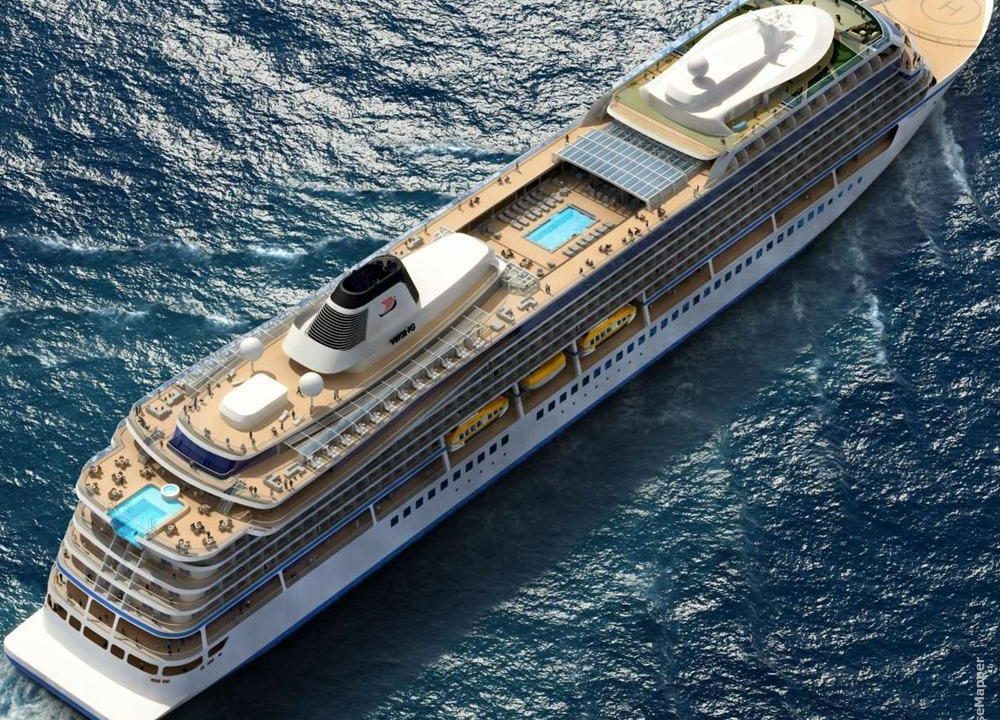
The world’s first hydrogen-powered cruise ship has officially touched water for the first time — and the cruise industry may never look quite the same again.
Viking, widely recognized as a world leader in experiential travel, announced that its newest vessel, Viking Libra, has completed its float-out ceremony at the Fincantieri shipyard in Ancona, Italy. That milestone marks the end of the ship’s first construction phase and puts it firmly on course for a debut in November 2026.
For travelers who care about where their vacation dollars go — and what those vacations leave behind — this is a ship worth watching closely.
What the Viking Libra Float-Out Actually Means
A float-out is one of the most significant moments in any ship’s life. It’s the first time a vessel enters water, transitioning from a dry shipbuilding dock to the next stage of outfitting. For Viking Libra, that process unfolded over two days, during which the ship was moved from the construction dock to the outfitting dock, where the final cabin builds and finishing work will now take place.
Think of it as the moment a ship stops being a structure on land and starts becoming something that will actually sail. Everything that follows — interior finishing, systems testing, sea trials — leads directly toward passenger voyages.
The Fincantieri shipyard in Ancona has a long history of building some of the world’s most sophisticated cruise ships, and Viking Libra’s construction there underscores the scale and ambition of this project.
Why Viking Libra Is Unlike Any Cruise Ship Before It
The headline distinction is straightforward: Viking Libra is the world’s first hydrogen-powered cruise ship. That puts it in a category entirely its own — no other passenger cruise vessel has reached this stage of construction with hydrogen propulsion at its core.
Hydrogen power represents a significant departure from the heavy fuel oil and liquefied natural gas that have long dominated the maritime industry. The environmental case for hydrogen is compelling: when used in fuel cells, it produces water vapor rather than the carbon dioxide and particulate emissions associated with conventional marine fuels.
For an industry that has faced sustained criticism over its environmental footprint, Viking Libra signals something real rather than just aspirational. The ship isn’t a concept or a prototype — it’s a vessel that has now floated out of its construction dock and is scheduled to carry paying passengers before the end of 2026.
Viking has positioned itself as a company that prioritizes both destination-focused travel and environmental responsibility. Viking Libra appears to be the clearest expression yet of that dual commitment.
Where Viking Libra Will Sail — and Who It’s For
Once operational, Viking Libra will sail routes across the Mediterranean and Northern Europe. These are among the most popular and storied cruising regions in the world, offering passengers access to ancient coastlines, Nordic fjords, historic port cities, and some of the most sought-after destinations on any traveler’s list.
The choice of these regions also carries practical significance. Both the Mediterranean and Northern Europe have seen increasing regulatory pressure on cruise emissions in recent years, with several ports and protected waterways tightening environmental standards. A hydrogen-powered vessel is well-positioned to operate in — and be welcomed by — destinations moving toward stricter environmental requirements.
| Detail | Information |
|---|---|
| Ship Name | Viking Libra |
| Distinction | World’s first hydrogen-powered cruise ship |
| Float-Out Location | Fincantieri shipyard, Ancona, Italy |
| Float-Out Duration | Two days |
| Current Construction Stage | Outfitting dock — final cabin builds and finishing |
| Expected Debut | November 2026 |
| Planned Sailing Regions | Mediterranean and Northern Europe |
| Builder | Fincantieri |
What This Means for the Broader Cruise Industry
The cruise sector has been under real pressure to modernize its environmental credentials. Carbon emissions, water quality concerns, and the sheer volume of passengers moving through sensitive ecosystems have all drawn attention from regulators, environmental groups, and increasingly, travelers themselves.
Viking Libra’s arrival as the world’s first hydrogen-powered cruise ship matters beyond Viking as a company. It establishes a proof of concept for the wider industry — demonstrating that hydrogen propulsion can move from theoretical discussion to an actual ship that floats, sails, and carries guests.
Industry observers have noted that early adopters in sustainable maritime technology often set the standard that competitors eventually follow. Whether that proves true for hydrogen-powered cruising remains to be seen, but Viking has positioned itself at the front of that conversation in a very tangible way.
For travelers, it also raises a question worth thinking about: as more options emerge for lower-impact travel, how much does a ship’s environmental footprint factor into booking decisions? Viking is clearly betting that it matters — and that a growing segment of cruise passengers will actively seek it out.
What Happens Between Now and November 2026
With the float-out complete, Viking Libra moves into its final construction phase. The ship is now at the outfitting dock in Ancona, where crews will complete the remaining cabin builds and interior finishing work. After that, the vessel will undergo systems testing and sea trials before being handed over to Viking ahead of its inaugural voyages.
The November 2026 debut timeline means the ship is expected to be sailing with passengers before the year is out. First voyages will take place in the Mediterranean and Northern Europe — giving early passengers the distinction of sailing aboard what will be a genuinely historic vessel.
For anyone considering booking, now is the window to watch Viking’s announcements closely. Inaugural sailings on milestone ships tend to draw significant interest, and availability on first voyages typically moves quickly.
Frequently Asked Questions
What makes Viking Libra different from other cruise ships?
Viking Libra is the world’s first hydrogen-powered cruise ship, distinguishing it from all other passenger cruise vessels currently in operation or construction.
Where was the Viking Libra float-out ceremony held?
The float-out took place at the Fincantieri shipyard in Ancona, Italy, marking the first time the ship had been placed in water.
When will Viking Libra begin sailing with passengers?
Viking has announced a debut date of November 2026, with first voyages planned for the Mediterranean and Northern Europe.
What does a float-out ceremony involve?
During the float-out, water is introduced into the shipbuilding dock and the vessel is moved to an outfitting dock over two days, where final construction — including cabin builds — is completed.
Which destinations will Viking Libra visit?
According to Viking’s announcement, the ship will sail to the Mediterranean and Northern Europe on its inaugural voyages.
Is hydrogen power proven technology for cruise ships?
Viking Libra is the first cruise ship of its kind to reach this stage, making it a pioneering vessel; broader industry adoption of hydrogen propulsion has not yet been confirmed by other cruise lines.


Leave a Reply