
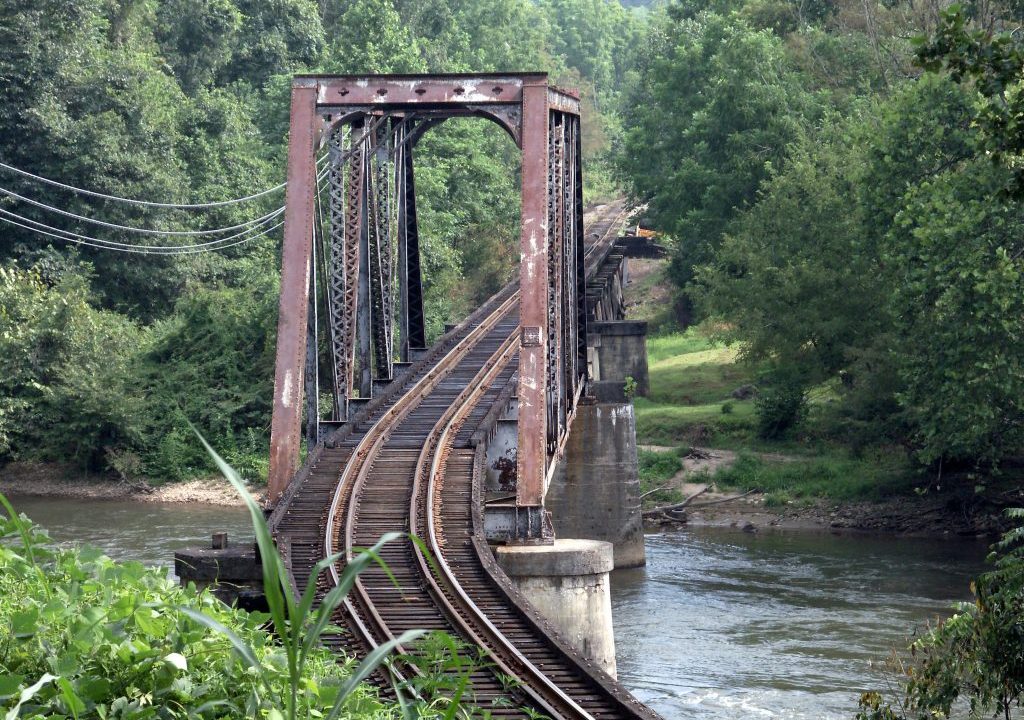
You step off the Amtrak Cardinal on a Tuesday morning and the platform is absolutely silent. No taxis, no coffee kiosk, no parking lot — just a beautifully restored 1904 depot, a ribbon of river below, and the soft creak of a Chesapeake & Ohio freight building settling in the Appalachian cold. There is no one here to greet you. Thurmond, West Virginia has a population of approximately five people. The train stops anyway, three times a week, in both directions.
That detail alone — a federally funded passenger rail stop serving a town smaller than a farmhouse family reunion — tells you everything about what Thurmond once was, and almost nothing about what it’s become. This is the story of both.
From Coal Capital to Ghost Town: What Happened in Thurmond
Thurmond didn’t just exist during the coal boom of the early twentieth century — it dominated it. At its peak, roughly between 1910 and 1927, the Thurmond depot processed more freight tonnage than Cincinnati, Ohio. Read that again. A mountain town clinging to the banks of the New River, reachable at the time only by rail, was moving more goods than one of the Midwest’s great industrial cities.
The C&O Railway made Thurmond possible. Thomas McKell, a Civil War veteran and land speculator, platted the town in 1903 after recognizing the New River Gorge’s coal potential. Within a decade, Thurmond had banks, hotels, a post office, and a year-round population of several hundred — extraordinary for a location with no road access whatsoever.
The collapse came in stages. Diesel engines replaced steam in the 1950s, gutting demand for New River coal. Highways were finally cut through the gorge, pulling commerce away from rail. By 1970, the population had cratered. By the 1990s, Thurmond had fewer than a dozen residents. Today, the U.S. Census estimates the incorporated municipality holds roughly five people — making it one of the smallest incorporated cities in the entire country.
Yet it never legally dissolved. Thurmond remains an incorporated municipality in Fayette County, West Virginia, with a mayor and a municipal structure — governing, essentially, a train depot and a handful of crumbling commercial buildings that the National Park Service has been slowly, carefully bringing back from the edge.
The Poker Game That Ran for 14 Years Straight
Every ghost town has a legend. Thurmond’s is spectacular. The Dunglen Hotel, which stood at the center of town during its boom years, hosted what local oral history records as a continuous poker game that ran for approximately 14 years without stopping — from around 1900 until sometime during World War I. Players rotated in and out. The cards, allegedly, never left the table.
The Dunglen Hotel no longer stands — it burned in 1930 — but its footprint is still visible near the depot. The NPS has documented the poker game legend in its interpretive materials for New River Gorge National Park, treating it with the same scholarly seriousness as the gorge’s geological record. Whether the game truly ran 14 unbroken years, no one can prove. But in a town where freight tonnage once beat Cincinnati, nothing about Thurmond’s ambitions seems impossible.
New River Gorge National Park Changed Everything — Again
In December 2020, Congress elevated New River Gorge from a national river designation to a full national park — the first new national park established in the eastern United States in decades. The change was more than symbolic. National park status brings federal infrastructure funding, expanded visitor services, and the kind of tourism marketing muscle that transforms regional curiosity into a line item in travel budgets across the country.
For Thurmond specifically, the park designation accelerated an NPS restoration project on the depot that had been underway since the 1990s. The 1904 C&O depot — a handsome two-story structure with broad covered platforms — was fully stabilized and now serves as the park’s visitor contact station for the gorge’s southern end. Rangers are stationed there seasonally.
The surrounding commercial district, which once held a dozen businesses along a single unpaved street, is being documented and partially preserved. Several structures remain — roofless, vine-threaded, but structurally honest about what happened here. The NPS has resisted the temptation to over-restore, leaving Thurmond feeling less like a theme park and more like a wound that’s been carefully cleaned.
Getting There: The Train Is Still the Best Way In
Thurmond sits approximately 20 miles southeast of Oak Hill, West Virginia, and about 35 miles from Beckley. A single-lane road now reaches the town from the north, but the approach by car is anticlimactic — you arrive at a parking area, walk across a bridge, and find yourself at the depot from the wrong angle. The train does it right.
Boarding the Cardinal in Washington, D.C. or Charleston, WV and riding to Thurmond is genuinely one of the more cinematic train journeys available in the eastern United States. The route follows the New River through increasingly dramatic gorge terrain, and the Thurmond stop — a flag stop, essentially, in a national park — feels earned by the time you arrive.
Once there, the experience rewards the patient traveler. Walk the depot’s restored platform. Read the NPS interpretive panels about the coal era. Stand at the edge of the gorge and look down at the river that made this place worth fighting over. Then walk the ghost street — careful with your footing in the old commercial district — and try to feel what it was like when this was the loudest, richest quarter-mile in Appalachian West Virginia.
What Thurmond Tells Us About American Boom-and-Bust
Thurmond is not unique in its arc. Dozens of coal and railroad towns across Appalachia followed the same trajectory: explosive growth tied to a single industry, followed by collapse when that industry moved on. What makes Thurmond distinctive is the combination of its extreme preservation, its continued legal existence as a municipality, and the sheer improbability of its ongoing rail connection to the outside world.
There’s something genuinely clarifying about standing in a place that went from outshipping Cincinnati to housing five people in under a century. It compresses American economic history into a single walkable block. The coal that moved through Thurmond’s yard fueled steel mills that built skyscrapers that still stand in cities that have largely forgotten West Virginia’s role in making them possible.
The NPS designation, whatever its economic ripple effects on the broader gorge region, has given Thurmond something it hadn’t had in seventy years: a reason for strangers to arrive with purpose. Visitor counts at the depot have grown steadily since 2021. The town’s five residents — whoever they are, because the NPS declines to publish personal details out of respect for privacy — live inside what is now one of America’s newer national parks, in a place that once held the loudest poker game in Appalachia.
The Cardinal pulls out of Thurmond on schedule. The platform goes quiet. The river keeps moving, indifferent and gorgeous, the same river that made all of this possible and then took none of the blame when it ended.
Related: The Mysterious Abandoned Estate Above Mussoorie That Draws Thousands of Curious Visitors Each Year




Leave a Reply