
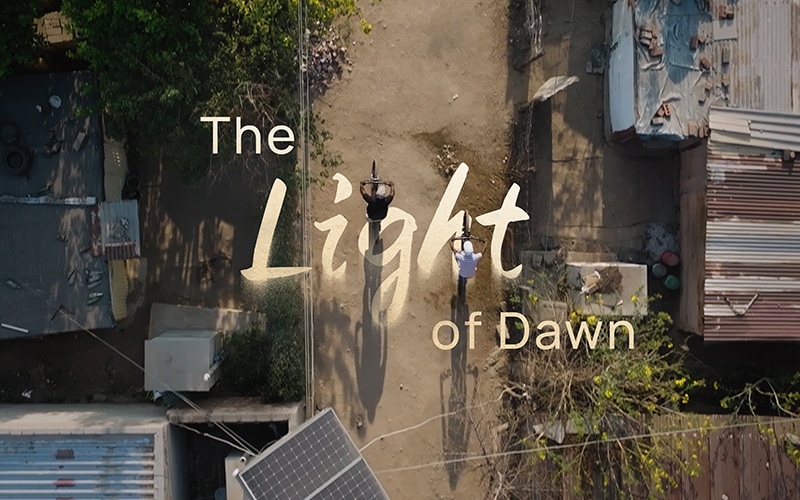
She had not turned off her phone in eleven months. Then, standing barefoot on red Karoo soil at dusk, watching a pair of bat-eared foxes disappear into the scrub, she realized she had not checked it in three hours. For the first time in years, she had simply forgotten it existed.
That moment, experienced by a London-based marketing director on a slow travel retreat in South Africa’s Klein Karoo, is not unique. It is becoming a pattern — one that is reshaping how the world thinks about travel, rest, and what it actually means to be present.
The Exhaustion Economy and Why South Africa Arrived at the Right Moment
Something shifted in global travel behavior after 2023. The post-pandemic rush to “catch up” on missed experiences gave way to a quieter, more deliberate hunger. Travelers stopped asking “how much can I see?” and started asking “how deeply can I feel?”
Slow travel, once a niche philosophy practiced by long-term backpackers, entered the mainstream. Wellness tourism grew into a multi-trillion-dollar industry. And the concept of a “digital detox” moved from luxury spa brochure language into genuine medical advice, with psychologists citing chronic smartphone use as a driver of anxiety, fractured attention, and sleep disruption.
South Africa arrived into this moment with extraordinary timing and extraordinary geography. The country spans lush coastal forests, vast savannahs, rugged mountain ranges, semi-arid Karoo plains, and some of the most biodiverse ocean coastline on earth. It is, in the most literal sense, built for the kind of travel that slows the nervous system down.
According to travel researchers at Charlie’s Travels, South Africa encompasses everything from lush jungles to vast savannahs, from rugged ocean coastlines to dramatic mountain ranges — a diversity of landscape found in very few destinations worldwide. That variety is not just scenic. It is therapeutic.
What Slow, Immersive Travel Actually Looks Like Here
The phrase “immersive travel” gets overused. In South Africa, it has specific, tangible meaning. Visitors are moving beyond the traditional game drive model, which, for all its magic, can feel like a curated performance viewed from a vehicle window.
The new wave of South African travel involves walking safaris in the Greater Kruger region, where guides teach guests to read animal tracks in the dust. It involves spending three nights in a single location rather than racing between five. It involves cooking with Zulu grandmothers in KwaZulu-Natal, learning to identify medicinal plants used for centuries before pharmaceutical companies existed.
| Experience Type | Region | Digital Detox Rating | Best For |
|---|---|---|---|
| Walking Safari | Greater Kruger | ★★★★★ | Full sensory immersion |
| Klein Karoo Retreat | Western Cape | ★★★★★ | Silence, solitude, stargazing |
| Cultural Homestay | KwaZulu-Natal | ★★★★☆ | Human connection, storytelling |
| Whale Coast Retreat | Hermanus / Overberg | ★★★★☆ | Ocean mindfulness, slow mornings |
| Drakensberg Hiking | uKhahlamba Range | ★★★★★ | Physical reset, mountain solitude |
As reporting from China Daily Global notes, visitors are now drawn into immersive experiences that go far beyond traditional game viewing, from exploring pristine wilderness to engaging with local communities in ways that feel genuinely reciprocal rather than transactional.
This shift matters because it changes the economic and cultural relationship between traveler and destination. Slow travelers stay longer. They spend more locally. They leave with something harder to Instagram but more lasting: a changed relationship with time itself.
The Klein Karoo Effect: When Silence Becomes the Destination
Ask any South African travel guide where to send someone who is truly burned out, and the Klein Karoo comes up within thirty seconds. This semi-arid region of the Western Cape is not conventionally dramatic. There are no Big Five sightings, no roaring waterfalls, no Instagram-famous infinity pools perched over a canyon.
What it has is silence. Genuine, almost physical silence. The kind that makes first-time visitors uncomfortable before it makes them weep with relief.
“The Klein Karoo is the place to become quiet. It is a luxury indeed to be at peace and one with nature at its best.”
— Getaway Magazine, via Facebook
Getaway Magazine’s feature on slow destinations identifies six regions across South Africa and broader Africa where slow travel is not a marketing concept but a lived reality. The Klein Karoo leads that list. Travelers report that the landscape itself enforces presence: the heat, the scent of wild herbs, the sound of cicadas at noon all demand attention in a way that a notification-choked phone screen never quite manages.
Wellness retreat operators in the region have begun designing experiences specifically around this quality. Some lodges now have formal phone-free hours. Others offer what they call “sensory walks” — guided hikes with no commentary, just instruction to observe. The absence of explanation, it turns out, is often the most profound guide of all.
Expert Perspectives: What the Science Says About Nature and Recovery
The appeal of South Africa’s landscapes is not purely aesthetic. There is a growing body of research linking time in biodiverse natural environments to measurable reductions in cortisol levels, improved sleep architecture, and restored attentional capacity.
Japanese researchers pioneered the concept of “Shinrin-yoku” (forest bathing) decades ago, demonstrating that time among trees reduces stress hormones and blood pressure. More recent work from European and North American universities has extended these findings to savannah-type environments, suggesting that open grasslands with scattered trees may activate what some evolutionary biologists call our “ancestral calm” — a neurological response to landscapes our species evolved within.
South Africa’s biomes hit nearly every category associated with restorative natural environments. The fynbos of the Cape Floristic Region is one of the world’s six plant kingdoms, packed into a relatively small area. The Drakensberg mountains offer altitude, isolation, and visual grandeur that research consistently links to feelings of awe. Awe, studies suggest, reliably reduces self-focused rumination — the mental loop that keeps burned-out professionals awake at 3 a.m.
Travel therapists and burnout coaches have begun including South Africa explicitly in their recovery recommendations. The combination of physical landscape, cultural richness, and the practical reality of limited connectivity in many wilderness areas creates conditions that are genuinely difficult to replicate elsewhere.
The Cultural Dimension: Connection as Antidote to Isolation
Digital overload does not just exhaust the mind. It also, paradoxically, deepens loneliness. Scrolling through other people’s lives while feeling increasingly disconnected from one’s own is a well-documented psychological phenomenon. South Africa’s slow travel movement addresses this directly, not just through nature, but through human connection.
Cultural immersion experiences in South Africa are among the most authentic available anywhere on earth. This is a country with eleven official languages, dozens of distinct ethnic traditions, and a history so layered and contested that engaging with it honestly requires presence and humility. Neither of those qualities is compatible with half-attention and a glowing screen.
Travelers who spend time with San communities in the Northern Cape, or who participate in traditional Xhosa storytelling evenings in the Eastern Cape, consistently report a specific kind of recalibration. The pace of oral tradition is incompatible with multitasking. You have to listen. Fully. And in that listening, something resets.
Travel and Tour World’s analysis of South Africa’s rising profile emphasizes precisely this combination: nature, wellness, and cultural connection working together as a unified experience rather than separate menu items.
What Comes Next for South Africa’s Mindful Travel Sector
The trajectory is clear and accelerating. South Africa’s tourism operators are increasingly designing products specifically for the slow, mindful traveler rather than retrofitting existing packages with wellness language. New lodges in the Northern Cape and Eastern Cape are being built with intentional connectivity limitations. Walking safari operators are expanding their offerings. Cultural exchange programs are gaining accreditation and international visibility.
The challenge, as with any travel trend that gains mainstream momentum, is preservation. The Klein Karoo’s silence is valuable precisely because it is not yet overwhelmed by visitors seeking silence. The San communities’ authenticity exists because it has not yet been packaged into a performance. South Africa’s tourism planners are aware of this tension.
Responsible travel frameworks, community-owned lodges, and strict visitor caps in sensitive wilderness areas are all part of the emerging model. The goal is to make South Africa’s mindful travel offering sustainable in the deepest sense: not just environmentally, but experientially. A destination that markets silence while filling itself with noise has already lost the thing it was selling.
For travelers, the practical implication is straightforward: go sooner rather than later, go slowly, and go with intention. Book the walking safari, not just the game drive. Stay five nights in the Karoo, not two. Accept the invitation to eat around someone else’s fire and listen to a story you cannot Google afterward.
The London marketing director who forgot her phone existed for three hours in the Klein Karoo went home and booked a return trip for six months later. She is not going back to see more. She is going back to remember how it felt to see less, and to mean it.

Leave a Reply