
Twenty-nine million. That is the number of domestic trips Iranians made during the Nowruz 2026 holiday period. To put that in perspective, it rivals the entire population of Australia hitting the road simultaneously, within a single country, over a matter of days.
That number is not a projection. It is not a target. It happened. And it tells a story about human stubbornness, cultural roots, and the quiet power of a 3,000-year-old tradition that refuses to be extinguished.
What the World Assumed About Iranian Tourism
The dominant narrative about Iran and travel has been one of contraction. Sanctions, geopolitical friction, and regional instability have dominated headlines for years. The assumption, shared by most international observers, was simple: tourism in Iran was dying on the vine.
International arrivals had indeed suffered. Western travelers stayed away. Airlines rerouted. Currency volatility made planning nearly impossible for foreign visitors. The picture painted was bleak, and for inbound tourism, it was largely accurate.
But that narrative made a critical error. It confused international tourism with tourism itself.
“Resistance has to be preserved. Iranians emerging from difficulty have their own struggle ahead, but the lessons travel across borders.”
— The Markaz Review, on Iranian cultural endurance
The First Crack in the Conventional Wisdom
Nowruz, the Persian New Year, falls on the first day of spring. It has been observed for thousands of years across lands stretching from Central Asia to the Mediterranean. Nearly 300 million people worldwide observe some version of it.
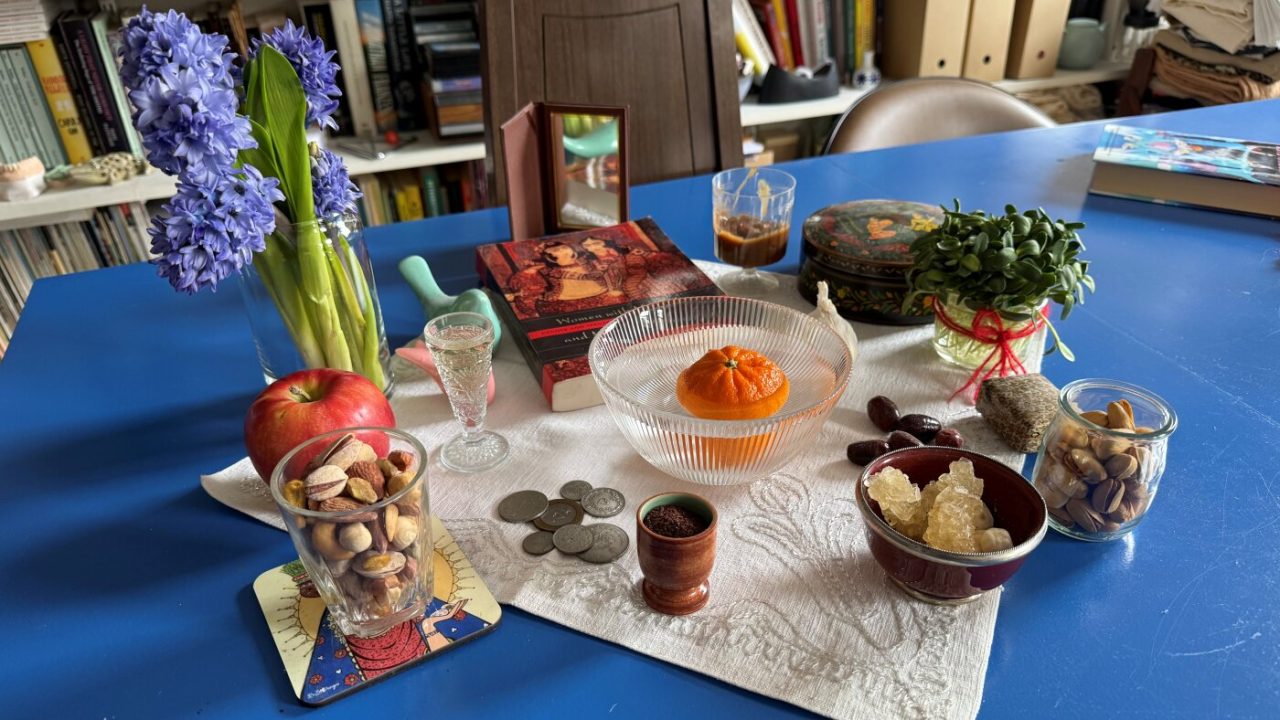
What makes Nowruz different from most holidays is its philosophical weight. It is not simply a celebration. It is a mandate. The holiday centers on rebirth, renewal, and the shedding of what no longer serves you. The Haft-Sin table, laid with seven symbolic items, encodes this directly. Sabzeh (sprouts) represents rebirth. Sib (apple) represents health. Serkeh (vinegar) represents patience earned through age.
In 2026, that philosophy moved off the table and onto the road. Iranians did not wait for the world to come to them. They went to their own country instead.
Why the “Tourism Is Dying” Assumption Collapses Under the Data
The evidence that dismantles the decline narrative is not subtle. Twenty-nine million trips in a country of roughly 88 million people means that roughly one in three Iranians traveled during Nowruz 2026. That is a participation rate that most developed tourism markets would envy during their peak seasons.
The surge was not concentrated in Tehran or Isfahan. Analysts noted a marked shift toward rural escapes, toward provinces that rarely appear in international travel guides. Mountains, forests, coastal stretches along the Caspian, and desert landscapes all saw visitor increases. Iranians were not retreating. They were exploring.
| Tourism Model | Focus | Iran’s 2026 Approach |
|---|---|---|
| Traditional inbound tourism | Foreign visitor spending | Effectively stalled by external pressures |
| Domestic mass tourism | Urban to urban movement | Still present but no longer dominant |
| Rural and nature travel | Provincial exploration | Surging, redefined the holiday season |
| Cultural-spiritual travel | Heritage and identity | Embedded in Nowruz’s 3,000-year framework |
The rural shift matters because it rewrites the economic logic. Money flowed into communities that rarely benefit from tourism infrastructure spending. Local guesthouses, roadside food vendors, and family-run farms absorbed visitor spending in ways that centralized hotel economies never could.
This is not accidental. It reflects a deeper behavioral change. When external options close, people rediscover what is inside their own borders. Iran has an extraordinary amount inside its borders.
The Real Story Behind 29 Million Departures
Nowruz 2026 did not simply produce a travel statistic. It produced a proof of concept. A nation under sustained external pressure demonstrated that its internal tourism ecosystem could absorb, sustain, and even grow during conditions that would have paralyzed smaller or less culturally cohesive societies.
Nowruz carries this capacity because of what it demands from participants. The holiday is not passive. It requires preparation, movement, and communal gathering. The traditions of Nowruz include spring cleaning, new clothing, family visits, and outdoor celebration on the thirteenth day (Sizdah Bedar), which specifically involves leaving the home and spending time in nature. The holiday itself generates travel. It always has.
What changed in 2026 was scale and intention. The subdued international context that had marked previous years, including a Nowruz observed against the backdrop of regional conflict, sharpened the domestic focus. Iranians channeled the holiday’s core philosophy of renewal into their own geography.
The color choices Iranians bring to Nowruz tell you something about the mindset. Green for nature. Turquoise for tranquility. Gold and red for energy and grandeur. These are not the colors of a culture in retreat. They are the colors of a people who intend to bloom regardless of the season outside.
What Iran’s Nowruz Surge Means for Travelers and Tourism Thinkers
For anyone who studies or practices tourism, the 2026 Nowruz numbers carry a lesson that extends well beyond Iran’s borders. Domestic tourism is not a consolation prize. It is not what people do when they cannot afford to go somewhere else. It is a fully realized system with its own logic, its own economics, and its own power to sustain communities.
Countries that have deprioritized domestic travel infrastructure in favor of chasing foreign visitors are watching the wrong metric. Iran demonstrated that 29 million internal trips can reorder a nation’s tourism conversation entirely. The provinces that received those travelers are not the same as they were before Nowruz began.
For individual travelers, the Iran story is an invitation to reframe what resilience looks like in a destination. Places under pressure often produce the most vivid, most honest travel experiences precisely because they are not performing for an outside audience. They are living for themselves.
The Nowruz tradition has been doing exactly that for three millennia. Twenty-nine million trips in 2026 confirm that it has not lost the habit.
The real question is not whether Iran’s domestic tourism can survive external pressure. The question is whether the rest of the world’s tourism industry will notice what just happened, and decide it has something to learn from a holiday that predates most modern nations by several thousand years.
Frequently Asked Questions

You Might Also Like
Bar Des Prés Moves to Mayfair and Brings Something London Has Not Seen
One of France’s most celebrated chefs is bringing his signature blend of Parisian style and…

India’s Fastest Trains Are Getting Faster — But Not How You Think
Bengaluru's Vande Bharat trains are getting new schedules for Kalaburagi and Belagavi routes. Here's what…
Brilliant Lady Is Bringing West Coast Cruises to Los Angeles This Season
Virgin Voyages made its long-awaited West Coast debut in April 2026, when the Brilliant Lady…
Leave a Reply