
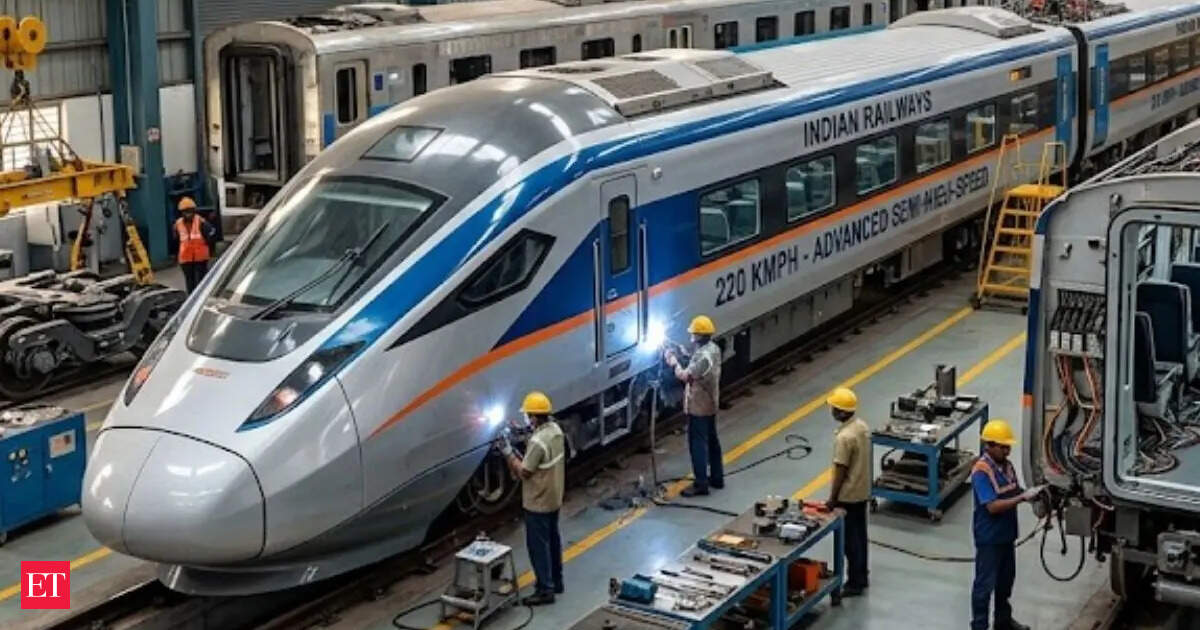
Here’s a contrarian take: India’s rail system doesn’t have a speed problem. It has a scheduling problem. And the latest overhaul of Vande Bharat services out of Bengaluru finally admits that out loud.
When Indian Railways announced sweeping changes to Vande Bharat schedules on the Bengaluru-Kalaburagi and Bengaluru-Belagavi corridors, most coverage focused on the shiny rolling stock and the promise of “passenger comfort.” That framing misses the deeper story entirely.
The real story is about infrastructure, political will, and what happens when a modern train runs on an outdated timetable. That combination doesn’t produce speed. It produces frustration.
What Most Travelers Assume About Vande Bharat
The common assumption is straightforward: Vande Bharat trains are fast, modern, and represent a clean break from India’s sluggish rail past. Buy a ticket, board a sleek semi-high-speed train, arrive refreshed. Simple.
This belief is reinforced by the train’s design. The Vande Bharat Express features aerodynamic bodywork, automatic doors, onboard Wi-Fi, and air suspension. It looks like the future. It’s been marketed as the future.
But here’s what that marketing glosses over: a train is only as fast as the track it runs on and the schedule it follows. For years, Vande Bharat services across several Karnataka corridors operated on timetables that didn’t reflect the train’s actual capabilities. The hardware was modern. The operating logic was not.
The Crack in the Narrative
The first sign that the standard story was incomplete came quietly. Indian Railways cleared two major rail infrastructure upgrades in Bengaluru, according to a Times of India report. One of those upgrades would push a key section to 130kmph operations.
That section would become only the second within the Bengaluru division to reach 130kmph, joining the Bengaluru-Jolarpettai corridor. That’s a significant detail. It means the previous Vande Bharat schedules were built around infrastructure that simply couldn’t support the train’s potential.
Rescheduling wasn’t a cosmetic refresh. It was a necessary response to physical reality catching up with ambition.
| Route | Previous Status | Post-Overhaul Target | Key Change |
|---|---|---|---|
| Bengaluru-Kalaburagi | Standard schedule, sub-optimal timings | Revised schedule, improved efficiency | New departure and arrival windows |
| Bengaluru-Belagavi | Standard schedule, limited frequency | Revised schedule, faster turnaround | Aligned with track upgrade plans |
| Bengaluru-Jolarpettai | Already at 130kmph | Benchmark corridor | First 130kmph section in division |
Why the Old Assumption Was Wrong
Speed on paper and speed in practice are two different things. The Vande Bharat platform was designed for performance, but performance requires the whole system to cooperate. Track quality, signaling upgrades, station dwell times, and scheduling logic all feed into the actual passenger experience.
Karnataka’s rail corridors, particularly the routes stretching north toward Kalaburagi and northwest toward Belagavi, have historically lagged behind the Mumbai and Chennai corridors in infrastructure investment. The trains were there. The conditions to run them optimally were not.
The new schedules being introduced for both the Bengaluru-Kalaburagi and Bengaluru-Belagavi routes represent an acknowledgment of this gap. According to reporting by Travel and Tour World, the overhaul is specifically aimed at boosting travel efficiency alongside passenger comfort. That pairing matters. Efficiency is a system-level goal. Comfort is a passenger-level experience. Addressing both simultaneously signals a more mature approach to rail planning.
For too long, India’s rail upgrades were presented as either infrastructure projects or passenger experience projects. They were rarely framed as the same thing. This overhaul blurs that line productively.
The Real Truth: A System in Transition
The Bengaluru Vande Bharat overhaul is one piece of a much larger transformation underway across Indian Railways. The broader picture involves 260 Vande Bharat Sleeper trainsets being planned for long-distance overnight routes across the country. That figure, cited in recent Indian Railways communications, signals that Vande Bharat is no longer just a daytime express concept. It’s becoming the backbone of India’s premium rail network.
The first Vande Bharat Sleeper service, operating on the Howrah-Kamakhya corridor, has already demonstrated the model’s viability for overnight travel. That precedent matters for Karnataka travelers. The Bengaluru-Belagavi corridor, covering a distance that makes overnight travel impractical today, could eventually benefit from sleeper variants once the infrastructure catches up.
The plan, as outlined in Indian Railways’ own communications, focuses on four pillars: faster services, improved passenger comfort, stronger safety systems, and greater operational efficiency. That four-part framework is notable because it doesn’t treat speed as the only goal. Safety and operational efficiency appear alongside comfort, suggesting a more holistic planning philosophy than previous upgrade cycles.
For the Bengaluru-Kalaburagi route specifically, the new schedule addresses a corridor that connects Karnataka’s tech capital with one of its most historically significant northern cities. Kalaburagi, formerly known as Gulbarga, serves as a gateway to the Hyderabad-Karnataka region. Better rail connectivity doesn’t just help tourists. It affects business travel, student mobility, and access to healthcare in underserved areas.
“The Vande Bharat Sleeper train represents a premium, modern upgrade for long-distance overnight travel in India.”
— Indian Railways, via official communications
What This Actually Means for Travelers
If you travel regularly between Bengaluru and either Kalaburagi or Belagavi, the practical implications of this overhaul are worth understanding clearly. The revised schedules are designed to reduce total journey time by aligning departure and arrival windows with actual operational capacity, rather than padding timetables to absorb infrastructure limitations.
Belagavi travelers stand to benefit particularly. The city is a major commercial and political hub in northern Karnataka, and the existing rail connection has long been considered underperforming relative to road transport alternatives. If the new schedule delivers even a modest reduction in journey time, it could shift the modal preference for business travelers who currently default to flights or private vehicles.
The comfort dimension matters too. Vande Bharat’s seating configuration, climate control, and reduced vibration from the train’s design already set it apart from conventional express services. The overhaul reportedly includes attention to these elements as well, not just the timetable. That means the upgrade isn’t purely about getting somewhere faster. It’s about making the journey itself more tolerable.
There’s a longer-term implication here that rarely gets discussed. India’s Tier 2 and Tier 3 cities have historically been underserved by premium rail. Kalaburagi and Belagavi are not Mumbai or Pune. Getting a Vande Bharat service, and then upgrading that service with better schedules and faster track, is a signal about which cities Indian Railways considers strategically important.
That signal has economic consequences. Better connectivity attracts investment, supports tourism, and reduces the friction that keeps talent concentrated in a handful of megacities. The Bengaluru Vande Bharat overhaul is, in a quiet way, also a statement about Karnataka’s internal geography of opportunity.
The trains were always fast enough. The question was whether everything around them would finally catch up.


Leave a Reply