
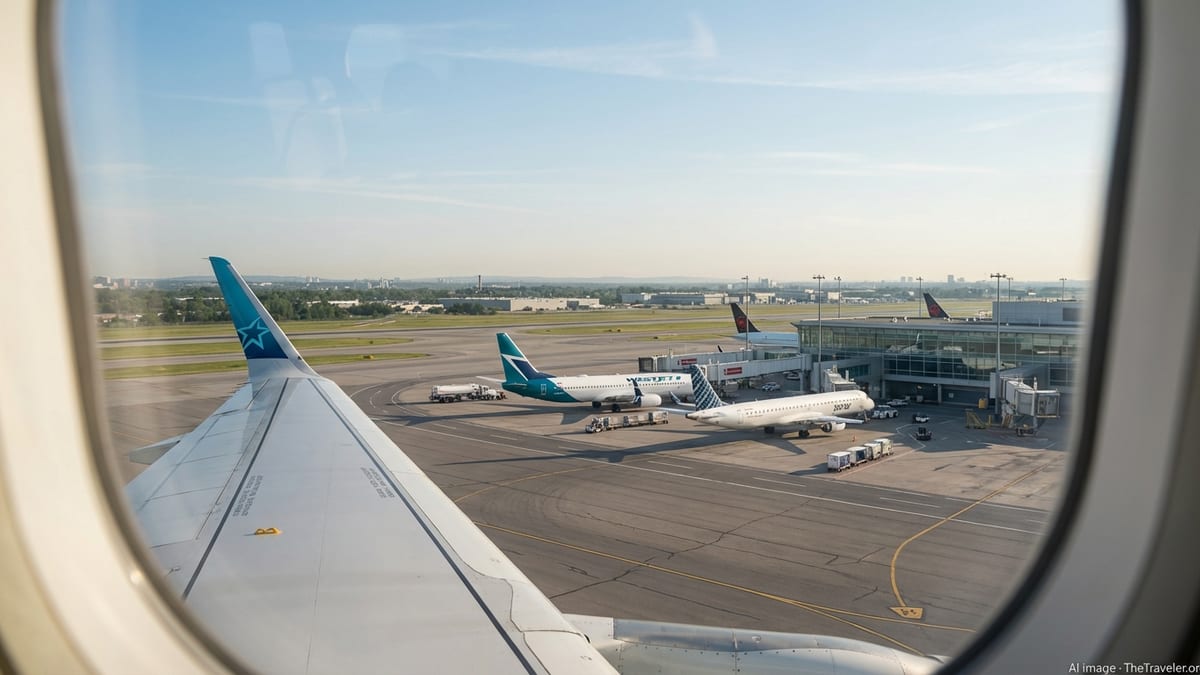
What would you do if you arrived at the airport, coffee in hand, boarding pass ready, only to discover your flight simply no longer existed?
That scenario played out for hundreds of Canadian travelers recently when 30 flights were cancelled and 159 were delayed across five major cities in a single day. Montreal, Ottawa, Toronto, Vancouver, and Winnipeg all recorded significant disruptions simultaneously. Airlines including Air Canada, WestJet, Porter Airlines, Jazz Aviation, and even international carrier Lufthansa were caught in the chaos.
The question that lingers isn’t just what happened. It’s who is responsible, and whether Canada’s aviation system is structurally prepared for the demands placed on it.
The 30 Cancellations and 159 Delays That Divided Travelers and Airlines
The disruption split public opinion almost immediately. On one side: frustrated passengers who believe airlines routinely overpromise and underdeliver, using weather or vague “operational” excuses to mask poor planning. On the other: airline representatives and aviation analysts who argue that Canada’s airports, weather patterns, and air traffic infrastructure create conditions that no carrier can fully control.
Both sides have legitimate points. Both sides also have blind spots.
| Airport / City | Airlines Affected | Disruption Type |
|---|---|---|
| Toronto (Pearson) | Air Canada, Jazz Aviation, WestJet, Porter | Cancellations + Delays |
| Montreal (Trudeau) | Air Canada, Lufthansa, Jazz Aviation | Cancellations + Delays |
| Vancouver | Air Canada, WestJet | Delays |
| Ottawa | Porter Airlines, Air Canada | Cancellations + Delays |
| Winnipeg | WestJet, Jazz Aviation | Delays |
Why Passengers Argue Airlines Are Failing Their Basic Obligation
Travelers who were stranded that day are not a sympathetic audience for corporate explanations. Many had connecting flights to catch, family events to attend, and business meetings that couldn’t be rescheduled. The disruptions weren’t minor inconveniences. They cascaded.
When one flight is delayed at Toronto Pearson, the ripple moves outward. A Jazz Aviation regional connector delayed by 90 minutes can strand passengers who miss their Air Canada transatlantic connection. That’s not weather. That’s scheduling fragility.
Critics point to a pattern. Updated data from Travel and Tour World shows Canada recorded 282 delays and 42 cancellations across seven major airports in a closely related reporting period, with Toronto Pearson logging the highest disruption count. If these numbers are becoming routine, passengers argue, the system isn’t being stressed. It’s broken.
“When airlines cancel a flight, they don’t just cancel a trip. They cancel a wedding appearance, a job interview, a last visit with a sick parent. The human cost is never reflected in the refund policy.”
— Frequent traveler perspective, widely echoed on Canadian aviation forums
There’s also the labor dimension. Air Canada experienced a notable flight attendant strike from August 16 to 19, 2025, involving 10,517 workers represented by the Canadian Union of Public Employees. Labor instability at a flagship carrier sends shockwaves through the entire network, including partner and regional carriers like Jazz Aviation.
Passengers argue that airlines have enough data, enough technology, and enough profit margin to build more resilient schedules. The fact that they don’t, critics say, is a choice.
Why Airlines and Aviation Analysts Say the System Is the Problem
The airline industry’s counterargument is less emotionally satisfying but structurally coherent. Canada is a geographically enormous country with some of the most severe weather conditions in the world. Operating reliable air service between Winnipeg and Vancouver in spring, when pressure systems shift rapidly, is genuinely difficult.
Air traffic control constraints, runway capacity limits, and gate availability at congested hubs like Pearson create bottlenecks that individual airlines cannot resolve unilaterally. When one aircraft is delayed, the next scheduled use of that aircraft is automatically compromised. This is called the “rotation effect,” and it’s a systemic issue, not an airline failure.
Airlines also point to the broader geopolitical and behavioral shifts affecting Canadian aviation. Air Transat announced it is cancelling all U.S. flights for summer, including routes to Fort Lauderdale and Orlando. Statistics Canada data from late 2025 showed Canadians were already taking fewer trips to the United States. Demand volatility forces carriers to make difficult scheduling decisions that inevitably produce gaps and cancellations.
From this perspective, blaming Air Canada or WestJet for systemic disruptions is like blaming a single driver for a highway traffic jam. The individual actor is visible. The infrastructure failure is invisible but primary.
What the Objective Data Shows About Canadian Flight Reliability
The data doesn’t fully vindicate either side. It complicates both.
FlightAware’s live cancellation tracking for Air Canada’s fleet shows a consistent pattern of Montreal-Trudeau and Toronto Pearson routes appearing in cancellation logs. This isn’t a one-day anomaly. The Aéroports de Montréal departure board regularly reflects delays that extend beyond weather windows, suggesting operational scheduling issues compound environmental ones.
#pvv_bar_chart_1775768775235_ye0nfh {
font-family: -apple-system, BlinkMacSystemFont, ‘Segoe UI’, Roboto, sans-serif;
margin: 2rem 0;
border-radius: 12px;
box-shadow: 0 4px 24px rgba(0,0,0,0.08);
background: #fff;
overflow: hidden;
}
#pvv_bar_chart_1775768775235_ye0nfh .pvv-bc-header {
background: linear-gradient(135deg, #2d3436 0%, #636e72 100%);
color: #fff;
padding: 1.25rem 1.5rem;
font-size: 1.15rem;
font-weight: 700;
}
#pvv_bar_chart_1775768775235_ye0nfh .pvv-bc-body { padding: 1.5rem; }
#pvv_bar_chart_1775768775235_ye0nfh .pvv-bc-row {
display: flex;
align-items: center;
margin-bottom: 0.75rem;
}
#pvv_bar_chart_1775768775235_ye0nfh .pvv-bc-label {
width: 120px;
flex-shrink: 0;
font-size: 0.85rem;
font-weight: 600;
color: #2d3748;
text-align: right;
padding-right: 1rem;
white-space: nowrap;
overflow: hidden;
text-overflow: ellipsis;
}
#pvv_bar_chart_1775768775235_ye0nfh .pvv-bc-track {
flex: 1;
height: 32px;
background: #f7fafc;
border-radius: 6px;
overflow: hidden;
}
#pvv_bar_chart_1775768775235_ye0nfh .pvv-bc-bar {
height: 100%;
border-radius: 6px;
display: flex;
align-items: center;
justify-content: flex-end;
padding-right: 8px;
min-width: 40px;
}
#pvv_bar_chart_1775768775235_ye0nfh .pvv-bc-value {
font-size: 0.75rem;
font-weight: 700;
color: #fff;
white-space: nowrap;
text-shadow: 0 1px 2px rgba(0,0,0,0.2);
}
#pvv_bar_chart_1775768775235_ye0nfh .pvv-bc-vertical {
display: flex;
align-items: flex-end;
justify-content: space-around;
height: 250px;
padding: 0 1rem;
border-bottom: 2px solid #e2e8f0;
}
#pvv_bar_chart_1775768775235_ye0nfh .pvv-bc-vcol {
display: flex;
flex-direction: column;
align-items: center;
flex: 1;
max-width: 60px;
height: 100%;
justify-content: flex-end;
}
#pvv_bar_chart_1775768775235_ye0nfh .pvv-bc-vbar {
width: 70%;
border-radius: 6px 6px 0 0;
min-width: 24px;
min-height: 4px;
}
#pvv_bar_chart_1775768775235_ye0nfh .pvv-bc-vlabel {
margin-top: 0.5rem;
font-size: 0.72rem;
font-weight: 600;
color: #4a5568;
text-align: center;
word-break: break-word;
}
#pvv_bar_chart_1775768775235_ye0nfh .pvv-bc-vvalue {
font-size: 0.7rem;
font-weight: 700;
color: #718096;
margin-top: 0.2rem;
}
@media (max-width: 640px) {
#pvv_bar_chart_1775768775235_ye0nfh .pvv-bc-label { width: 80px; font-size: 0.75rem; }
#pvv_bar_chart_1775768775235_ye0nfh .pvv-bc-track { height: 26px; }
#pvv_bar_chart_1775768775235_ye0nfh .pvv-bc-header { font-size: 1rem; padding: 1rem; }
#pvv_bar_chart_1775768775235_ye0nfh .pvv-bc-vertical { height: 180px; }
}
Travel and Tour World’s reporting on a comparable disruption event recorded 174 delays and 13 cancellations affecting Toronto, Montreal, Vancouver, Ottawa, and Calgary, with Air Canada appearing across multiple disruption categories. The frequency of these events, across multiple reporting periods, suggests this is not random turbulence. It is a recurring pattern.
At the same time, Canada’s airports rank among the most weather-exposed in the world. Comparing Canadian on-time performance to European or Gulf-region carriers without accounting for climate variables produces misleading conclusions. The data is real. The context around the data matters enormously.
The Editorial Verdict: Shared Failure Requires Shared Solutions
Assigning blame entirely to airlines is emotionally satisfying but analytically incomplete. Assigning blame entirely to weather and infrastructure lets carriers off the hook for choices they do control: scheduling buffer times, crew deployment, communication with stranded passengers, and compensation processing speed.
The 30 cancellations and 159 delays affecting Montreal, Ottawa, Toronto, Vancouver, and Winnipeg represent a shared failure. Airlines built schedules with insufficient resilience. Airports operate at capacity levels that leave no room for error. Regulators have not enforced passenger rights with enough consistency to create real financial incentives for improvement.
Canada’s Air Passenger Protection Regulations exist precisely for moments like this. But enforcement gaps mean many travelers receive inadequate compensation or none at all, particularly when airlines successfully classify disruptions as outside their control.
What Canada’s Aviation Disruption Crisis Means for the Next Booking You Make
The implications of this debate extend beyond any single bad travel day. If disruptions at this scale are becoming normalized, Canadian travelers face a fundamental trust problem with domestic aviation. That trust, once lost, reshapes behavior. Air Transat’s decision to pull U.S. routes is partly a response to declining Canadian demand for cross-border travel. Demand shifts when confidence collapses.
For airlines, the long-term cost of chronic disruption isn’t just compensation payouts. It’s brand erosion. WestJet, Porter Airlines, and Jazz Aviation all compete for travelers who have options. Repeated delays and cancellations push passengers toward rail, road, or simply staying home.
For regulators and airport authorities, the pattern visible in this data is an early warning. Toronto Pearson’s consistently high disruption numbers, confirmed across multiple reporting periods, signal infrastructure stress that will not resolve itself. Investment decisions made in the next two to three years will determine whether Canada’s aviation network becomes more resilient or more brittle.
The next time you book a flight through Pearson or Trudeau, you’re not just purchasing a seat. You’re placing a bet on a system that, right now, is losing that bet more often than it should.
(function(){var w=document.getElementById(‘pvv-scenario-s17757687801656jx4’);if(!w)return;var btns=w.querySelectorAll(‘button[data-choice]’);btns.forEach(function(b){b.addEventListener(‘click’,function(){if(w.dataset.revealed)return;w.dataset.revealed=’1′;btns.forEach(function(x){x.style.opacity=x===b?’1′:’0.45′;x.style.cursor=’default’;x.style.transform=’none’});var o=document.getElementById(‘s17757687801656jx4-out-‘+b.dataset.choice);if(o){o.style.display=’block’}});b.addEventListener(‘mouseenter’,function(){if(!w.dataset.revealed){b.style.borderColor=’#38bdf8′;b.style.transform=’translateX(4px)’}});b.addEventListener(‘mouseleave’,function(){if(!w.dataset.revealed){b.style.borderColor=’#334155′;b.style.transform=’none’}})})})();
.pvv-faq-section details summary::-webkit-details-marker{display:none}.pvv-faq-section details summary::marker{display:none;content:””}.pvv-faq-section details[open] summary .pvv-faq-arrow{transform:rotate(90deg)}
Frequently Asked Questions

You Might Also Like

Travelport’s AI Platform Upgrade Is Quietly Reshaping How the World Travels
API-driven transactions on Travelport’s platform have jumped to 63 percent — up from just 43…

Gujarat Just Crossed 12.4 Crore Domestic Tourists And Pilgrimage Led The Way
One hundred and twenty-four million Indian travelers visited Gujarat's top destinations in a single recorded…

Colorado Mountain Towns Are Quietly Shifting Away From Record-Chasing
Colorado’s mountain tourism is hitting a rare rough patch — and a weak winter is…
Leave a Reply