
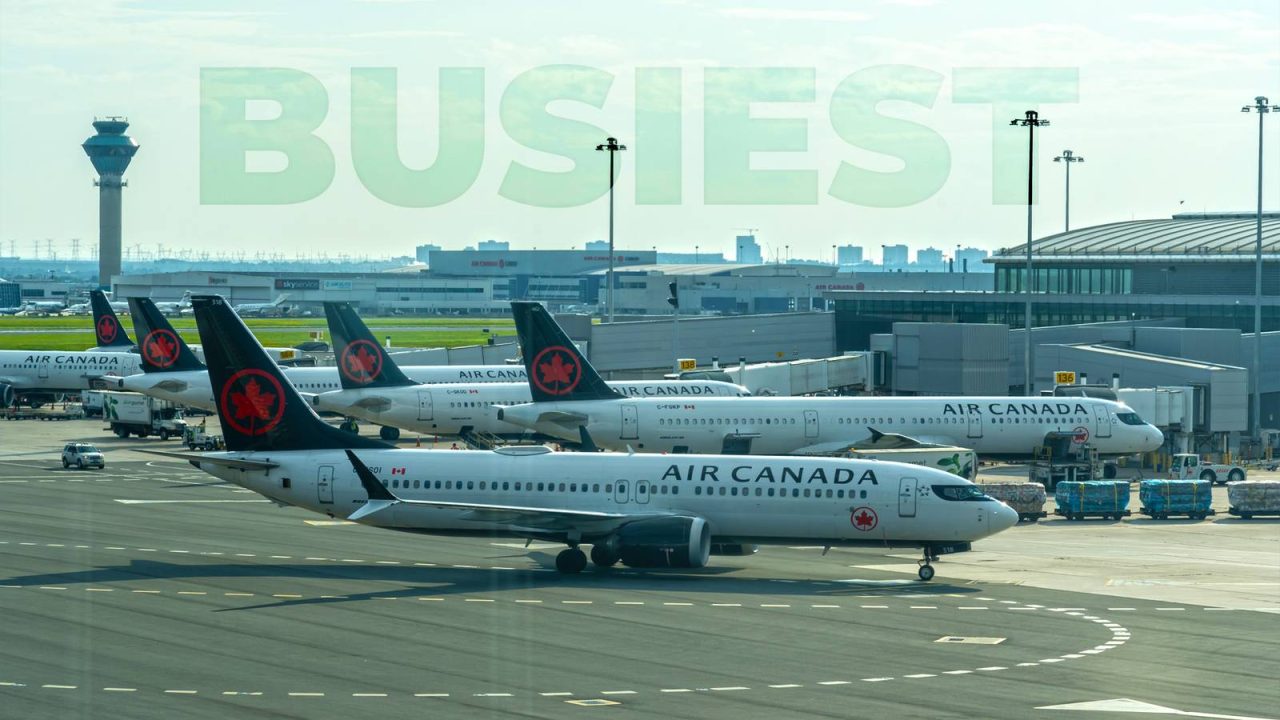
Four hundred and thirty-five flights. That is the combined count of cancellations and delays that swept across eight Canadian airports in a single operational day, grounding thousands of passengers from Deer Lake to Vancouver and every major hub in between.
The numbers are stark on their own. But numbers don’t capture the woman in Calgary who missed her father’s surgery. They don’t describe the young family at Halifax who slept on terminal chairs for eleven hours, feeding a toddler crackers from a carry-on bag.
This is what a 435-flight disruption day actually feels like.
How 8 Airports Collapsed Into 435 Disruptions on One Day
It began quietly, the way these things always do. A handful of gate changes. A scattering of delay notifications. By mid-morning, the boards at Toronto Pearson told a different story entirely.
Toronto, Canada’s busiest hub, anchored the disruption. Delays cascaded outward from there, pulling Montreal, Calgary, Vancouver, Ottawa, Halifax, St. John’s, and Deer Lake into the same web of misconnections and rolling holdovers.
| Airport | Cancellations | Delays | Airlines Affected |
|---|---|---|---|
| Toronto Pearson | Multiple | Highest volume | Air Canada, Porter, WestJet, Jazz |
| Montreal Trudeau | 7 | 123 | Air Canada, Jazz, WestJet |
| Vancouver International | 9 | 79 | Air Canada, WestJet |
| Calgary International | Confirmed | Confirmed | WestJet, Air Canada |
| Ottawa Macdonald-Cartier | Confirmed | Confirmed | Porter, Air Canada |
| Halifax Stanfield | Confirmed | Confirmed | Air Canada, Jazz |
| St. John’s International | Confirmed | Confirmed | PAL Airlines, Air Canada |
| Deer Lake Regional | Confirmed | Confirmed | PAL Airlines |
The disruption hit every airline operating in Canada’s domestic and short-haul international corridors. Air Canada’s travel outlook page listed affected routes stretching coast to coast. Jazz, Porter Airlines, WestJet, and PAL Airlines all reported significant operational impacts.
Montreal’s 123 delays alone made it the second-worst affected city. Vancouver’s 79 delays reflected a West Coast ripple that stretched as far north as smaller regional hubs.
The Terminal Experience: Three Passengers, Three Broken Journeys
Consider Marcus, a 34-year-old project manager from Ottawa. He booked a Porter flight to Toronto that morning to catch a connecting Air Canada leg to Vancouver. The delay notification arrived at 5:47 a.m., twelve minutes before he left for the airport.
He went anyway. Everyone always goes anyway.
By 9:00 a.m., his Ottawa departure had slipped two hours. By 11:30 a.m., the Toronto connection was gone. The next available seat to Vancouver was not until the following evening, meaning a full lost workday, one hotel night, and a rebooked meeting that had taken three weeks to schedule.
“You keep checking the app, refreshing, expecting it to fix itself. It never does. You just watch the board and do the math on what you’re losing.”
— Composite passenger experience, Canadian airport terminals
Then there’s the case of Deer Lake. This Newfoundland regional airport serves communities that have almost no ground transportation alternatives for long distances. PAL Airlines is the primary carrier connecting those communities to larger centres.
When PAL flights delayed out of Deer Lake, passengers weren’t just inconvenienced. Some were stranded with no realistic alternative. The geography of Atlantic Canada turns a flight delay into something that can mean missing a medical appointment in St. John’s, or failing to reach a ferry connection, or simply spending an unplanned night in a regional airport with minimal amenities.
Why Canada’s Aviation Network Is Especially Vulnerable to Cascade Failures
Canada’s airport geography creates a structural fragility that other countries don’t face quite the same way. The country is the second largest in the world by land area, but its population clusters along a narrow southern corridor. That means a handful of hub airports carry a disproportionate share of all domestic traffic.
When Toronto Pearson stumbles, the entire network feels it. A delayed inbound aircraft from Montreal means a delayed outbound to Calgary. That Calgary aircraft was supposed to turn around for Vancouver. Vancouver misses its Halifax connection. Halifax can’t get the aircraft to St. John’s on time.
Aviation analysts have described this as the “hub dependency problem” in Canadian domestic aviation. The tight labor market in recent years has intensified the issue. Pilot shortages, crew availability constraints, and maintenance scheduling pressures mean that the buffer capacity airlines once relied on is thinner than it used to be.
The disruption affecting 32 cancellations and 403 delays is not an isolated anomaly. Earlier reporting tracked a comparable event where 297 delays and 52 cancellations hit the same corridor of major Canadian airports, suggesting a persistent pattern rather than a one-off storm event.
The Turning Point Nobody Talks About: Hour Six in the Terminal
Passengers who have survived long airport delays describe a specific psychological threshold. It usually arrives somewhere around hour five or six. Before that threshold, most people believe the system will correct itself. They stay near their gate, refresh their phones, accept the airline’s apologies with patience.
After that threshold, something shifts. The mental calculus changes. People start pricing rental cars they can’t afford. They call friends two cities over to ask about driving. They book refundable hotels just to have an exit option, even if they never use it.
For travelers affected by the 32 cancellations specifically, there was no “maybe it clears up” comfort. A cancellation is a hard stop. The next available rebooking on popular routes out of Toronto, Montreal, or Vancouver can be 24 to 48 hours out during peak disruption periods. Airlines work through their waitlists methodically, but the math rarely favors late-arriving passengers at the rebooking desk.
Deer Lake and St. John’s: When Delays Aren’t Just Inconvenient
The inclusion of Deer Lake Regional Airport in this disruption deserves specific attention. Deer Lake serves the western Newfoundland region, and PAL Airlines is the dominant carrier connecting it to the rest of the country. The airport handles a relatively small total volume, but its passengers are overwhelmingly reliant on air travel in a way that urban travelers rarely are.
A delayed flight out of Deer Lake can mean missing a specialist appointment in St. John’s that took four months to schedule. It can mean arriving too late for a ferry to an island community with no hotel alternatives. The disruption calculus is entirely different from what a business traveler in Toronto faces.
St. John’s, meanwhile, recorded its own confirmed disruptions. Air Canada and PAL Airlines both showed affected operations, compressing an already limited schedule into fewer available seats for rebooking.
After 435 Disruptions: What the Resolution Actually Looked Like
By late evening, airlines began releasing recovery schedules. Air Canada’s travel outlook listed updated departure windows. WestJet communicated directly with affected passengers via app notifications. Porter, which operates a more concentrated route network, managed rebookings with slightly shorter wait times due to its smaller overall volume.
The final count stood at 32 confirmed cancellations and 403 confirmed delays across eight airports. Not every delayed passenger missed a connection. Some delays were measured in forty minutes, not hours. But for the subset of travelers whose itineraries required tight connections, or whose final destinations were served by only one or two daily flights, the day ended far from where they expected to be.
Marcus, the Ottawa project manager, eventually reached Vancouver. He arrived 29 hours after his originally scheduled landing, one hotel receipt in his bag and a rescheduled meeting still waiting to be confirmed.
The family in Halifax made it home by midnight. The father in Calgary, the one whose daughter had worried about missing surgery, landed in time. Not every story from a disruption day ends in loss. But the near-misses are their own kind of exhaustion.
Canada’s airports will have another day like this one. The structural pressures that produced 435 disruptions in a single operational cycle have not been resolved. The question passengers are quietly beginning to ask is not whether it will happen again, but how many hours they are willing to surrender before they stop calling it a delay and start calling it something else entirely.



Leave a Reply