
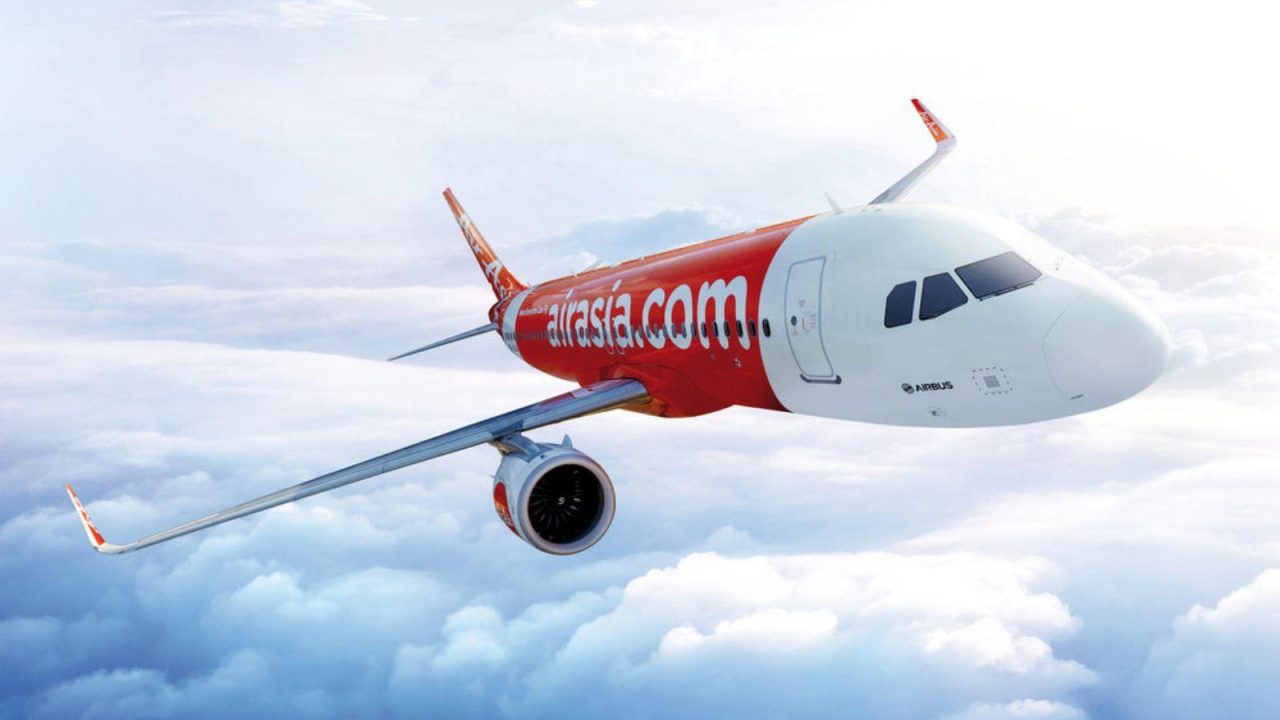
It was a Tuesday morning in Kuala Lumpur, and the departure hall at klia2 was already humming. A young couple from Osaka waited beside a family from Melbourne. Students with backpacks stood next to retirees rolling neatly packed luggage. Every flight board blinked with cities most budget travelers once thought were out of reach. That scene, multiplied across dozens of airports and dozens of weeks, is exactly what 18.9 million passengers looks like in real life.
AirAsia X Berhad dropped its preliminary Q1 2026 results on April 10, 2026, and the headline landed with quiet confidence: 9% passenger growth year-on-year for the quarter ending March 31, 2026. That is not a rounding-error uptick. It is a structural signal.
The number matters because it arrived during a period of genuine uncertainty. Fuel costs remain stubborn. Currency volatility across Southeast Asia has not disappeared. And yet, demand held. Then it grew. Understanding why requires peeling back five distinct forces, each one more revealing than the last.
Why the Q1 2026 Report Is the Most Watched in AirAsia X’s Recent History
Before we count down the five forces, it is worth understanding why this particular quarter carries extra weight. Q1 2026 was not just another performance period. It was the first consolidated result after AirAsia X completed the integration of AirAsia’s broader aviation assets under one listed umbrella.
That kind of structural change usually creates noise, confusion, and temporary drag on metrics. Investors watch closely. Analysts hedge their forecasts. The fact that the group emerged from that integration with 9% growth intact is, by any measure, a notable achievement.
5 Through 2: The Forces That Built the Foundation
5 — Corporate Consolidation That Actually Worked
Mergers and integrations in aviation often produce chaos before they produce clarity. Routes overlap, staff realign, branding blurs. AirAsia X’s consolidation of AirAsia’s aviation assets into a single listed entity could have been a distraction. Instead, it appears to have created operational coherence.
With a unified fleet strategy, centralized revenue management, and one balance sheet to tell the story, the group can allocate capacity more efficiently. Profitable routes get more aircraft. Underperforming markets get reassessed faster. That agility is a competitive edge that took years to build and one quarter to validate.
4 — Southeast Asia’s Middle-Class Travel Appetite Shows No Ceiling
The demographic tide driving low-cost long-haul demand across Southeast Asia is not a short-term trend. It is a generational shift. Millions of first-time international travelers are graduating into repeat travelers. They know how to hunt for fares. They book months in advance. They fill aircraft that full-service carriers once assumed would never turn a profit at budget prices.
Malaysia, Indonesia, Thailand, and the Philippines collectively represent a market where outbound travel continues to outpace economic forecasts. AirAsia X sits directly in the path of that current. The 9% passenger growth is partly a reflection of the airline’s strategy and partly a reflection of the ocean it swims in.
3 — The Philippines Terminal Shift and Infrastructure Signals
Not every factor driving passenger numbers is glamorous. Sometimes it is logistics. Starting March 29, 2026, all international flights in Manila moved from NAIA Terminal 3 to Terminal 1. That kind of transition creates short-term friction but signals longer-term capacity investment in a market that feeds directly into AirAsia’s regional network.
Passengers adapting to new terminal operations are, by definition, passengers still traveling. The fact that demand absorbed that disruption without visible collapse is a quiet indicator of how robust underlying intent to travel has become across the region.
2 — Competitive Pricing in Long-Haul Budget Travel Remains Unmatched
AirAsia X built its model around one uncomfortable truth: most people want to fly long distances but refuse to pay full-service prices to do it. That proposition has not changed. What has changed is the competitive landscape, where AirAsia X has few genuine rivals operating at scale on intra-Asia and Asia-Pacific long-haul routes at budget price points.
The absence of a crowded competitive field on its core routes means AirAsia X captures demand that has nowhere else to go at comparable prices. That pricing power, exercised carefully, shows up in passenger numbers first and revenue metrics second.
The Number 1 Reveal: 18.9 Million Passengers and What That Number Actually Means
Here is where the countdown earns its weight. The single most important force behind AirAsia X’s strong Q1 2026 start is not any one route, strategy, or market condition. It is the demonstrated resilience of demand itself, even as macroeconomic headwinds kept analysts cautious.
Carrying 18.9 million passengers in a single quarter is a volume that strains the imagination. That is roughly the entire population of the Netherlands boarding planes operated under the AirAsia Group umbrella, in three months. It is also a number that represents real revenue, real seat utilization, and real confidence from travelers who could have stayed home but chose to fly.
The 9% year-on-year growth rate is particularly meaningful because Q1 2025 was not a soft comparison period. Post-pandemic travel recovery in Southeast Asia had already normalized by early 2025. Growing 9% on top of a healthy baseline is organic expansion, not statistical bounce-back.
“AirAsia X Berhad has recorded strong 1Q2026 operating performance with passenger growth of 9% year-on-year.”
— AirAsia X Official Newsroom, April 10, 2026
What makes the number deeper is its timing. This result landed in the first quarter following the group’s structural transformation into a single consolidated listed entity. Integration usually costs performance in the short term. Here, performance improved. That tells you something important about how the underlying airline operation was already running before the corporate restructuring formalized it.
It also signals something about traveler psychology in Southeast Asia right now. Uncertainty around global trade policy, currency fluctuations across the ringgit and other regional currencies, and elevated cost-of-living pressures have not translated into reduced flying. If anything, budget long-haul appears to be the category that travelers protect when discretionary spending comes under pressure. They cut restaurants before they cut their one annual trip to Japan or Australia.
AirAsia X’s model is uniquely positioned to capture that behavior. When budgets tighten, the value proposition of flying cheap rather than not flying at all becomes more compelling, not less. The 18.9 million figure is the measurable outcome of that dynamic playing out across millions of individual booking decisions.
What the 9% Growth Signal Means for Travelers and the Broader Market
For travelers planning trips across Asia-Pacific routes in 2026, this data carries practical implications. When an airline reports strong passenger growth early in the year, it typically responds by defending its schedule, adding frequencies on proven routes, and opening new markets carefully. That translates to more options at competitive fares across the network.
For the broader aviation market, AirAsia X’s Q1 performance reinforces a pattern that is emerging across budget long-haul operators globally: the segment is not just surviving, it is expanding its share of total international travel. The era of assuming that long-haul travel belongs exclusively to full-service carriers is ending one boarding pass at a time.
The more interesting question is what happens next. Can AirAsia X convert 9% passenger growth into proportional revenue and profit improvement when full financial results arrive? Passenger counts are the crowd at the door. Yield management is whether they paid enough to make the show worth running.
The 18.9 million passengers who flew in those three months did not make a collective decision. They each made individual ones, in their own currencies, from their own cities, toward destinations that matter to them personally. That those decisions added up to 9% more than the year before is the most honest economic survey of how Southeast Asia feels about the future right now.
And if that survey is right, the queues at klia2 are only going to get longer.
Frequently Asked Questions

You Might Also Like
Five Flights Cut as Spirit Delta and American Leave Philadelphia Travellers Stranded
Five flights out of Philadelphia International Airport have been suspended by Spirit, Delta, and American…

Egba People Gather in Abeokuta to Mark 39 Years of Lisabi Festival
For 39 years, the Egba people of Abeokuta have gathered to honor a warrior whose…
Spain Airport Strikes This Easter Could Leave Thousands Stranded
Millions of Easter travelers heading to Spain this year are being warned to prepare for…
Leave a Reply