
▶ Read transcript
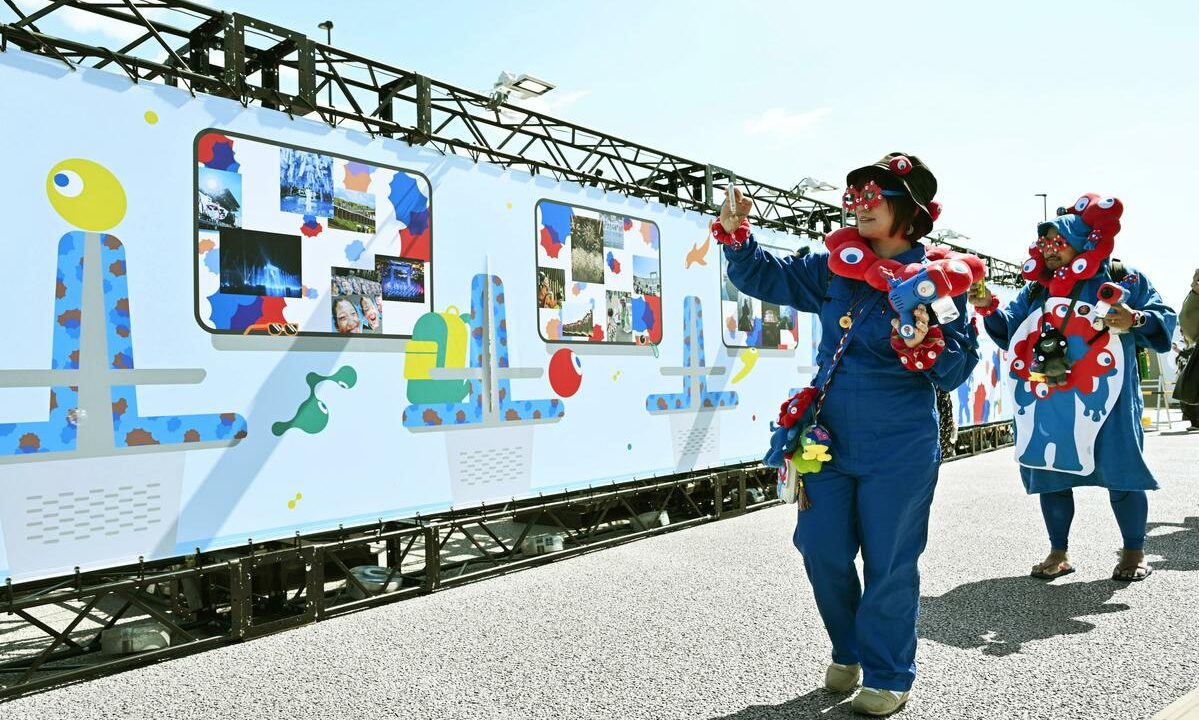
Here’s what you need to know about Osaka’s Expo anniversary week in 2026. Starting April 8th, Osaka launched a full week of events called Expo 2025 Futures, marking one year since World Expo 2025 opened. This isn’t just a celebration — it’s a continuation of the Expo’s original theme around designing future society, covering health, sustainability, and technology. Events are split across two venues, including the historic Expo ’70 Commemorative Park, which connects Osaka’s modernist past directly to its current push into biotech and clean energy. You’ll also find exhibits featuring objects made from repurposed Expo infrastructure, plus new technology displays treating last year’s big ideas as works in progress rather than finished products. And if you’re into collectibles, anniversary-edition Myaku-Myaku mascot merchandise is available exclusively during the week. If you’re considering a trip, lock in your travel dates around April 8th and check the official Expo 2025 site for venue details before you book.
Most people assume a World Expo anniversary is just a ribbon-cutting ceremony with speeches nobody remembers. They’re wrong. What Osaka launched on April 8, 2026, is something far more deliberate and, frankly, more interesting than a nostalgic pat on the back.
This is a city using a milestone to push an ongoing conversation about how humans design their future. The weeklong event, tied to the first anniversary of World Expo 2025 opening in Osaka, isn’t just a party. It’s a preview of where the ideas first showcased in 2025 are heading next.
And if you’re a traveler who hasn’t booked Osaka yet, this countdown might change that.
The Expo 2025 Theme That Still Drives Everything
Before the countdown begins, one fact anchors everything else: World Expo 2025 Osaka was not a typical trade fair. Its theme, “Designing Future Society for Our Lives,” placed health, sustainability, technology, and innovation at the center of 158 participating countries’ exhibits.
That’s 158 nations, all under one organizing idea. The anniversary week carries that same DNA forward. Understanding the theme is understanding why each item on this list matters.
| Ticket Type | Age Group | Price (Yen) |
|---|---|---|
| Adult | 18 years and older | ¥7,500 |
| Youth | Ages 12 to 17 | ¥4,200 |
| Child | Ages 4 to 11 | ¥1,800 |
Number 5: Two Historic Venues Hosting “Expo 2025 Futures” Events
The anniversary programming doesn’t live in one place. According to the official Expo 2025 site, the first events in the “Expo 2025 Futures” series are being held at two venues in April 2026, with one of them being Expo ’70 Commemorative Park.
That location choice is deliberate and loaded with meaning. Expo ’70 was Osaka’s original World Expo, held 56 years ago. Returning to that ground signals a city drawing a direct line between its mid-century modernist ambitions and its current push toward biotech, clean energy, and AI-integrated living.
For travelers, this means two distinct experiences in one trip. One venue carries the weight of history. The other carries prototypes of what’s next. Neither is a passive museum visit.
Number 4: Repurposed Materials Exhibits That Challenge What “Souvenir” Means
One of the more unexpected elements of the anniversary week is the focus on repurposed materials. Exhibits displaying objects made from reclaimed and upcycled Expo infrastructure are part of the programming, according to reporting by Mainichi Japan.
This isn’t decoration. It’s a direct extension of the Expo’s sustainability mandate. When you display a chair made from a decommissioned pavilion wall, you’re making an argument about material culture and consumption. That argument lands harder than a panel discussion.
For the design-minded traveler, these exhibits offer something rare: objects with a documented provenance tied to a specific global moment. That’s not a trinket. That’s a conversation piece with a timestamp.
Number 3: Innovative Exhibits Extending the Expo’s Core Research
The anniversary isn’t just looking backward. New innovative exhibits are featured throughout the week, carrying forward the Expo’s focus on health technology, environmental design, and social infrastructure.
World Expo 2025 drew international attention for its concentration of cutting-edge demonstrations. The anniversary programming treats those demonstrations not as finished products but as starting points. Think of it as a one-year progress report on ideas that were still theoretical in April 2025.
That framing matters for travelers who follow technology trends. You’re not watching a replay. You’re watching iteration in real time, in a city that has committed institutional resources to seeing these ideas through.
“A weeklong event began on Wednesday in Osaka to mark the first anniversary of last year’s World Expo opening in the western Japanese city.”
— Kyodo News, April 2026
Number 2: Myaku-Myaku, the Mascot That Became a Cultural Phenomenon
If you haven’t encountered Myaku-Myaku yet, prepare yourself. The official mascot of Expo 2025 is described as a mysterious creature born from the fusion of cells and water, with a true identity that officially remains unknown.
That deliberately ambiguous origin story turned Myaku-Myaku into one of the more discussed mascot designs in recent Expo history. The creature’s unsettling yet oddly endearing appearance generated significant international attention online throughout 2025.
Exclusive Myaku-Myaku souvenirs are available during the anniversary week celebrations. For collectors and pop culture travelers, this is the primary commercial draw of the event. These aren’t standard gift shop items. Anniversary-edition merchandise tied to a specific milestone tends to hold value in ways that general Expo merchandise does not.
The souvenir angle also points to something larger: Osaka has built a mascot with enough cultural traction to anchor merchandise drops a full year after the Expo’s opening. That’s brand management at a civic scale, and it’s working.
The Top Reason: Osaka Is Turning a One-Time Event Into a Permanent Conversation
Here is the thing most travel coverage misses about this anniversary week. The celebrations aren’t a farewell tour. They’re the opening act of something longer.
The “Expo 2025 Futures” series, of which the April 2026 events are just the first installment, is designed to extend the Expo’s intellectual and cultural impact well beyond the original event’s timeline. Osaka is not treating the Expo as a chapter that closed. It’s treating it as infrastructure for ongoing civic and global dialogue.
This has direct implications for travelers. A city that invests in this kind of long-arc programming creates a more interesting destination over time. Osaka in 2026 is not the same city it was in 2019. The Expo accelerated infrastructure development, international partnerships, and a public culture of forward-thinking design that is now visibly embedded in how the city presents itself.
The western Japanese city, already a draw for its food culture, castle district, and proximity to Kyoto and Nara, now carries an additional layer. It is a city that hosted 158 nations in a shared thought experiment about the future, and it is actively refusing to let that experiment end.
For travelers who want more than a checklist of temples and ramen bowls, that’s a compelling pitch. Osaka is offering something that most destinations can’t: a living, evolving engagement with the question of what comes next, housed in a place that has been asking that question for over half a century.
What Travelers Should Actually Do With This Information
The anniversary week runs through mid-April 2026. If you’re already planning a Japan trip, routing through Osaka during this window adds a layer to the visit that no standard itinerary offers. The dual-venue format means you can split the experience across two days without overlap.
If you’re a collector, the Myaku-Myaku anniversary merchandise is the clearest time-sensitive reason to move quickly. Anniversary-edition items from major international events have a well-documented pattern of disappearing from shelves and reappearing at multiples on secondary markets.
If you’re a designer, architect, urban planner, or anyone professionally invested in sustainability and technology, the repurposed materials exhibits and innovation displays offer a compressed briefing on where 158 countries’ best ideas landed after a year of real-world pressure-testing.
The deeper takeaway isn’t about any single exhibit or souvenir. It’s about what it means when a city decides that a world-class event doesn’t have to end when the flags come down. Osaka made that decision. The question for travelers is whether they’ll show up while the decision is still fresh enough to feel it.
Frequently Asked Questions

You Might Also Like
HK Express Named World’s Best Low-Cost Airline as Hotels Hit Record Demand
HK Express has just been named the World’s Best Low-Cost Airline for 2026 — and…

Vivanta Vrindavan Opens and Luxury Hospitality Enters Sacred Territory
One of India’s most recognized hospitality brands is making its first move into one of…
Zanzibar Is Now Part of Africa’s Fastest-Growing Travel Wave
Africa’s tourism boom is no longer a trend on the horizon — it is happening…
Leave a Reply