
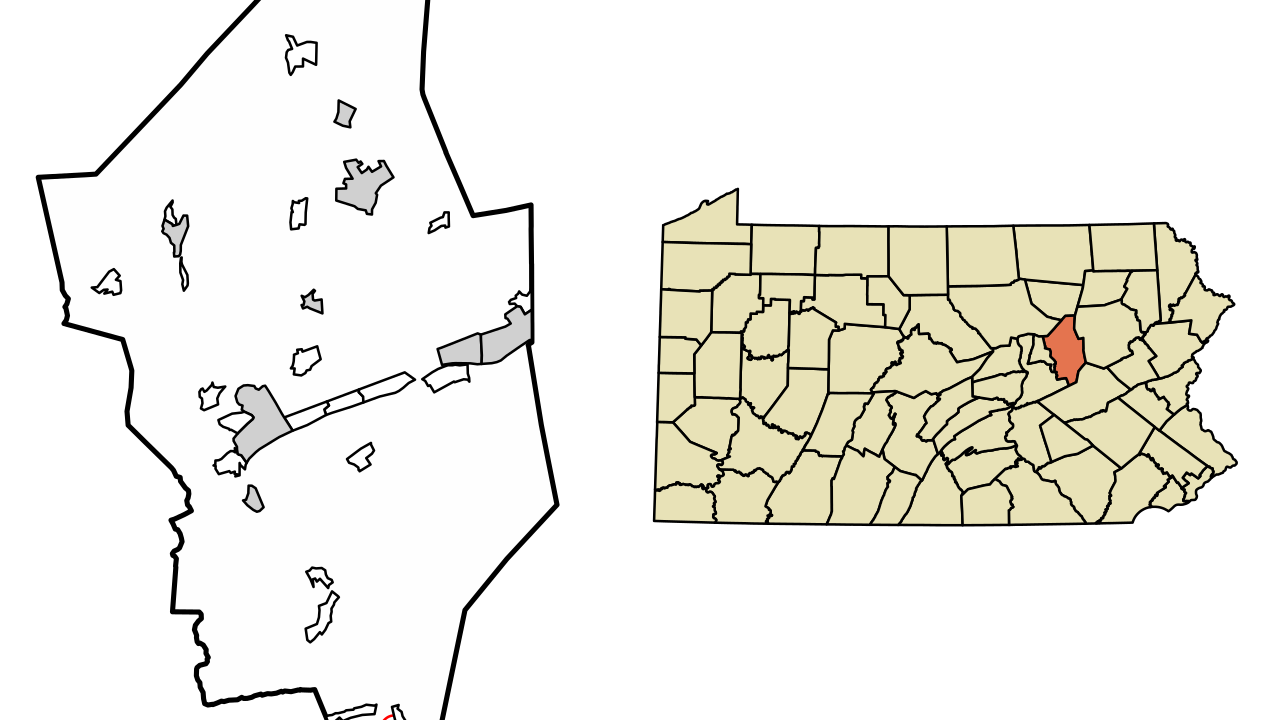
As of April 2026, a fire has been burning beneath Centralia, Pennsylvania for exactly 63 years and 11 months — and there is no credible timeline for it ending. The borough, situated in Columbia County in Northeastern Pennsylvania, once housed a population of approximately 1,000 people as recently as 1980. According to the U.S. Census Bureau’s 2020 count, that number has fallen to five. The streets are mostly gone. The homes are mostly demolished. And the coal seam beneath the ground continues to smolder across an estimated 3,700 acres of underground terrain.
Centralia is not an abstraction or a historical footnote. It is a legally recognized borough in the Commonwealth of Pennsylvania, with a ZIP code (17927) that the U.S. Postal Service officially discontinued in 2002. The physical site is accessible by car, roughly 100 miles northwest of Philadelphia and about 120 miles northeast of Pittsburgh. Visitors arrive regularly, drawn by a combination of geological curiosity, dark tourism, and the borough’s well-documented connection to the fictional town of Silent Hill in the 2006 horror film of the same name.
How the Fire Started — and Why It Never Stopped
The fire is widely traced to May 1962, when a trash burning operation near the Odd Fellows Cemetery — a standard disposal method at the time — ignited an exposed coal seam. According to the Christian Science Monitor, early attempts to extinguish the blaze were inadequate, and the fire spread into the labyrinthine network of underground mine tunnels that honeycomb the region beneath the borough.
Coal seam fires are among the most difficult fires on earth to extinguish. They require no surface oxygen to sustain themselves, feeding instead on carbon trapped in the seam itself. Once they travel into tunnels and fissures, conventional firefighting methods — water, foam, smothering — become effectively useless. The Pennsylvania Department of Environmental Protection (DEP) has conducted multiple intervention attempts over the decades, including a major excavation effort in the 1980s, but none succeeded in fully containing the blaze.
According to All That’s Interesting, geological assessments have estimated the fire could continue burning for upward of 250 years given the volume of coal still present in the seam. The DEP monitors the fire’s progress but has not announced any active extinguishment program as of early 2026.
The Population Collapse: From 1,000 to Five in Four Decades
The human cost of the fire unfolded over roughly two decades after the blaze began. For most of the 1960s and 1970s, residents were largely unaware of the scale of the danger beneath them. Carbon monoxide levels in homes began rising during the late 1970s, and in February 1981, a sinkhole opened beneath a residential backyard on Locust Avenue, swallowing 12-year-old Todd Domboski nearly 150 feet before a cousin pulled him out.
That incident accelerated federal and state action. Congress appropriated approximately $42 million for a voluntary relocation program in 1984, according to reporting by the Christian Science Monitor. The majority of Centralia’s roughly 1,000 residents accepted buyouts and left. By 1990, the population had dropped to around 63. By 2000, it stood at 21. The 2020 Census recorded five.
The handful of residents who refused relocation fought the Commonwealth in court. Pennsylvania moved to condemn remaining properties using eminent domain in 1992. A small group of holdouts successfully challenged their specific cases, and as of 2026, the remaining five residents live under a legal arrangement with the state that permits them to stay for the remainder of their lives — but does not extend property rights to heirs.
What Visitors Actually Find in Centralia Today
The most-photographed site in Centralia is the abandoned section of Route 61, also called the Graffiti Highway — a stretch of old state highway whose asphalt cracked and buckled from underground heat and subsidence. Pennsylvania officially closed the road in 1993. It became a canvas for spray-paint artists and an informal pilgrimage site for urban explorers. In April 2020, the Commonwealth of Pennsylvania had the road buried under fill material to discourage trespassers, but the surrounding landscape of cracked earth, steam vents, and vacant lots remains visible and accessible from the borough’s remaining roadways.
What remains above ground includes St. Ignatius Cemetery, which still receives maintenance and contains headstones dating to the mid-1800s. The Assumption of the Blessed Virgin Mary Ukrainian Church still stands. Steam occasionally rises through cracks in the ground and through hillside vents during colder months, providing the eerie visual most associated with the town in photographs.
According to Atlas Obscura, nature has begun reclaiming the cleared lots where homes once stood — wild plants, butterfly populations, and early successional forest growth have taken hold across much of the former residential grid. Ecologists have noted the area as an unusual case study in urban abandonment and natural recolonization.
Dark Tourism, Pop Culture, and the Question of What Comes Next
Centralia’s association with the Silent Hill video game franchise — and the 2006 film adaptation directed by Christophe Gans — introduced the borough to an entirely new generation of visitors. The fictional town of Silent Hill draws on Centralia’s visual language: ash-covered streets, permanent fog, and a landscape where the surface and the underground are in constant, dangerous dialogue. Game developer Konami has never formally confirmed Centralia as the direct inspiration, but the parallels are extensively documented in gaming and horror media coverage.
According to the Express, Centralia now draws dark tourism visitors from across the United States and internationally, with visitors arriving particularly during autumn and winter months when steam vents are more visually dramatic against cold air. There are no hotels in Centralia. The nearest lodging options are in Mount Carmel, approximately three miles away, or Shamokin, approximately eight miles to the south.
The future of Centralia as a borough remains legally ambiguous. Pennsylvania owns most of the land. The five remaining residents hold lifetime occupancy rights that do not transfer. When the last resident dies, Pennsylvania will hold the entirety of the borough’s former residential and commercial grid — land that remains legally uninhabitable due to ongoing subsidence risk, toxic gas venting, and the unresolved fire beneath it.
No commercial development has been proposed for the site. The Pennsylvania DEP continues to monitor gas levels and ground subsidence. The fire beneath Centralia, according to all available geological assessments, will outlast every person who ever lived there.
Frequently Asked Questions

You Might Also Like
Smokey and the Bandit Turns 50: Georgia’s 3 Forgotten Film Towns
Jonesboro, McDonough, and Atlanta hosted the 1976 shoot of Smokey and the Bandit. With the…

Every Friday Night, an Entire Montana Town Gathers in Someone’s Living Room
A small Montana town with no traffic lights, no mall, and no cinema holds weekly…
He Left Austin’s $2,100 Rent and Found a 3BR House for $1,050
A man left Austin's $2,100/month apartment and moved to a 3BR house in Fayetteville, AR…
Leave a Reply