
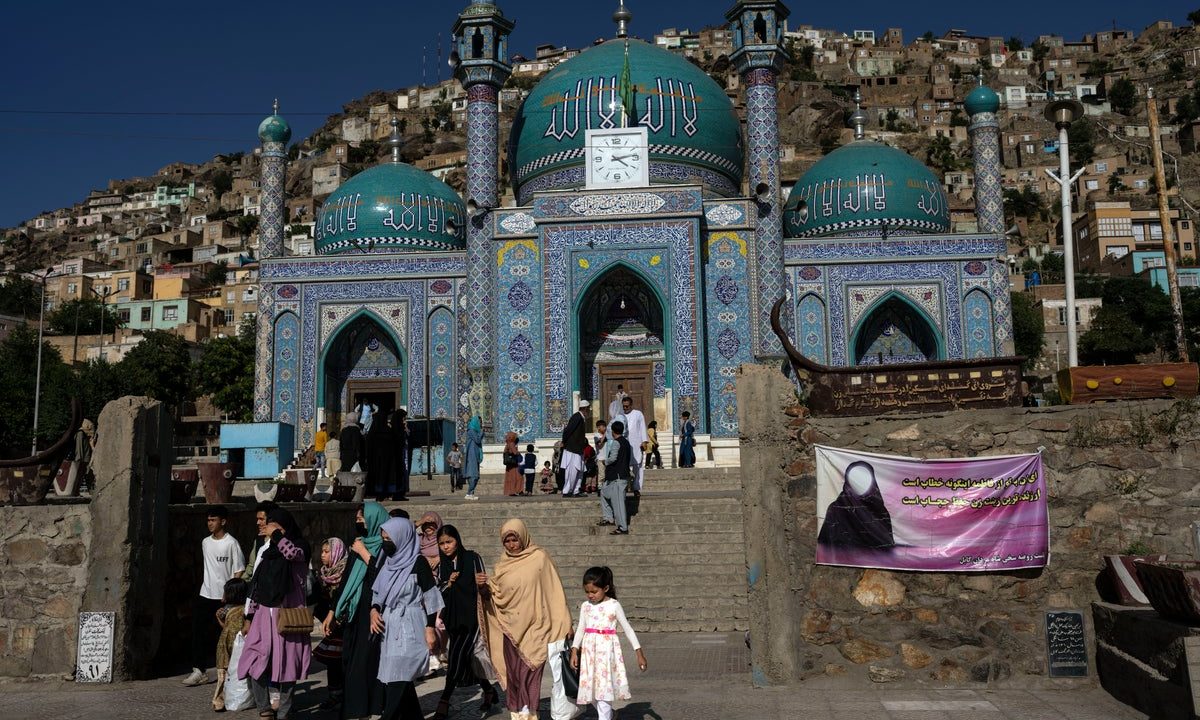
More than 7,000 international tourists arrived in Afghanistan in just the first half of 2025 alone — a figure that has already drawn close to matching the country’s entire visitor count for 2024. Now, Afghan authorities are moving to accelerate that momentum with a significant shift in how foreign travelers apply to enter the country.
Afghanistan has introduced a new electronic visa system, a major overhaul of what was previously a complex and often discouraging entry process. The move is part of a deliberate push to position the country as a viable destination for international visitors — something that would have seemed unlikely not long ago.
For anyone who has followed Afghanistan’s recent history, the scale of that ambition is striking. Security concerns and bureaucratic hurdles have long made the country one of the most difficult places on earth to visit as a tourist. The e-visa launch signals a real intention to change that reality.
(function(){var wrp=document.getElementById(“paap_stat_69c418ef717c78.38562000”);if(!wrp)return;var ids=[“paap_stat_69c418ef717c78.38562000_c0″,”paap_stat_69c418ef717c78.38562000_c1”];var dur=1800;function ease(t){return 1-Math.pow(1-t,3);}function anim(){ids.forEach(function(id){var el=document.getElementById(id);if(!el)return;var tgt=parseFloat(el.getAttribute(“data-target”))||0;var pfx=el.getAttribute(“data-prefix”)||””;var sfx=el.getAttribute(“data-suffix”)||””;var dec=parseInt(el.getAttribute(“data-decimals”))||0;var st=null;function step(ts){if(!st)st=ts;var p=Math.min((ts-st)/dur,1);var v=ease(p)*tgt;el.textContent=pfx+v.toFixed(dec)+sfx;if(p<1)requestAnimationFrame(step);}requestAnimationFrame(step);});}if("IntersectionObserver" in window){var obs=new IntersectionObserver(function(e){e.forEach(function(en){if(en.isIntersecting){anim();obs.disconnect();}});},{threshold:0.2});obs.observe(wrp);}else{anim();}})();
Why Afghanistan Is Betting on Tourism Right Now
The numbers tell an interesting story. In 2024, nearly 9,000 international tourists visited Afghanistan. By the midpoint of 2025, more than 7,000 had already made the trip. Officials believe the total for 2025 has already surpassed the full-year 2024 figure — a trajectory that suggests genuine and growing interest from travelers willing to explore one of the world’s least-visited countries.
Tourism to Afghanistan has historically been shaped by two major obstacles: security concerns and a visa process that was anything but straightforward. Both have deterred potential visitors who might otherwise be drawn to the country’s landscapes, history, and culture.
The introduction of the e-visa system is designed to address the second of those obstacles directly. By simplifying and digitizing the application process, Afghan authorities are removing a practical friction point that stood between curious travelers and an actual booking. The hope is that making entry easier will translate into continued growth in visitor numbers.
What the New E-Visa System Changes
The core change is the shift from a traditional, in-person or embassy-based visa application process to an electronic system that foreign visitors can navigate without the logistical complexity of the old approach. For international tourists, that means a more accessible path to obtaining the authorization they need to enter the country.
Here is what is confirmed about the new system and the tourism context surrounding it:
- Afghanistan has launched a new electronic visa regime specifically aimed at international tourists
- The system is intended to simplify and streamline the application process for foreign visitors
- The move is part of a broader national effort to grow tourism as a sector
- Visitor numbers have been growing steadily, with 2025 figures expected to exceed those of 2024
- Security concerns and complex visa processes have historically been the two primary barriers to tourism in Afghanistan
| Year / Period | International Tourist Arrivals | Notes |
|---|---|---|
| 2024 (full year) | ~9,000 | Full-year confirmed figure |
| First half of 2025 | 7,000+ | Mid-year figure already approaching 2024 total |
| Full year 2025 (projected) | Surpassed 2024 total | Officials believe 2024 figures have been exceeded |
(function(){function loadChartJs(cb){if(window.Chart){cb();return;}var s=document.createElement(“script”);s.src=”https://cdn.jsdelivr.net/npm/chart.js@4.4.0/dist/chart.umd.min.js”;s.onload=cb;document.head.appendChild(s);}function initChart(){var cv=document.getElementById(“paap_chart_69c418ef7185e0.04531621”);if(!cv)return;var dv=[“~9,000″,”7,000+”,”Exceeds 2024″];new Chart(cv,{type:”bar”,data:{labels:[“Full Year 2024″,”First Half 2025″,”Full Year 2025 (Projected)”],datasets:[{data:[9000,7000,9500],backgroundColor:[“#3b82f6″,”#10b981″,”#f59e0b”],borderRadius:6,borderSkipped:false}]},options:{indexAxis:”y”,responsive:true,maintainAspectRatio:false,animation:{duration:1200,easing:”easeOutQuart”},plugins:{legend:{display:false},tooltip:{callbacks:{label:function(ctx){return dv[ctx.dataIndex]||ctx.formattedValue;}}}},scales:{x:{grid:{color:”#e5e7eb”},ticks:{color:”#6b7280″}},y:{grid:{display:false},ticks:{color:”#1a1a1a”,font:{weight:600}}}}}});}var cv=document.getElementById(“paap_chart_69c418ef7185e0.04531621”);if(!cv)return;if(“IntersectionObserver” in window){var obs=new IntersectionObserver(function(e){e.forEach(function(en){if(en.isIntersecting){loadChartJs(initChart);obs.disconnect();}});},{threshold:0.1});obs.observe(cv);}else{loadChartJs(initChart);}})();
Who This Actually Affects — and How
For the international traveler, the practical impact is straightforward: applying for permission to visit Afghanistan is now meant to be simpler and more accessible than it was before. Travelers who previously faced a cumbersome, multi-step application process through embassies or consular offices should find the electronic route considerably less demanding.
For Afghanistan itself, the stakes are larger. Tourism, even at relatively modest numbers, represents an economic opportunity and a form of soft engagement with the outside world. Each visitor who arrives, spends money, and returns home with a story about the country contributes — however incrementally — to a different kind of international perception.
The growth figures are notable precisely because they are happening against a backdrop of persistent security concerns. That a growing number of travelers are choosing to visit despite those risks suggests that the country’s appeal — its ancient cities, dramatic landscapes, and historical depth — is real and not hypothetical. The e-visa system is designed to ensure that administrative friction does not become the reason someone decides not to make the trip.
Observers note that the steady year-on-year growth in arrivals, combined with this structural change to the entry process, could meaningfully accelerate the pace of tourism development if security conditions remain stable enough to allow it.
- Visitors faced a complex, traditional visa process that created significant barriers to entry for international tourists.
- Embassy or consular-based applications added logistical difficulty for travelers in many parts of the world.
- Tourism remained limited, with security concerns compounded by administrative friction discouraging potential visitors.
- A new electronic visa regime allows foreign visitors to apply through a simplified, digitized process.
- Afghanistan recorded more than 7,000 international arrivals in just the first half of 2025, approaching the full 2024 total.
- Officials believe total 2025 visitor numbers have already surpassed the entire 2024 figure of nearly 9,000 tourists.
What Comes Next for Afghanistan’s Tourism Push
The e-visa launch is best understood as one piece of a larger strategy. Afghan authorities have signaled that boosting tourism is a sustained national priority, not a one-off initiative. The growth trajectory seen between 2024 and 2025 will likely be used as evidence that the approach is working — and as justification for continued investment in the sector.
Whether the momentum holds will depend on several factors beyond the visa process alone. Security conditions remain the most significant variable, and any deterioration could quickly reverse the gains that have been made. But the direction of travel — in every sense — is currently upward, and the e-visa system removes one more reason for a curious traveler to hesitate.
For now, Afghanistan is open for visitors in a way it has not been in recent memory, and it is actively working to make the process of getting there easier than it has ever been.
Frequently Asked Questions
What is Afghanistan’s new e-visa system?
Afghanistan has introduced an electronic visa regime designed to simplify the entry process for international tourists, replacing the more complex traditional application process.
How many tourists visited Afghanistan in 2024?
Nearly 9,000 international tourists visited Afghanistan in 2024, with more than 7,000 arriving in just the first half of 2025 alone.
Has Afghanistan’s tourism grown in 2025?
Yes. Officials believe the total number of international visitors in 2025 has already surpassed the full-year 2024 figure, indicating strong growth momentum.
What were the main barriers to tourism in Afghanistan before the e-visa?
Security concerns and a complex visa application process were historically the two primary obstacles that discouraged international tourists from visiting Afghanistan.
Is it safe to travel to Afghanistan?
What is driving the increase in tourist arrivals to Afghanistan?
The source points to the country’s rich cultural and historical appeal, combined with administrative changes like the new e-visa system, as factors contributing to steady growth in visitor numbers.



Leave a Reply