
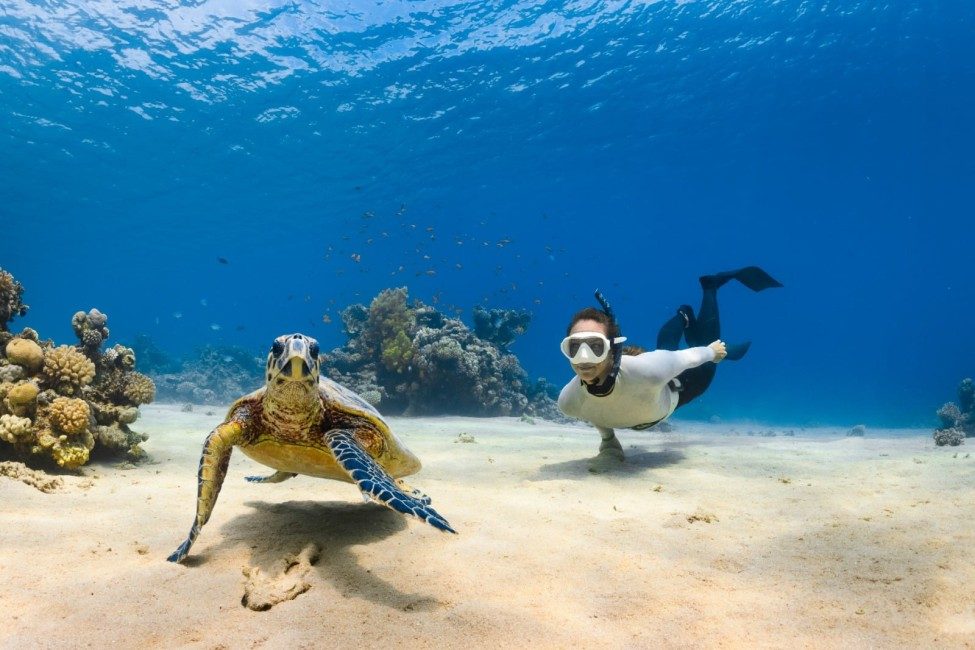
Asia sits at the center of the underwater world — and travelers are increasingly making that the whole point of the trip. The region is home to some of the most biodiverse marine environments on the planet, drawing scuba divers and snorkelers from across the globe to coral reefs, dramatic sea walls, and teeming open-water ecosystems that few other destinations can match.
Travel platform Agoda has curated a list of top diving destinations across Asia, spotlighting sites in Malaysia, Indonesia, the Philippines, Thailand, Nepal, and Japan. The list reflects a broader shift in how people are choosing to travel — less about ticking off landmarks, more about immersive experiences that connect them to the natural world.
At the heart of this growing interest is the Coral Triangle, widely recognized as one of the most biologically rich marine areas anywhere on Earth. Many of the highlighted sites sit within or near this region, making them not just spectacular places to dive, but places where the act of visiting carries real ecological significance.
Why Asia Has Become the World’s Dive Capital
Adventure tourism has been climbing steadily, and scuba diving and snorkeling have emerged as two of its fastest-growing segments. Travelers who once might have added a beach day to their itinerary are now building entire trips around underwater access.
Asia’s appeal is straightforward: the sheer variety of dive experiences available within a relatively compact region is unmatched. You can drift along a coral wall in Malaysia, explore a volcanic underwater landscape in Indonesia, or encounter open-ocean species in the Philippines — sometimes within the same week-long trip.
There is also a growing eco-tourism dimension to this trend. Divers are increasingly drawn to destinations where marine conservation is active and visible. The Coral Triangle, which spans parts of Indonesia, Malaysia, the Philippines, Papua New Guinea, the Solomon Islands, and Timor-Leste, is a focal point for this kind of environmentally aware travel. Visiting these sites responsibly has become part of the appeal, not just a footnote.
The Destinations Agoda Highlighted Across Asia
The Agoda list covers a wide geographic spread, from Southeast Asian islands to Himalayan freshwater sites and temperate Japanese waters. Each destination offers something distinct — different marine life, different diving conditions, and different levels of accessibility for divers at various experience levels.
Malaysia’s Sipadan Island is among the sites featured, a location that consistently ranks among the world’s best dive spots for its sheer density of marine life and dramatic underwater terrain.
| Country | Featured Destination | Key Feature |
|---|---|---|
| Malaysia | Sipadan Island | Rich marine biodiversity, coral reef ecosystems |
| Indonesia | Featured site | Located within the Coral Triangle |
| Philippines | Featured site | Located within the Coral Triangle |
| Thailand | Featured site | Accessible for new and experienced divers |
| Nepal | Featured site | Unique freshwater or high-altitude diving experience |
| Japan | Featured site | Distinct temperate marine environment |
The range of countries on the list is notable. Nepal and Japan represent very different diving environments from the tropical reef systems of Southeast Asia — broadening the appeal of the list to divers who want variety beyond the Coral Triangle.
What This Means for Travelers Planning a Dive Trip
For anyone considering building a trip around underwater experiences, this list offers a useful starting framework. The destinations span multiple countries, dive difficulty levels, and marine environments — which means there is a realistic option for first-time snorkelers as well as certified divers looking for something more demanding.
The emphasis on eco-tourism is also practically relevant. Many of the top sites in the Coral Triangle have visitor limits, permit requirements, or conservation fees designed to protect reef systems from overuse. Travelers planning ahead should factor these restrictions into their itineraries, as access to some of the most celebrated sites — including Sipadan Island — is actively managed.
For seasoned divers, the inclusion of Japan and Nepal signals that the list is not simply a rehash of the usual tropical destinations. Japan’s waters offer cold-water species and visibility conditions that are genuinely different from anything available in Southeast Asia. Nepal’s inclusion points toward freshwater and altitude diving experiences that represent a niche but growing corner of adventure travel.
Where Marine Tourism in Asia Goes From Here
The release of this kind of curated destination list by a major travel platform reflects something real about where tourism demand is heading. Underwater experiences have moved from niche to mainstream, and the infrastructure around dive tourism — accommodation, certified instruction, equipment rental, and conservation programming — has expanded to match.
The focus on the Coral Triangle in particular suggests that marine tourism growth will continue to concentrate in Southeast Asia, where the combination of accessibility, biodiversity, and relatively affordable travel costs makes it the default destination for first-time and returning divers alike.
At the same time, the presence of Japan and Nepal on the list hints at a diversification of dive tourism beyond the tropics. As more travelers seek out less crowded, less familiar experiences, the definition of what counts as a premier diving destination is quietly expanding.
Frequently Asked Questions
Which countries are included in Agoda’s top diving destinations list for Asia?
The list includes Malaysia, Indonesia, the Philippines, Thailand, Nepal, and Japan.
What is the Coral Triangle and why does it matter for divers?
The Coral Triangle is widely recognized as one of the most biologically diverse marine areas in the world, and many of the top Asian diving sites are located within or near it.
Which Malaysian destination was specifically highlighted by Agoda?
Sipadan Island in Malaysia was named as one of the featured diving destinations on the list.
Is the list suitable for beginner divers or only experienced ones?
The list is described as covering experiences for both new and seasoned divers, suggesting a range of difficulty levels across the destinations.
Why is Nepal included on a list of Asian diving destinations?
The source confirms Nepal’s inclusion but does not detail the specific site; it likely points to freshwater or high-altitude diving experiences distinct from the tropical reef sites elsewhere on the list.
How does eco-tourism connect to these dive destinations?
The sites reflect growing interest in eco-tourism and preserving vulnerable marine ecosystems, with many locations tied to active marine conservation efforts.




Leave a Reply