
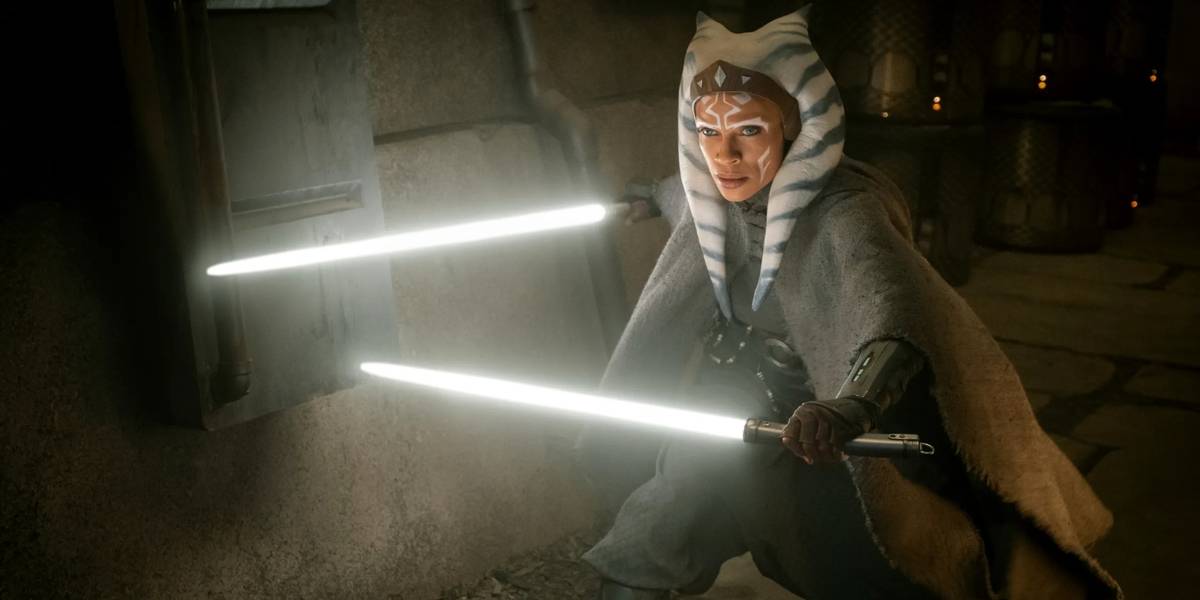
One of the most persistent criticisms of Disney’s live-action Star Wars television productions has been their heavy reliance on volume stage technology — the LED-wall filmmaking technique that, while innovative, has often given shows a noticeably artificial, studio-bound look. For Ahsoka Season 2, that appears to be changing in a meaningful way.
Reports confirmed in March 2026 indicate that production on the second season of Ahsoka has been incorporating significantly more on-location and exterior shooting than its first season did. For fans who felt the original run looked too contained — too clean, too digital — this is exactly the kind of course correction they were hoping for.
It’s a shift that matters more than it might initially seem. The visual language of Star Wars has always been defined by real, textured, lived-in environments. Getting that back, even partially, could fundamentally change how the show feels to watch.
Why the First Season’s Look Became a Talking Point
When Ahsoka Season 1 arrived on Disney+, reactions were genuinely mixed. Rosario Dawson’s performance as the former Jedi was widely praised, and the story — with its connections to Star Wars Rebels and the broader Filoniverse — generated real excitement. But the visual presentation drew consistent criticism.
The StageCraft volume technology, first popularized by The Mandalorian, uses massive curved LED screens to project digital backgrounds in real time behind actors on set. When it works well, the results are seamless. When it doesn’t, environments can look flat, overly lit, or unconvincing in a way that’s hard to ignore once you notice it.
Season 1 of Ahsoka leaned heavily on this approach. Critics and fans pointed to certain sequences that felt visually restricted — like the world existed only as far as the camera could see. For a story involving galaxy-spanning travel to entirely new realms, that limitation felt especially pronounced.
What ‘Ahsoka’ Season 2 Is Doing Differently
The reported shift toward more on-location exterior shooting for Season 2 is a direct response to that feedback. Filming outside on real terrain, with genuine light, weather, and physical environments, produces a visual quality that LED volumes simply cannot replicate — at least not yet.
This doesn’t mean the production is abandoning volume technology entirely. Modern Star Wars shows use a combination of techniques, and that’s unlikely to change. But increasing the proportion of real-world shooting — particularly for exterior sequences — could make a substantial difference in how grounded and cinematic the finished product looks.
The move also signals something about the production’s priorities. Choosing to take cast and crew on location is more expensive and logistically complex than staying on a controlled stage. The decision to do it more suggests confidence in the show’s direction and a genuine commitment to raising its visual standard.
The Broader Context: Star Wars and the Volume Debate
The tension between volume filmmaking and traditional location work has been a running conversation across the Star Wars TV landscape since The Mandalorian launched in 2019. At the time, the technology felt genuinely revolutionary. Scenes set on alien planets looked convincing in ways that green screen rarely achieved.
But as more shows adopted the same approach — The Book of Boba Fett, Obi-Wan Kenobi, Andor being notable examples — the limitations became more apparent. Interestingly, Andor is frequently cited as the Star Wars series that best avoided the volume trap, partly because it shot extensively on real locations across the UK and used practical, physical sets to create its gritty, grounded aesthetic. The result was a show that looked and felt distinctly different from its peers.
| Star Wars Series | Known for Location/Practical Work | Volume-Heavy Production |
|---|---|---|
| The Mandalorian | Pioneered volume use | Yes — primarily volume |
| Andor | Extensive real-location shooting | Minimal — praised for it |
| Ahsoka Season 1 | Limited exterior work | Yes — criticized for it |
| Ahsoka Season 2 | More on-location exterior shooting confirmed | Mixed approach reported |
The table above reflects the general trajectory of the conversation — and where Ahsoka Season 2 appears to be positioning itself.
Why This Should Matter to You as a Viewer
If you watched Season 1 and found yourself occasionally pulled out of the story by something that felt visually off, this development is directly relevant to your experience of Season 2. Visual authenticity isn’t a trivial concern — it directly affects emotional immersion, and immersion is what makes or breaks a fantasy or science fiction series.
There’s also something to be said for what real locations communicate about a production’s ambition. When a show commits to taking its story into the real world — into actual landscapes, weather, and light — it sends a signal to the audience that what they’re watching was worth the effort. That effort tends to show up on screen.
For Ahsoka specifically, a series that’s asking viewers to invest in entirely new corners of the Star Wars galaxy, visual credibility matters even more than usual. Strange new worlds need to feel genuinely strange, not digitally projected.
What to Watch For When Season 2 Arrives
No confirmed release date for Ahsoka Season 2 has been publicly announced as of the time of this reporting. Production has been underway, and the shift toward more location work suggests the creative team is taking the time needed to do it properly rather than rushing back to screens.
When it does arrive, the exterior sequences will be the immediate tell. Look for scenes where light behaves naturally — where shadows fall at angles that a studio can’t fully fake, where backgrounds have genuine depth and atmosphere. Those moments will signal whether the reported production changes have translated into a meaningfully different viewing experience.
The ambition is clearly there. Whether the execution delivers is a question only the finished season can answer.
Frequently Asked Questions
What is the main production change being made for Ahsoka Season 2?
The production is reported to be incorporating significantly more on-location and exterior shooting compared to the first season, which relied heavily on LED volume stage technology.
Was the volume stage technology criticized in Ahsoka Season 1?
Yes. Fans and critics frequently pointed to the visual limitations of the volume-heavy approach in Season 1, noting that some environments looked artificial or flat.
Does this mean Ahsoka Season 2 will stop using volume technology entirely?
This has not been confirmed. The reported shift is toward more location work, suggesting a mixed approach rather than a complete abandonment of volume filming.
When does Ahsoka Season 2 release?
No confirmed release date has been publicly announced as of this reporting.
Which other Star Wars series is considered a benchmark for location-based production?
Andor is widely cited as the Star Wars series that made the most effective use of real-world locations, contributing to its distinctly grounded visual style.
Why does it matter whether a show uses real locations or volume stages?
Real locations produce natural light, depth, and texture that affect how immersive and believable a story feels — qualities that are difficult to fully replicate with digital backgrounds, particularly for exterior environments.


Leave a Reply