
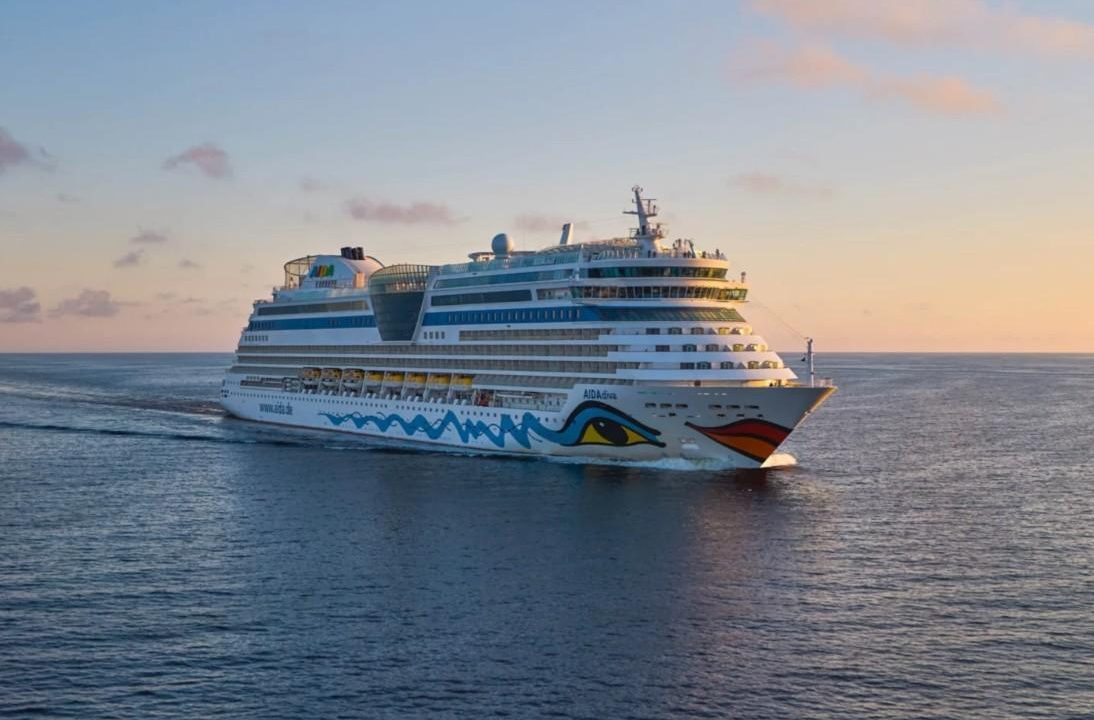
After 120 days at sea and stops across 45 ports in 25 countries, the cruise ship AIDAdiva sailed back into Hamburg on March 25, 2026 — and the ripple effects for German coastal tourism are already being felt. The return of one of AIDA Cruises’ flagship vessels from its world voyage marks more than just a homecoming. It signals the start of a busy summer season for the Baltic Sea and Norwegian fjord routes that depend heavily on this kind of momentum.
The ship, which carried approximately 2,500 passengers around the globe via the Caribbean, Panama Canal, Hawaii, Asia, and the Suez Canal, doesn’t get much of a rest. Within days of docking in Hamburg, AIDAdiva transitions directly into summer deployments out of Kiel — repositioning AIDA Cruises for what the company expects to be a high-demand Scandinavian season.
For Hamburg, Kiel, and the broader German cruise industry, this moment matters. World cruise returnees tend to be among the most enthusiastic repeat travelers, and their appetite for extended journeys makes them natural candidates for Baltic and fjord itineraries. The economic engine is already running.
(function(){var wrp=document.getElementById(“paap_stat_69c4d5a63cc494.66836292”);if(!wrp)return;var ids=[“paap_stat_69c4d5a63cc494.66836292_c0″,”paap_stat_69c4d5a63cc494.66836292_c1”];var dur=1800;function ease(t){return 1-Math.pow(1-t,3);}function anim(){ids.forEach(function(id){var el=document.getElementById(id);if(!el)return;var tgt=parseFloat(el.getAttribute(“data-target”))||0;var pfx=el.getAttribute(“data-prefix”)||””;var sfx=el.getAttribute(“data-suffix”)||””;var dec=parseInt(el.getAttribute(“data-decimals”))||0;var st=null;function step(ts){if(!st)st=ts;var p=Math.min((ts-st)/dur,1);var v=ease(p)*tgt;el.textContent=pfx+v.toFixed(dec)+sfx;if(p<1)requestAnimationFrame(step);}requestAnimationFrame(step);});}if("IntersectionObserver" in window){var obs=new IntersectionObserver(function(e){e.forEach(function(en){if(en.isIntersecting){anim();obs.disconnect();}});},{threshold:0.2});obs.observe(wrp);}else{anim();}})();
What AIDAdiva’s World Cruise Actually Covered
The voyage wasn’t a simple loop. AIDAdiva’s world cruise threaded through some of the most geographically diverse waters on the planet — starting with the Caribbean, passing through the Panama Canal, continuing on to Hawaii, then across to Asia, and finally returning to Europe via the Suez Canal. That’s effectively a circumnavigation of the globe, hitting major ocean basins along the way.
The itinerary covered 45 ports across 25 countries, giving passengers an unusually broad exposure to global destinations in a single continuous journey. For AIDA Cruises, which markets primarily to German-speaking travelers, this kind of world voyage serves as both a prestige product and a powerful brand statement.
After docking in Hamburg, the ship is set to operate summer sailings out of Kiel, with routes focused on the Baltic Sea and Norway’s fjords — a natural seasonal pivot from tropical and transoceanic waters to northern European scenery.
The Numbers Behind the Return — Ports, Passengers, and Scale
| Detail | Figure |
|---|---|
| Duration of world cruise | 120 days |
| Ports visited | 45 |
| Countries visited | 25 |
| Passengers onboard | Approximately 2,500 |
| Ship size (gross tonnage) | Over 120,000 GT |
| Annual passengers through Kiel | 1.2 million |
| Return date to Hamburg | March 25, 2026 |
(function(){function loadChartJs(cb){if(window.Chart){cb();return;}var s=document.createElement(“script”);s.src=”https://cdn.jsdelivr.net/npm/chart.js@4.4.0/dist/chart.umd.min.js”;s.onload=cb;document.head.appendChild(s);}function initChart(){var cv=document.getElementById(“paap_chart_69c4d5a63ccbf3.12271111”);if(!cv)return;var dv=[“45 ports”,”25 countries”,”120 days”];new Chart(cv,{type:”bar”,data:{labels:[“Ports Visited”,”Countries Covered”,”Cruise Duration”],datasets:[{data:[45,25,120],backgroundColor:[“#3b82f6″,”#10b981″,”#f59e0b”],borderRadius:6,borderSkipped:false}]},options:{indexAxis:”y”,responsive:true,maintainAspectRatio:false,animation:{duration:1200,easing:”easeOutQuart”},plugins:{legend:{display:false},tooltip:{callbacks:{label:function(ctx){return dv[ctx.dataIndex]||ctx.formattedValue;}}}},scales:{x:{grid:{color:”#e5e7eb”},ticks:{color:”#6b7280″}},y:{grid:{display:false},ticks:{color:”#1a1a1a”,font:{weight:600}}}}}});}var cv=document.getElementById(“paap_chart_69c4d5a63ccbf3.12271111”);if(!cv)return;if(“IntersectionObserver” in window){var obs=new IntersectionObserver(function(e){e.forEach(function(en){if(en.isIntersecting){loadChartJs(initChart);obs.disconnect();}});},{threshold:0.1});obs.observe(cv);}else{loadChartJs(initChart);}})();
The vessel itself is substantial — weighing in at over 120,000 gross tons, it’s a large-format cruise ship designed for exactly this kind of high-volume, long-haul voyaging. Kiel, where AIDAdiva will be based for summer sailings, handles roughly 1.2 million cruise passengers annually, making it one of northern Europe’s most significant embarkation points for Scandinavia-bound travelers.
Why Hamburg and Kiel Feel This Return Immediately
When a ship carrying 2,500 world cruise passengers docks in Hamburg, the economic effect isn’t subtle. Travelers who have just completed a 120-day voyage tend to spend time in the port city before heading home — visiting neighborhoods like Speicherstadt, stopping at cultural landmarks like the Elbphilharmonie, and contributing to local hospitality and retail economies. Hamburg’s Tolbodie and Altona cruise terminals are positioned to absorb that spending directly.
The transition to Kiel matters for a different reason. As the primary gateway for AIDA’s Scandinavia operations, Kiel benefits from being positioned at the start of the summer season rather than the end. With 1.2 million passengers moving through annually, even marginal increases in booking momentum translate into meaningful revenue for the port and surrounding businesses.
Observers note that world cruise returnees — particularly affluent German travelers who have already experienced 45 global ports — are among the most likely to book follow-on Baltic or fjord itineraries. The world voyage, in effect, primes the market for the summer season that immediately follows it.
What Happens Next for AIDAdiva and AIDA Cruises
The seasonal repositioning is already underway. AIDAdiva moves from Hamburg to Kiel to begin its Baltic Sea and Norwegian fjord summer schedule — a direct handoff from one major deployment phase to the next. For AIDA Cruises, this kind of tight scheduling is deliberate: the world cruise ends, and the summer season begins almost without pause.
The fjord routes out of Kiel place AIDAdiva squarely in competition for the significant demand for Scandinavia sailings among German travelers. Norway’s fjords in particular remain one of the most sought-after European cruise destinations, and departures from a domestic German port remove the need for passengers to fly to a Mediterranean embarkation point.
The broader picture for German cruise tourism looks healthy heading into the summer. Hamburg and Kiel together function as the twin pillars of the country’s cruise infrastructure, and AIDAdiva’s return — followed immediately by its summer redeployment — keeps both terminals active and economically engaged through the high season.
Frequently Asked Questions
When did AIDAdiva return from its world cruise?
AIDAdiva docked in Hamburg on March 25, 2026, completing its 120-day world voyage.
Where did the world cruise travel?
The itinerary covered 45 ports across 25 countries, including stops via the Caribbean, Panama Canal, Hawaii, Asia, and the Suez Canal.
How many passengers were on the world cruise?
AIDAdiva carried approximately 2,500 passengers during the voyage.
Where will AIDAdiva sail after returning to Hamburg?
The ship transitions to summer deployments out of Kiel, focusing on Baltic Sea and Norwegian fjord routes.
How significant is Kiel as a cruise port?
Kiel handles approximately 1.2 million cruise passengers annually and serves as a primary gateway for Scandinavia-bound sailings.
How does AIDAdiva’s return benefit Hamburg’s economy?
Returning passengers contribute to local spending at Hamburg’s cruise terminals and surrounding attractions, providing an immediate economic boost to the city’s hospitality and tourism sectors.


Leave a Reply