
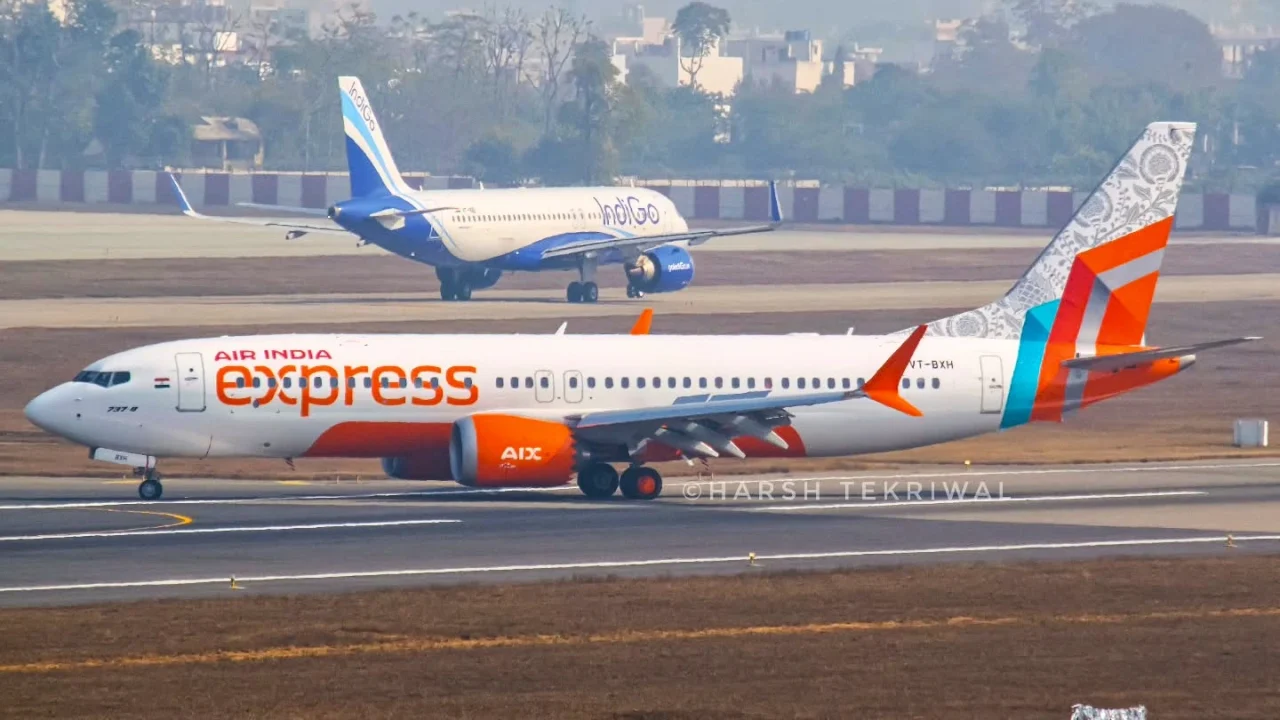
Less than a year after launching services at Hindon Airport, Air India Express has confirmed it will stop all flights from the facility by the end of March 2026 — a swift exit that highlights just how difficult it is to build a viable commercial aviation hub from the ground up.
The airline, which operates under the code IX, had positioned Hindon as a strategic entry point for travelers in the Delhi National Capital Region looking for an alternative to the congested Indira Gandhi International Airport. Routes to Mumbai and Bengaluru were launched with the goal of tapping into genuine regional demand. But the ambition ran headlong into the reality of operating from an airport that simply wasn’t ready for commercial scale.
According to the airline’s booking system, no flights are scheduled beyond March 27, 2026 — a date that coincides precisely with the end of the winter timetable. The timing suggests this is not an emergency withdrawal, but a deliberate decision made within the natural rhythm of the aviation scheduling calendar.
Why Air India Express Is Pulling Out of Hindon Airport
The core problem at Hindon isn’t demand — it’s infrastructure. The airport currently operates with just two functional gates, which creates a hard ceiling on how many flights can realistically be processed in a day. For a low-cost carrier like Air India Express, which depends on fast turnarounds and high aircraft utilization to keep fares competitive, that kind of bottleneck is a serious commercial liability.
Hindon was originally developed as a civil enclave within a military airfield, which adds another layer of operational complexity. The dual-use nature of the facility means commercial airlines don’t have the same freedom of movement they would at a purely civilian airport. Ground handling, passenger processing, and scheduling all have to accommodate a more constrained environment.
Despite these limitations, passenger demand at the routes Air India Express operated was described as steady. That detail matters — it means the airline isn’t leaving because travelers don’t want to use Hindon. It’s leaving because the airport, in its current state, can’t support the kind of growth needed to make the operation financially sustainable.
The Numbers Behind the Decision
The key facts about Hindon’s operational status and Air India Express’s departure timeline are worth laying out clearly:
| Detail | Status |
|---|---|
| Airline | Air India Express (IX) |
| Airport | Hindon Airport (HDX), Delhi NCR |
| Routes operated | Mumbai (BOM) and Bengaluru (BLR) |
| Final scheduled flight date | March 27, 2026 |
| Schedule alignment | Coincides with end of winter timetable |
| Current operational gates | Two |
| Passenger demand | Described as steady despite constraints |
| Time in operation at Hindon | Less than one year |
What stands out in this data is the gap between demand and delivery. Steady passenger numbers typically signal a route worth keeping. The fact that Air India Express is walking away anyway points to how deeply the infrastructure issues cut into the operation’s viability.
What This Means for Travelers Flying Out of Delhi NCR
For passengers who had been using Hindon as a more convenient alternative to Indira Gandhi International, the withdrawal creates a real inconvenience. Hindon was designed to serve travelers in parts of the NCR — particularly in Ghaziabad and surrounding areas — who face long commutes to the main airport. Losing Air India Express service means those passengers will need to factor that journey back into their travel plans.
Anyone who has already booked Air India Express flights from Hindon beyond March 27, 2026 should contact the airline directly to confirm their booking status and explore rebooking options to alternative departure points.
For the broader Delhi NCR aviation market, this development reinforces a familiar pattern: secondary airports in major metro regions struggle to attract and retain carriers unless the supporting infrastructure is genuinely competitive. Demand alone is not enough. Airlines need gates, ground handling capacity, and operational flexibility — and Hindon, right now, offers limited versions of all three.
What Happens Next for Hindon Airport
The departure of Air India Express doesn’t necessarily spell the end of commercial aviation ambitions at Hindon. The airport has long been discussed as a potential relief valve for the overcrowded Delhi aviation system, and there are broader expansion plans associated with the facility.
But those plans will need to address the specific constraints that drove Air India Express away. Two operational gates is not a commercial airport — it’s a starting point. Until the terminal capacity, ground infrastructure, and operational environment are upgraded to a standard that airlines can work with profitably, attracting carriers willing to commit long-term will remain a challenge.
The winter schedule ends with Air India Express’s departure. Whether the summer schedule brings a new airline willing to test the market — or whether Hindon enters a quieter phase while development plans move forward — remains to be seen. What’s clear is that the airport’s commercial future depends on solving the infrastructure problem, not just the demand equation.
Frequently Asked Questions
When is the last Air India Express flight from Hindon Airport?
The airline’s booking system shows no flights scheduled beyond March 27, 2026, which marks the end of the current winter timetable.
Why is Air India Express leaving Hindon Airport?
The airline cited infrastructure constraints at Hindon, including limited gate capacity, as the primary reason for the withdrawal despite steady passenger demand.
Which routes did Air India Express operate from Hindon?
Air India Express operated flights connecting Hindon Airport to Mumbai and Bengaluru during its time at the facility.
How long was Air India Express operating at Hindon?
The airline launched services at Hindon less than a year before announcing its exit, making it a short-lived operation.
Will any other airline take over Hindon routes after Air India Express leaves?
This has not yet been confirmed. No replacement carrier has been announced as of the information available.
How many gates does Hindon Airport currently have?
Hindon Airport is currently operating with just two gates, a limitation that has significantly restricted its capacity for commercial growth.




Leave a Reply