
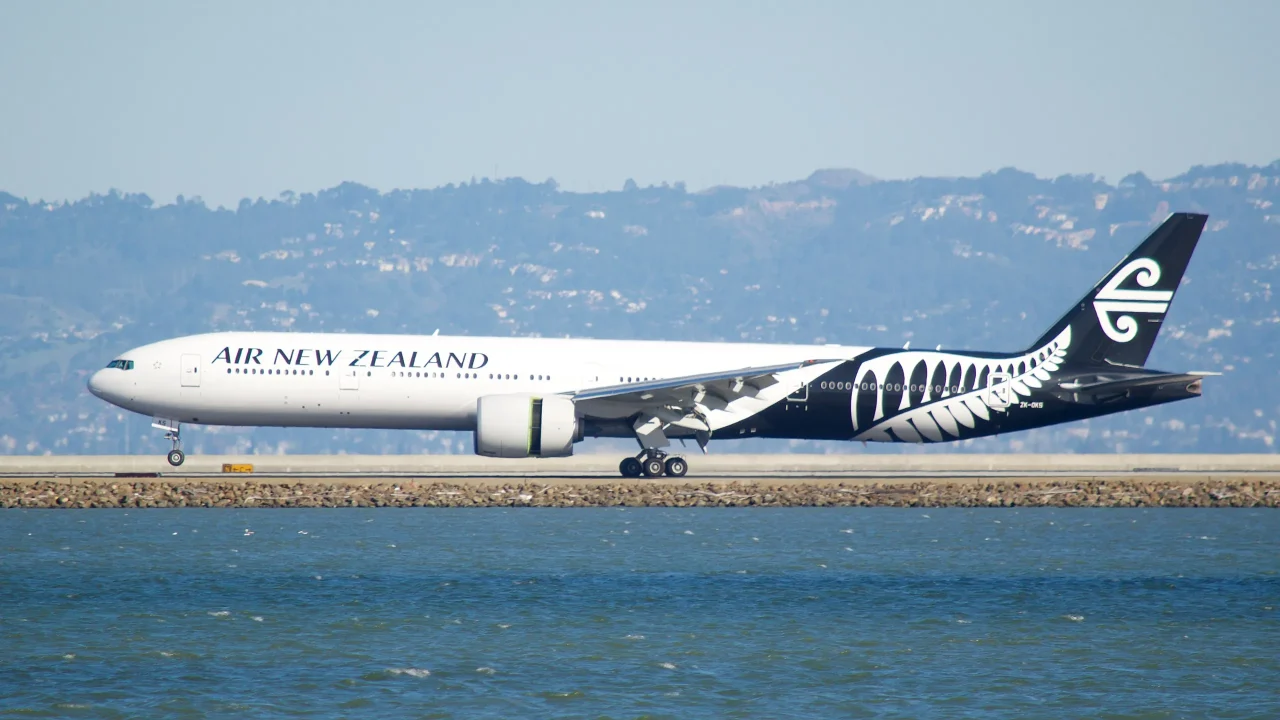
A Boeing 777-300ER bound for Fiji turned around over the Tasman Sea on March 24, 2026 — not because of bad weather or a medical emergency, but because of an engineering alert that the flight crew could not ignore. The incident, involving Air New Zealand flight NZ952, serves as a reminder of how quickly a routine departure can become anything but.
The aircraft had departed Auckland International Airport on what should have been a straightforward flight to Nadi, Fiji. It never made it. Somewhere over the Tasman Sea — roughly halfway through the crossing — the crew received an engineering alert and made the call to turn back.
For the passengers on board, it meant hours of uncertainty and a disrupted travel plan. For Air New Zealand, it was the safety system working exactly as intended.
What Happened on Air New Zealand Flight NZ952
Flight NZ952 operates the Auckland–Nadi route, a transoceanic crossing that takes passengers from New Zealand’s largest city to the heart of Fiji. On March 24, the aircraft in service was a Boeing 777-300ER, one of the widebody jets Air New Zealand uses on longer international routes.
According to the available information, the flight crew received an engineering alert mid-flight while the aircraft was over the Tasman Sea. The nature of the specific fault has not been publicly confirmed, but the response was immediate: the crew initiated a return to Auckland rather than continuing toward Nadi.
The decision to turn back — rather than divert to a closer airport or continue to the destination — was made in line with the airline’s safety protocols. Returning to Auckland allowed engineers to conduct a thorough inspection under controlled conditions, with full access to ground support and maintenance facilities.
Key Facts at a Glance
| Detail | Information |
|---|---|
| Flight number | NZ952 |
| Aircraft type | Boeing 777-300ER |
| Departure airport | Auckland International Airport |
| Intended destination | Nadi, Fiji |
| Date of incident | March 24, 2026 |
| Point of turnaround | Over the Tasman Sea |
| Reason for return | Engineering issue detected mid-flight |
| Passenger outcome | Rebooked on next available flight to Nadi |
The core facts are straightforward. What makes this incident worth paying attention to is what it illustrates about how commercial aviation handles technical problems — and why turning back is often the right answer, even when it creates significant disruption.
Why Turning Back Was the Right Call
When a flight crew receives an engineering alert mid-flight, they face a decision with real consequences either way. Continuing to the destination might seem like the path of least disruption, but it carries risk if the underlying fault is serious or worsening. Diverting to a closer airport is an option, but it can mean landing somewhere with limited maintenance infrastructure.
Returning to the departure airport — in this case Auckland — gives the airline’s engineering team the best possible environment to assess and fix the problem. The aircraft can be taken out of service safely, passengers can be processed through a familiar hub, and the investigation can happen without the pressure of an unfamiliar location.
Aviation safety experts broadly support this kind of precautionary approach. The principle is simple: when in doubt, don’t push on. The Boeing 777-300ER is a well-established long-haul aircraft, but no aircraft type is immune to technical alerts, and the protocols exist precisely for moments like this one.
- The aircraft returned to Auckland after detecting an engineering issue over the Tasman Sea
- The return allowed for a full inspection under controlled ground conditions
- Passengers were rebooked on the next available service to Nadi
- Air New Zealand’s safety protocols guided the decision to turn back
What This Meant for Passengers on Board
There is no easy way to frame a mid-flight turnaround for passengers. Many will have been traveling to Fiji for holidays, family visits, or connecting onward journeys. An unplanned return to Auckland means lost time, potential missed connections, and the general stress of an itinerary falling apart without warning.
Air New Zealand moved to rebook affected passengers on the next available flight to Nadi. The airline’s stated priority was minimizing inconvenience while ensuring the engineering issue was properly resolved before the aircraft — or a replacement — returned to service on that route.
For travelers, incidents like this are a useful reminder of why travel insurance matters, particularly for international itineraries with tight connections. A mechanical turnaround is nobody’s fault, but the downstream effects — hotel costs, missed tours, rescheduled plans — can be significant if a passenger is not covered.
What Comes Next for the Aircraft and the Route
The specific nature of the engineering fault detected on NZ952 has not been publicly disclosed as of the information available. Air New Zealand would typically conduct a full technical inspection before returning the aircraft to service, with engineers identifying and resolving the underlying issue.
Whether the same aircraft was used for the rescheduled Nadi service, or whether a replacement aircraft was brought in, has not been confirmed in the available reporting. Airlines operating widebody fleets generally have contingency plans for exactly these situations, including the ability to substitute aircraft on affected routes.
The Auckland–Nadi route itself remains an important one for Air New Zealand, connecting New Zealand’s main international gateway with one of the Pacific’s most popular tourism destinations. Disruptions like this are uncommon, but the airline’s handling of the situation — prioritizing safety and rebooking passengers promptly — reflects standard practice for a major carrier dealing with an unplanned technical event.
Frequently Asked Questions
What flight was involved in the Air New Zealand engineering incident?
The flight was Air New Zealand NZ952, operated by a Boeing 777-300ER, departing Auckland for Nadi, Fiji on March 24, 2026.
Why did the flight turn back to Auckland?
The flight crew detected an engineering issue while the aircraft was over the Tasman Sea and returned to Auckland to allow for a thorough inspection under controlled conditions.
Were passengers on the affected flight rebooked?
Yes. Air New Zealand rebooked affected passengers on the next available flight to Nadi following the unplanned return to Auckland.
What type of aircraft was involved?
The aircraft was a Boeing 777-300ER, a widebody jet Air New Zealand uses on long-haul international routes.
Has Air New Zealand disclosed what the engineering fault was?
The specific nature of the engineering issue has not been publicly confirmed based on the available information.
Was anyone injured during the incident?
No injuries have been reported. The return to Auckland was described as a precautionary measure made in accordance with safety protocols.



Leave a Reply