
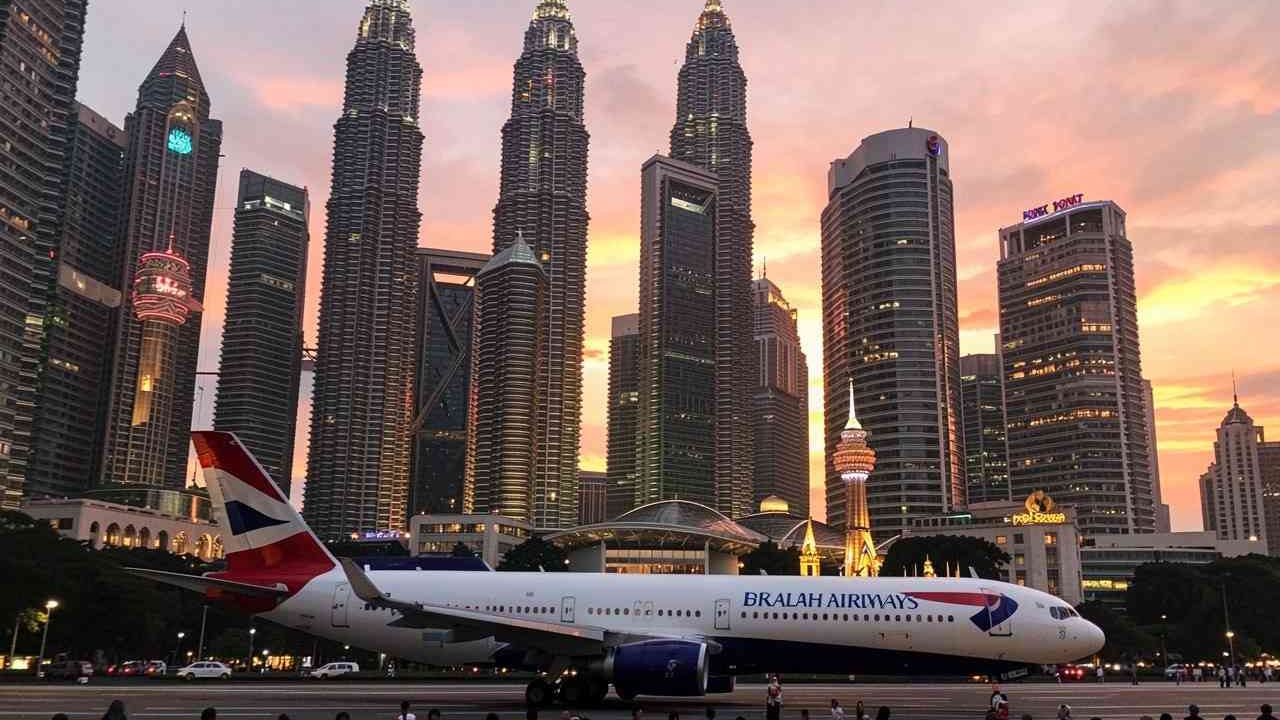
Malaysia welcomed 42.19 million international visitors in 2025 — a record that surpasses not just the previous year by 11.2%, but also exceeds pre-pandemic 2019 levels by a striking 20.4%. That kind of rebound doesn’t happen by accident, and the numbers tell a story about a destination that has fundamentally repositioned itself on the global tourism map.
The surge is being driven by a powerful combination of source markets — China, Singapore, Indonesia, the United Kingdom, and Germany — each contributing meaningfully to the wave of arrivals. And where travelers go, airlines and hotels follow. Major carriers including Cathay Pacific, Singapore Airlines, British Airways, and Lufthansa have expanded their routes to Malaysia, while hospitality brands like Hyatt, Accor, and Four Seasons are reportedly operating at or near capacity.
For travelers, investors, and anyone watching Southeast Asia’s tourism economy, Malaysia’s 2025 performance is one of the most significant stories in global travel right now.
(function(){var wrp=document.getElementById(“paap_stat_69c9ed86001150.27038788”);if(!wrp)return;var ids=[“paap_stat_69c9ed86001150.27038788_c0″,”paap_stat_69c9ed86001150.27038788_c1”];var dur=1800;function ease(t){return 1-Math.pow(1-t,3);}function anim(){ids.forEach(function(id){var el=document.getElementById(id);if(!el)return;var tgt=parseFloat(el.getAttribute(“data-target”))||0;var pfx=el.getAttribute(“data-prefix”)||””;var sfx=el.getAttribute(“data-suffix”)||””;var dec=parseInt(el.getAttribute(“data-decimals”))||0;var st=null;function step(ts){if(!st)st=ts;var p=Math.min((ts-st)/dur,1);var v=ease(p)*tgt;el.textContent=pfx+v.toFixed(dec)+sfx;if(p<1)requestAnimationFrame(step);}requestAnimationFrame(step);});}if("IntersectionObserver" in window){var obs=new IntersectionObserver(function(e){e.forEach(function(en){if(en.isIntersecting){anim();obs.disconnect();}});},{threshold:0.2});obs.observe(wrp);}else{anim();}})();
How Malaysia Broke Its Own Tourism Record
The 11.2% year-over-year increase is impressive on its own. But the comparison to 2019 is what makes this genuinely remarkable. Most destinations that suffered through the pandemic years have struggled to fully recover — Malaysia didn’t just recover, it grew past its previous peak.
The five key source markets — China, Singapore, Indonesia, the United Kingdom, and Germany — represent a geographically diverse mix that signals broad international appeal rather than dependence on a single regional market. Proximity plays a role for Singapore and Indonesia, while the presence of the UK and Germany confirms that long-haul travelers are actively choosing Malaysia over competing destinations.
China’s inclusion is particularly significant. Chinese outbound tourism has been gradually rebuilding since border restrictions eased, and Malaysia has clearly captured a strong share of that returning demand. The combination of cultural familiarity, affordability, and connectivity makes Malaysia an attractive choice for Chinese travelers looking to explore Southeast Asia.
Airlines Are Responding With New and Expanded Routes
When passenger volumes reach record levels, airlines take notice — and act. The expansion of routes by four of the world’s most recognized carriers reflects confidence that Malaysia’s tourism momentum is durable, not a short-term spike.
- Cathay Pacific has added routes connecting Malaysia more directly to its Hong Kong hub, improving access for travelers across Asia and beyond.
- Singapore Airlines has expanded its Malaysia connections, capitalizing on the strong Singapore-Malaysia travel corridor that consistently ranks among the busiest in the region.
- British Airways has moved to meet rising demand from the UK market, which is among the top five source countries driving Malaysia’s record arrivals.
- Lufthansa has similarly responded to growing German visitor numbers with enhanced route capacity into Malaysia.
This level of airline investment matters beyond convenience. More direct routes reduce travel friction, which in turn encourages more visitors — creating a self-reinforcing cycle of demand and supply that benefits the broader tourism ecosystem.
The Numbers Behind Malaysia’s Tourism Surge
| Metric | Figure |
|---|---|
| Total international visitors in 2025 | 42.19 million |
| Year-over-year growth | +11.2% |
| Growth vs. pre-pandemic 2019 | +20.4% |
| Top source markets | China, Singapore, Indonesia, UK, Germany |
| Airlines adding or expanding routes | Cathay Pacific, Singapore Airlines, British Airways, Lufthansa |
| Hotel brands reporting high occupancy | Hyatt, Accor, Four Seasons |
(function(){function loadChartJs(cb){if(window.Chart){cb();return;}var s=document.createElement(“script”);s.src=”https://cdn.jsdelivr.net/npm/chart.js@4.4.0/dist/chart.umd.min.js”;s.onload=cb;document.head.appendChild(s);}function initChart(){var cv=document.getElementById(“paap_chart_69c9ed86002348.93228320”);if(!cv)return;var dv=[“42.19M”,”11.2%”,”20.4%”];new Chart(cv,{type:”bar”,data:{labels:[“2025 Visitors”,”Year-over-Year Growth”,”Growth vs. 2019″],datasets:[{data:[42190000,11.2,20.4],backgroundColor:[“#3b82f6″,”#10b981″,”#f59e0b”],borderRadius:6,borderSkipped:false}]},options:{indexAxis:”y”,responsive:true,maintainAspectRatio:false,animation:{duration:1200,easing:”easeOutQuart”},plugins:{legend:{display:false},tooltip:{callbacks:{label:function(ctx){return dv[ctx.dataIndex]||ctx.formattedValue;}}}},scales:{x:{grid:{color:”#e5e7eb”},ticks:{color:”#6b7280″}},y:{grid:{display:false},ticks:{color:”#1a1a1a”,font:{weight:600}}}}}});}var cv=document.getElementById(“paap_chart_69c9ed86002348.93228320”);if(!cv)return;if(“IntersectionObserver” in window){var obs=new IntersectionObserver(function(e){e.forEach(function(en){if(en.isIntersecting){loadChartJs(initChart);obs.disconnect();}});},{threshold:0.1});obs.observe(cv);}else{loadChartJs(initChart);}})();
What This Means for Hotels, Travelers, and the Local Economy
The hospitality sector is feeling the impact directly. Hyatt, Accor, and Four Seasons properties in Malaysia are reportedly overflowing — a strong indicator that high-end and mid-tier accommodation alike is absorbing the volume of arrivals. For travelers planning a visit, this is a practical signal: book early, because availability at premium properties is under real pressure.
For the local economy, the implications extend well beyond hotel occupancy rates. Record visitor numbers translate into spending across restaurants, transport, retail, cultural attractions, and tour operators. A 42-million-visitor year generates economic activity that ripples through communities far beyond the major tourist corridors.
For businesses operating in or adjacent to Malaysia’s tourism sector — from regional airlines to hospitality investors — the 2025 data makes a compelling case for continued commitment and expansion. The market has demonstrated that it can absorb and sustain significant growth.
Travelers from the UK and Germany, in particular, now have more direct flight options than before, lowering both the cost and inconvenience of reaching Malaysia from Europe. That access improvement alone could sustain elevated visitor numbers from those markets well into future years.
What the Momentum Points to Going Forward
Malaysia’s 2025 performance sets a new baseline — and the infrastructure being put in place suggests that officials and industry players expect the trajectory to continue upward. With four major international airlines having already expanded their routes, connectivity into Malaysia is stronger than it has ever been.
The diversity of source markets is also a stabilizing factor. A tourism economy that draws meaningfully from both nearby neighbors like Indonesia and Singapore and long-haul markets like the UK and Germany is less vulnerable to disruption in any single region. If one market softens, others can compensate.
Hotel brands investing in Malaysian capacity — and operating at overflow levels in 2025 — are placing a clear bet on continued demand. That kind of private-sector confidence, backed by record public-facing visitor data, is typically a leading indicator of sustained growth rather than a one-year anomaly.
For anyone considering Malaysia as a travel destination, the message from the 2025 data is straightforward: the world has discovered — or rediscovered — what this country has to offer, and the experience on the ground is being shaped by that reality in real time.
Frequently Asked Questions
How many tourists visited Malaysia in 2025?
Malaysia welcomed 42.19 million international visitors in 2025, setting a new record for the country.
Which countries sent the most visitors to Malaysia in 2025?
The top source markets were China, Singapore, Indonesia, the United Kingdom, and Germany.
Which airlines expanded routes to Malaysia following the tourism surge?
Cathay Pacific, Singapore Airlines, British Airways, and Lufthansa all added or expanded their routes to Malaysia.
How does Malaysia’s 2025 tourism figure compare to before the pandemic?
The 42.19 million visitors in 2025 represents a 20.4% increase compared to pre-pandemic 2019 levels, meaning Malaysia has grown well beyond its previous peak.
Which hotel brands are seeing high occupancy in Malaysia?
Hyatt, Accor, and Four Seasons properties in Malaysia are reported to be overflowing as a result of the record visitor numbers.
Is the year-over-year growth rate significant?
Yes — the 11.2% increase from the previous year is a strong growth rate for a market already operating at high volume, not a recovery from a low base.



Leave a Reply