
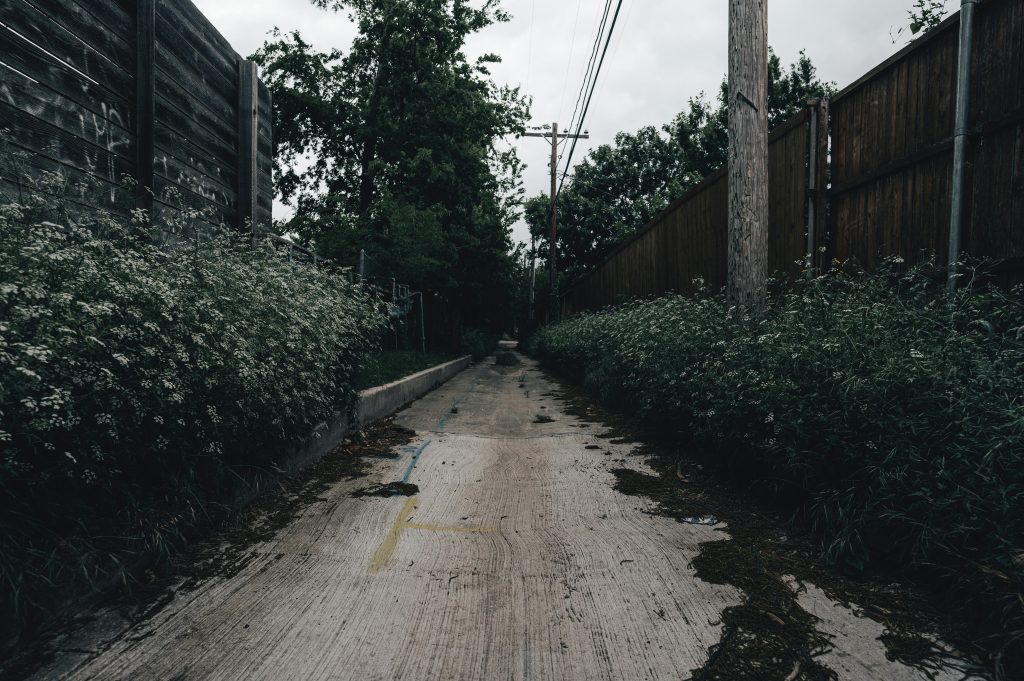
The GPS brings most visitors to a gravel turnaround at the end of County Road 9 in Dallas County, Alabama — and then stops. What stretches beyond the parking area looks, at first glance, like dense riverine forest. Walk fifty feet in any direction, though, and the geometry becomes unmistakable: rectangular depressions where foundation walls once stood, brick rubble arranged in orderly lines, and wide clearings following the path of streets platted nearly 210 years ago. This is Cahaba — Alabama’s first permanent state capital, its most consequential planning failure, and one of the most quietly layered historical sites in the American South.
The town at the confluence of the Cahaba and Alabama Rivers held the state’s seat of government from 1820 to 1826. Today, its permanent population is zero. Its ruins are maintained as Old Cahawba Archaeological Park by the Alabama Historical Commission, and every May and June, the surrounding river shoals erupt in rare aquatic wildflowers that draw visitors who never knew the town existed.
A Capital Built on the Wrong Ground
Alabama achieved statehood in December 1819, and lawmakers needed a permanent capital quickly. The site chosen — a wedge of land between two rivers, roughly 12 miles south of present-day Selma — seemed strategically sound. River access meant commerce. A central location meant political accessibility. The legislature convened at Cahaba in 1820, and the town grew fast, eventually supporting hotels, a newspaper, and brick storefronts along St. Andrews Street.
The rivers that made Cahaba attractive also made it dangerous. Seasonal flooding from both the Cahaba River and the Alabama River turned the capital grounds into wetlands during wet seasons. According to the Encyclopedia of Alabama, floodwaters repeatedly submerged the statehouse and surrounding blocks, making normal governance nearly impossible. By the mid-1820s, legislators were convening in buildings standing in inches of water.
In 1826, the Alabama legislature voted to relocate the capital to Tuscaloosa, citing the chronic flooding. Without state government anchoring it, Cahaba’s commercial infrastructure gradually collapsed. The town persisted as a small agricultural community through the antebellum era, but it never recovered the significance it briefly held.
Castle Morgan: A Civil War Prison at the Bend of the Alabama River
Whatever hope Cahaba had for revival ended in the wreckage of the Civil War. In 1863, Confederate authorities established a prisoner-of-war camp at the town’s old cotton warehouse, designating it Castle Morgan. The facility was designed to hold roughly 500 Union soldiers. At its peak, it held more than 3,000.
Conditions at Castle Morgan were documented in postwar testimonies compiled by Union veterans and Congressional investigators. Overcrowding, inadequate food, and the same flooding that had doomed the capital years earlier combined to make the prison extraordinarily difficult for its occupants. Unlike the more widely documented Andersonville facility in Georgia, Castle Morgan received comparatively limited historical attention in the decades following the war — a gap that historians have since worked to address.
When the war ended in April 1865, Castle Morgan’s prisoners were released and transported north by river. A significant number boarded the steamboat Sultana on the Mississippi River, packed far beyond the vessel’s legal capacity. On April 27, 1865 — just days after the Confederate surrender — the Sultana‘s boilers exploded near Memphis, Tennessee. More than 1,500 people died, making it the deadliest maritime disaster in American history. Many of the dead were former prisoners of Castle Morgan at Cahaba.
What Remains: Foundations, Cemeteries, and Rare Lilies
Walking the grounds of Old Cahawba today means navigating a landscape where infrastructure and ecology have merged over two centuries. The Alabama Historical Commission has preserved the archaeological grid of the original town plan, marked by interpretive signs identifying where the statehouse, hotels, churches, and prison warehouse once stood. Two cemeteries remain on-site — one for the town’s white residents, one for enslaved people — both maintained and still visited.
The site’s most visually striking feature has nothing to do with human history. The rocky shoals of the Cahaba River adjacent to the park produce one of the rarest botanical displays in North America: the cahaba lily (Hymenocallis coronaria), a white aquatic spider lily found almost exclusively in the river systems of Alabama and Georgia. The blooms emerge from the river’s rocky floor in late May and early June, with hundreds of flowers visible from the banks at peak season.
The cahaba lily’s presence has also become a conservation concern. The species is considered vulnerable due to habitat loss from upstream development, altered river flow, and water quality changes. Ecologists have pointed to the Cahaba River as one of the most biodiverse waterways of its size in North America — a designation that draws botanists and wildlife biologists to the same stretch of Dallas County that once hosted Alabama’s legislature.
How a Ghost Town Holds Two Kinds of Memory
Old Cahawba occupies an unusual position in American public memory. It is simultaneously an archaeological record of governmental history, a Civil War prison site, a working cemetery, and a natural preserve. Few sites of comparable scale carry that range of historical layers — and fewer still remain as uncommercial as Cahaba has.
The Alabama Historical Commission has added trail markers, archaeological excavation reports, and educational signage over recent decades without converting the site into a conventional heritage attraction. The ruins remain ruins. The forest has been permitted to reclaim most of the original town footprint. The rivers still flood the site multiple times each year, exactly as they always have.
For visitors making the drive from Selma — south on U.S. Route 80 before turning onto County Road 9 — Old Cahawba offers something genuinely uncommon in American heritage tourism: unmediated contact with history on its own terms. No gift shop, no admission booth, no costumed interpreters. Just the foundations, the cemeteries, the converging rivers, and in late May, the white flowers rising from the shoals of one of the most biodiverse waterways in the eastern United States.
Frequently Asked Questions

You Might Also Like
Forgotten Small Towns Under $150/Night: 18 Gems Across America
18 under-the-radar American towns — some with under 400 residents — offering real culture, affordable…
This Alaska Town of 272 People Lives Almost Entirely Inside One Building — and It’s Only Reachable by Tunnel
The first thing you notice is the darkness. You pull into the Anton Anderson Memorial…
25 Hidden US Towns With Hotels From $89 a Night
25 under-the-radar US towns offer hotels from $89–$175/night and meals under $25 while Sedona and…
Leave a Reply