
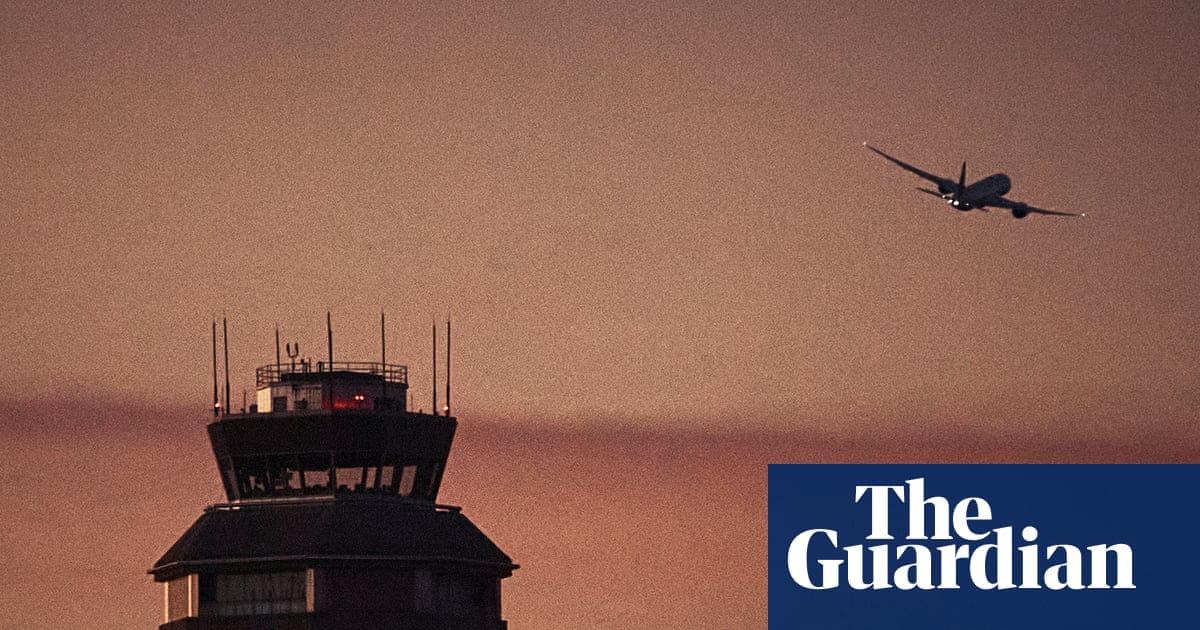
Two commercial aircraft came within a few hundred feet of each other at one of the busiest airports on the East Coast — and it was a last-second instruction from an air traffic controller that kept the situation from becoming a catastrophe.
The close call happened on a Tuesday evening at Newark Liberty International Airport, when an Alaska Airlines Boeing 737 and a FedEx Boeing 777 cargo plane ended up on intersecting flight paths. The two aircraft were dangerously close before a go-around order from air traffic control broke the collision course and brought both planes to safety.
It was the kind of moment that rarely makes it into the public consciousness — but absolutely should. Newark is one of the most complex airspace environments in the country, and incidents like this one are a sobering reminder of how much depends on the people working behind the scenes.
What Happened at Newark Liberty International Airport
According to available reporting, the Alaska Airlines 737 and the FedEx 777 were on intersecting flight paths when the proximity alarm became unavoidable. The two aircraft closed to within a few hundred feet of each other — a distance that, at the speeds involved, leaves almost no margin for error.
Air traffic controllers issued a go-around instruction — an order directing a pilot to abort the current approach or maneuver and climb away from the runway — at what appears to have been the critical moment. That single call prevented what could have been a runway collision involving both a passenger jet and a large cargo aircraft.
The incident underscores something aviation safety advocates have long argued: that the invisible infrastructure of air traffic control is every bit as important as the aircraft themselves. Without a controller making the right call at the right second, the outcome could have been entirely different.
The Aircraft Involved: A Closer Look
| Detail | Aircraft 1 | Aircraft 2 |
|---|---|---|
| Airline / Operator | Alaska Airlines | FedEx |
| Aircraft Type | Boeing 737 | Boeing 777 |
| Type of Flight | Passenger | Cargo |
| Airport | Newark Liberty International | Newark Liberty International |
| Incident Resolved By | Go-around instruction | Go-around instruction |
The Boeing 777 operated by FedEx is one of the largest wide-body aircraft in commercial use. A passenger 737 and a cargo 777 converging at a major airport hub represents a serious mismatch in size, speed, and momentum — which makes the successful intervention all the more significant.
Why Newark Makes These Situations So Difficult to Manage
Newark Liberty International is not just a busy airport — it operates within one of the most congested airspace corridors in the world, sharing approach paths and departure corridors with John F. Kennedy International and LaGuardia Airport, all within a relatively tight geographic area.
What makes Newark particularly challenging is its runway configuration. Intersecting runways — where two runways cross or converge — require constant, precise coordination between controllers and flight crews. When multiple aircraft are moving simultaneously, the timing tolerances can be measured in seconds.
Officials have long noted that managing intersecting runway operations demands the highest levels of attention and communication. A miscommunication, a delayed response, or a misheard instruction can quickly compress a routine operation into an emergency scenario. That is exactly what appears to have nearly happened here.
The Role Air Traffic Control Played — and Why It Matters to Every Traveler
Most passengers board a plane thinking about their destination, their seat, or whether the Wi-Fi works. Very few think about the network of controllers on the ground whose sole job is to keep every aircraft separated by safe distances at all times.
In this case, that system worked. A controller recognized the conflict developing between the Alaska Airlines jet and the FedEx freighter and issued a go-around before the situation became unrecoverable. That response — fast, clear, and correct — is precisely what the system is designed to produce.
Aviation safety observers note that near-miss incidents, while alarming, are also part of how the broader safety system learns and improves. Every close call that is properly documented and investigated generates data that can be used to prevent the next one. The question that follows any incident like this is always the same: what procedural or systemic changes, if any, are needed to make sure it doesn’t happen again?
- Intersecting runway operations require split-second coordination
- Go-around instructions are a standard safety tool — but timing is everything
- Newark operates in one of the most complex shared airspace environments in the U.S.
- Both aircraft — a passenger jet and a large cargo freighter — were successfully separated
- No collision occurred; the intervention is being credited to swift air traffic control action
What Comes Next After a Near-Miss Incident
When a close call like this occurs at a U.S. airport, the standard process involves review by aviation safety authorities. The Federal Aviation Administration typically examines air traffic control recordings, radar data, and cockpit communications to reconstruct exactly what happened and identify any contributing factors.
Whether a formal investigation has been opened into this specific incident has not yet been confirmed in available reporting. What is clear is that the event has already drawn attention to the ongoing challenges of managing high-density air traffic at major hub airports — a challenge that has been a recurring concern in U.S. aviation circles.
For travelers passing through Newark or flying on either carrier, the immediate takeaway is straightforward: the close call was caught, both aircraft landed safely, and the system — specifically the human judgment of an air traffic controller — performed as intended under pressure.
Frequently Asked Questions
Where did the near-collision between Alaska Airlines and FedEx occur?
The incident took place at Newark Liberty International Airport on a Tuesday evening, when the two aircraft came within a few hundred feet of each other on intersecting flight paths.
What aircraft were involved in the close call?
An Alaska Airlines Boeing 737 passenger jet and a FedEx Boeing 777 cargo plane were the two aircraft involved.
How was the near-collision avoided?
An air traffic controller issued a go-around instruction at a critical moment, directing one of the aircraft to abort its approach and climb away, preventing a runway collision.
Was anyone injured in the incident?
No collision occurred, and no injuries have been reported in connection with this incident.
Will there be an official investigation?
Whether a formal investigation has been opened has not yet been confirmed in available reporting, though close-call incidents at U.S. airports are typically reviewed by aviation safety authorities.
Is Newark Airport considered particularly risky for this type of incident?
Newark operates intersecting runways within one of the most congested airspace corridors in the United States, which requires extremely precise coordination between pilots and controllers at all times.




Leave a Reply