
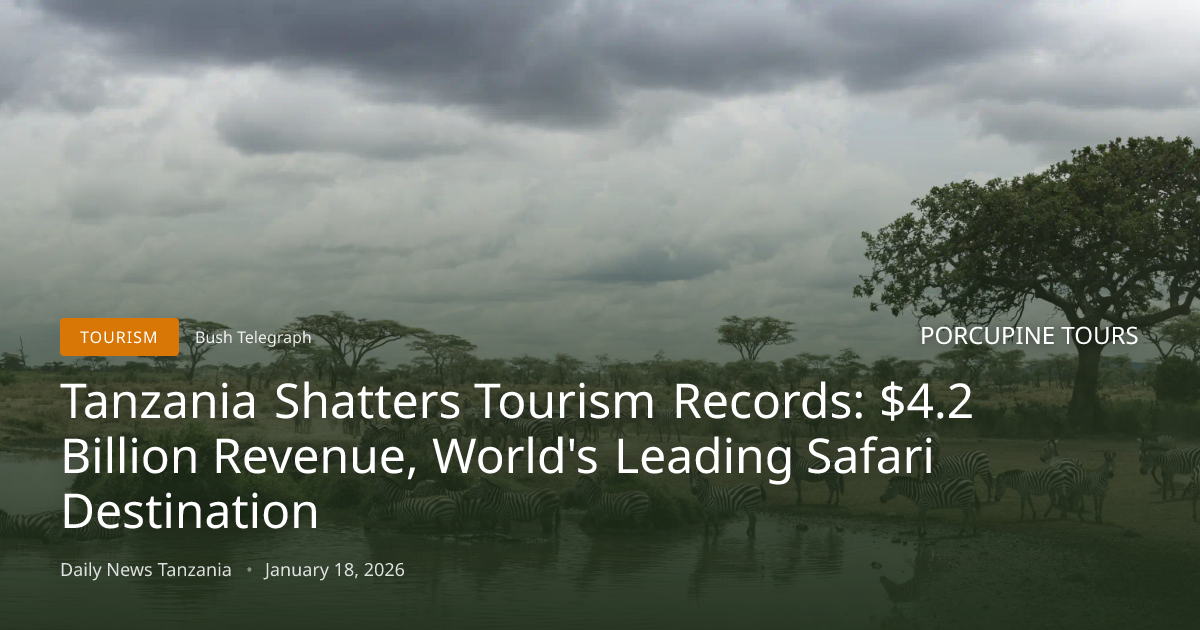
Africa is having a tourism moment that few could have predicted even five years ago, and 2026 is shaping up to be the continent’s biggest year on record for international visitors. Tanzania has now officially joined Egypt, Kenya, Tunisia, Morocco, South Africa, and Zimbabwe as one of the top destinations fueling that surge — a lineup that covers everything from ancient pyramids to some of the most dramatic wildlife spectacles on the planet.
What makes Tanzania’s rise particularly striking is how quickly it has moved from a well-regarded niche destination to a cornerstone of Africa’s global tourism identity. The country’s combination of iconic wildlife, world-class beaches, and a growing commitment to sustainable luxury has clearly resonated with a new generation of international travelers who want more than a beach chair and a cocktail.
For anyone thinking about where to travel next, this story matters. These seven African nations are not just drawing crowds — they are reshaping what long-haul travel looks like in 2026.
Why Africa’s Tourism Boom Is Different This Time
Africa’s tourism sector has seen significant surges before, only to be knocked back by global events — a pandemic, a regional conflict, an economic shock. What observers are noting about 2026 is that the recovery and growth feel more structurally sound. The continent’s diverse offerings are doing the work: rich history, breathtaking natural landscapes, wildlife found nowhere else on Earth, and a hospitality sector that has invested heavily in infrastructure over the past several years.
The seven leading destinations each bring something distinct to the table. Egypt anchors the north with its ancient wonders and Red Sea resorts. Morocco blends medina culture with Atlas Mountain adventure. Tunisia offers Mediterranean coastlines alongside Roman ruins. Kenya remains the gold standard for East African safari experiences. South Africa covers everything from Cape Town’s cosmopolitan energy to the Kruger National Park’s big five. Zimbabwe draws visitors to Victoria Falls, one of the natural world’s most humbling sights.
Tanzania fits into this group not as a late arrival, but as a destination that has been quietly building toward this moment for years.
What Tanzania Specifically Brings to the Table
Tanzania’s draw is built on three distinct pillars, each capable of attracting a different type of traveler.
- The Serengeti National Park — home to the Great Wildebeest Migration, widely considered one of the greatest natural spectacles on Earth, drawing adventurers and wildlife photographers from across the globe.
- Mount Kilimanjaro — Africa’s highest peak, attracting trekkers and mountaineers looking for a serious physical challenge with an unforgettable payoff at the summit.
- Zanzibar — the archipelago off Tanzania’s coast, offering pristine beaches and a rich Swahili cultural heritage for travelers who want to decompress after a safari or climb.
Beyond the headline attractions, Tanzania has been building a reputation for sustainable luxury tourism — high-end lodges and camps that minimize environmental impact while delivering exceptional experiences. That combination has proven particularly appealing to wealthier international travelers who are increasingly conscious of how their trips affect the places they visit.
Continued investment in infrastructure has also played a role, making Tanzania more accessible and easier to navigate for first-time visitors.
| Destination | Primary Attractions | Key Draw for 2026 Visitors |
|---|---|---|
| Tanzania | Serengeti, Kilimanjaro, Zanzibar | Wildlife migration, trekking, sustainable luxury |
| Egypt | Ancient monuments, Red Sea coast | History and beach resort combination |
| Kenya | Safari reserves, Maasai Mara | East African safari experiences |
| Morocco | Medinas, Atlas Mountains, Sahara | Culture, adventure, and cuisine |
| Tunisia | Mediterranean coast, Roman ruins | History paired with beach tourism |
| South Africa | Cape Town, Kruger National Park | Urban culture and big five wildlife |
| Zimbabwe | Victoria Falls | One of the world’s great natural wonders |
What This Means for Travelers Planning an Africa Trip
If you have been considering Africa as a travel destination, 2026 is the year the continent is most clearly presenting itself as a unified, world-class option rather than a collection of isolated adventures. The seven destinations now recognized as leading the charge cover virtually every type of travel experience — cultural immersion, wildlife, adventure, luxury, beach, and history.
The practical consequence for travelers is that there are now more routes, more operators, and more infrastructure connecting these destinations than at any previous point. That makes multi-country itineraries — combining, say, a Tanzanian safari with a few days in Zanzibar, then a flight to Cape Town — more realistic and better supported than ever before.
For budget-conscious travelers, the growing competition among destinations and operators also means more options at different price points, even as the luxury end of the market continues to expand rapidly.
The emphasis on sustainable tourism across multiple destinations is also worth noting for travelers who care about the environmental footprint of their trips. Tanzania’s growing reputation in this space reflects a broader continental shift toward tourism models that preserve the very landscapes and wildlife that draw visitors in the first place.
- The Great Wildebeest Migration in the Serengeti draws adventurers and wildlife photographers from around the world.
- Mount Kilimanjaro attracts trekkers seeking Africa's highest and most iconic mountaineering challenge.
- Zanzibar's pristine beaches offer a relaxing complement to Tanzania's wildlife and adventure experiences.
- Africa's diverse offerings span rich history, dramatic landscapes, and wildlife found nowhere else on Earth.
- Continued infrastructure investment across leading destinations is making long-haul African travel more accessible.
- A growing sustainable luxury tourism model is appealing to environmentally conscious international visitors.
Where Africa’s Tourism Momentum Goes From Here
With 2026 already being described as a record year for international visitors to the continent, the question for the industry is how to sustain and build on that momentum. The answer, based on what is happening across these seven destinations, appears to involve continued infrastructure investment, a stronger push into the sustainable and luxury segments, and smarter marketing that positions Africa as a diverse, multi-experience destination rather than a single-note safari trip.
Tanzania’s elevation to the top tier of African destinations is a signal that the continent’s tourism map is expanding. Travelers who may have previously considered only Egypt or South Africa now have a much richer menu of options — and the infrastructure to support more adventurous itineraries is catching up fast.
For the destinations themselves, the challenge will be managing growth in a way that protects the natural environments and cultural heritage that make them worth visiting. That tension — between tourism revenue and conservation — will likely define the next chapter of Africa’s travel story.
Frequently Asked Questions
Which African destinations are drawing record tourist numbers in 2026?
The seven leading destinations are Tanzania, Egypt, Kenya, Tunisia, Morocco, South Africa, and Zimbabwe, all of which are attracting record numbers of international visitors in 2026.
What makes Tanzania a top destination in 2026?
Tanzania is recognized for the Serengeti National Park and the Great Wildebeest Migration, Mount Kilimanjaro, the beaches of Zanzibar, and a growing reputation for sustainable luxury tourism.
What is the Great Wildebeest Migration?
It is a large-scale annual wildlife movement that takes place in and around the Serengeti National Park in Tanzania, widely regarded as one of the greatest natural spectacles on Earth.
Is Tanzania suitable for travelers who are not interested in safaris?
Yes — Zanzibar offers pristine beaches and Swahili cultural experiences, while Mount Kilimanjaro draws trekkers and mountaineers looking for a different kind of adventure entirely.
What is driving Africa’s broader tourism boom in 2026?
The growth is attributed to the continent’s diverse offerings including rich history, dramatic landscapes, wildlife, and continued investment in tourism infrastructure across multiple countries.
Is sustainable tourism a factor in Tanzania’s rise?
Yes, Tanzania has developed a growing reputation for sustainable luxury tourism, which has become an increasingly important draw for international visitors who prioritize environmentally responsible travel.



Leave a Reply