
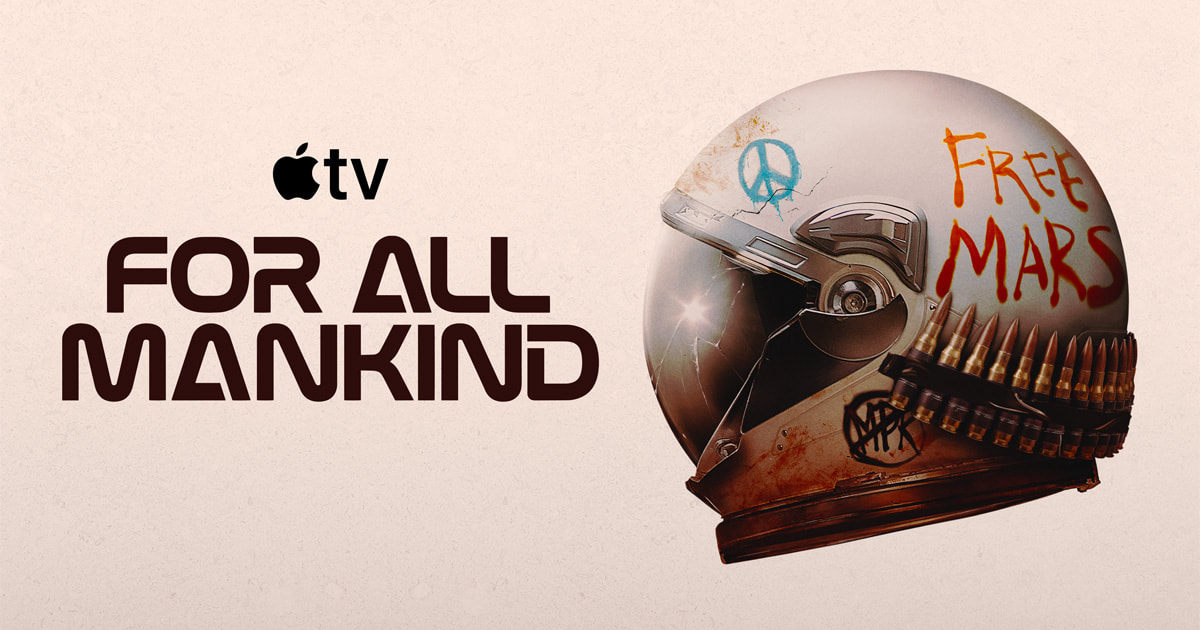
What if the Soviet Union had beaten America to the Moon? That single question — deceptively simple, endlessly consequential — is the engine driving one of the most ambitious science fiction series currently on television. For All Mankind, Apple TV+’s alternate history space opera, has quietly built itself into something rare: a prestige sci-fi franchise that gets more compelling with every season, not less.
Now heading into its fifth season, the show is earning serious recognition as one of the defining original sci-fi works of the 21st century. That’s not hyperbole — it’s a case that becomes easier to make the longer the series runs.
For viewers who haven’t caught up yet, or for fans trying to articulate exactly why this show hits differently than most streaming sci-fi, here’s what makes For All Mankind worth paying attention to right now.
The Alternate History Premise That Changes Everything
For All Mankind begins in 1969 with a single divergence from real history: the Soviet Union lands on the Moon first. From that pivot point, the series reimagines the entire trajectory of the space race — and by extension, geopolitics, technology, gender equality, and human ambition itself.
Each season jumps forward roughly a decade, which means the show’s world evolves dramatically between episodes. Season one inhabits the 1960s and ’70s. Later seasons push into the 1980s, ’90s, and beyond, charting a version of history where competition in space never cooled down — it escalated.
This structure gives the writers extraordinary creative freedom. Characters age. Institutions rise and fall. The consequences of earlier choices ripple forward in ways that feel genuinely earned rather than manufactured for drama. It’s the kind of long-form storytelling that television rarely pulls off, and For All Mankind has made it look almost effortless.
Why This Show Stands Apart From Other Streaming Sci-Fi
The streaming era has produced plenty of science fiction — some of it excellent, much of it forgettable. What separates For All Mankind from the pack comes down to a few specific qualities that are harder to fake than good visual effects.
- Emotional grounding: The show never loses sight of its human characters, even as the backdrop grows increasingly epic. Personal relationships, career ambitions, and moral failures remain central to every season.
- Intellectual seriousness: The alternate history is constructed with genuine care. The show asks real questions about how technological competition shapes societies and what humanity might have achieved under different pressures.
- Consistent quality across seasons: Many prestige dramas peak early and decline. For All Mankind has maintained — and by many accounts improved — its storytelling across four completed seasons.
- A willingness to take risks: The series regularly kills off major characters, upends its own status quo, and refuses to offer easy resolutions. It trusts its audience to keep up.
- Stunning production value: Apple TV+ has backed the show with the kind of budget that makes its vision of alternate space history feel fully realized on screen.
How Each Season Has Expanded the Franchise
One of the most impressive things about For All Mankind is how deliberately each season has built on the last, expanding the scope without losing coherence.
| Season | Primary Setting / Era | Core Narrative Focus |
|---|---|---|
| Season 1 | Late 1960s – Early 1970s | The alternate Moon race; NASA’s response to Soviet success |
| Season 2 | Early 1980s | Cold War tensions escalating on the lunar surface |
| Season 3 | Early 1990s | The race to Mars; private space industry enters the picture |
| Season 4 | Early 2000s | An international Mars colony; labor, politics, and survival |
| Season 5 | TBD / Future Era | Continuing the franchise’s expansion into deeper space territory |
The Mars colony arc in particular marked a turning point for the series. By season four, For All Mankind had evolved from a Cold War drama set in space into something closer to a full civilization-building epic — with all the political and human complexity that implies.
What a Fifth Season Means for the Franchise’s Legacy
Reaching five seasons is itself an achievement for any prestige drama, but for an ambitious alternate history space opera on a streaming platform, it signals something more significant. Apple TV+ has demonstrated sustained commitment to this world — and the creative team has responded by continuing to push the story forward rather than coasting on an established formula.
The fact that the show is still generating serious critical conversation heading into season five suggests it has done something genuinely difficult: it has built a franchise with actual longevity. Not just a strong debut followed by diminishing returns, but a series that has earned its place in the conversation about the best science fiction of this era.
Observers of the genre have noted that For All Mankind belongs in the same discussion as the landmark sci-fi television works of the past two decades — series that used speculative premises to illuminate real human truths rather than simply deliver spectacle.
Why Now Is the Right Time to Start Watching
If you’ve been aware of For All Mankind without actually committing to it, season five arriving is a genuine reason to catch up. Having all four previous seasons available means you can experience the full arc of the story — the slow build of season one, the escalating tension of season two, the scope explosion of seasons three and four — without waiting between installments.
The show rewards patience and attention in ways that few streaming series manage. Details planted early pay off seasons later. Character decisions made in the 1970s echo into the 2000s. That kind of craft is increasingly rare, and it’s worth seeking out.
For anyone who has ever wondered what television science fiction looks like when it’s firing on every cylinder — narratively, visually, and intellectually — For All Mankind is currently the clearest answer to that question.
Frequently Asked Questions
What is For All Mankind about?
It’s an alternate history science fiction series on Apple TV+ that imagines a world where the Soviet Union beat the United States to the Moon, dramatically changing the course of the space race and global history.
How many seasons of For All Mankind are there?
The show is heading into its fifth season, with four seasons already completed and available to stream on Apple TV+.
Does each season cover a different time period?
Yes — each season jumps forward roughly a decade, allowing the story to follow the long-term consequences of its alternate history across different eras, from the late 1960s through the early 2000s and beyond.
Do I need to watch all seasons in order?
Yes. The show’s storytelling is deeply serialized, with character arcs and plot consequences building continuously across seasons. Starting from season one is strongly recommended.
Is For All Mankind considered a good show critically?
The series has built a strong critical reputation over its run and is increasingly discussed as one of the most significant original sci-fi franchises of the current era of television.
Has Apple TV+ confirmed the show’s future beyond season five?
This has not been confirmed in the available source material — season five is the current focus of the franchise’s ongoing development.




Leave a Reply