
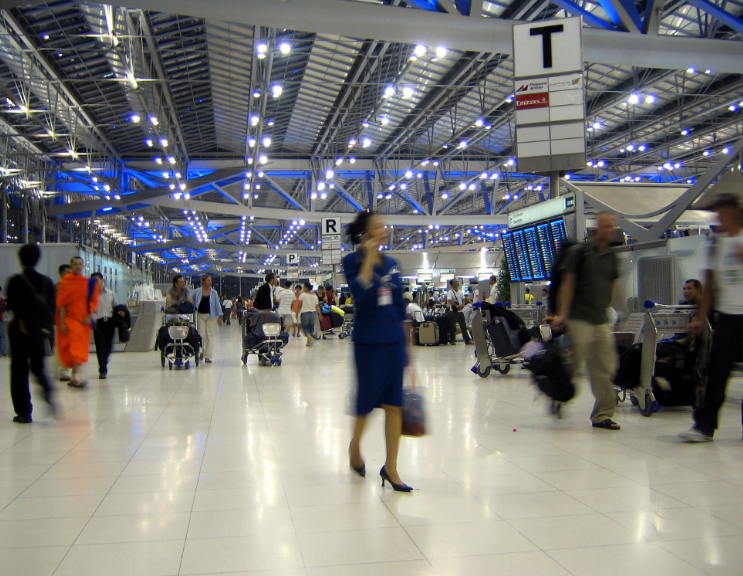
More than 2,300 flights across Asia were either cancelled or delayed on March 23, 2026, leaving thousands of travellers stranded at airports from Tokyo to Jeddah in one of the region’s most widespread aviation disruptions in recent memory.
The chaos stretched across six countries — Thailand, Japan, Singapore, China, India, and Saudi Arabia — hitting some of the world’s busiest air hubs simultaneously. Passengers at major airports faced hours of uncertainty, missed connections, and little clarity on when they would reach their destinations.
Airlines caught in the disruption include Japan Airlines, Thai Airways, Air India, ANA, Saudia, and others operating across the affected region. The combined toll: at least 144 flights cancelled outright and more than 2,180 delayed.
Where the Disruption Hit Hardest
Tokyo Haneda bore the heaviest burden of delays, recording 414 delayed flights — more than any other airport in the affected region. Delhi’s Indira Gandhi International Airport followed with 268 delays and 4 cancellations, while Bangkok’s Suvarnabhumi Airport logged 248 delays and 4 cancellations of its own.
Shanghai Pudong saw 215 delays and 11 cancellations. Mumbai’s Chhatrapati Shivaji Maharaj International Airport recorded 203 delays alongside 11 cancellations. Singapore’s Changi Airport, typically one of the world’s most efficient, was not spared — 163 delays and 2 cancellations were reported there.
In Saudi Arabia, both major hubs were affected. Jeddah’s King Abdulaziz International Airport reported 148 delays and 9 cancellations, while Riyadh’s King Khalid International Airport recorded 117 delays and 19 cancellations — the highest number of outright cancellations among all listed airports.
Flight Disruption Data by Airport
| Airport | Country | Cancellations | Delays |
|---|---|---|---|
| Tokyo Haneda | Japan | Not specified | 414 |
| Delhi Indira Gandhi | India | 4 | 268 |
| Bangkok Suvarnabhumi | Thailand | 4 | 248 |
| Shanghai Pudong | China | 11 | 215 |
| Mumbai Chhatrapati Shivaji | India | 11 | 203 |
| Singapore Changi | Singapore | 2 | 163 |
| Jeddah King Abdulaziz | Saudi Arabia | 9 | 148 |
| Riyadh King Khalid | Saudi Arabia | 19 | 117 |
The Airlines Caught in the Middle
Several of Asia’s most prominent carriers were directly affected by the disruption. Japan Airlines and ANA, both operating heavily out of Tokyo Haneda, faced the pressure of hundreds of delays rippling through their schedules. Thai Airways at Bangkok Suvarnabhumi and Air India across Delhi and Mumbai struggled to manage cascading schedule failures as the day wore on.
Saudia, the national carrier of Saudi Arabia, was caught up in the disruptions at both Jeddah and Riyadh. When a carrier’s two main domestic hubs are simultaneously affected, the knock-on effects for onward international connections can be severe and long-lasting.
Flight disruptions of this scale don’t resolve quickly. A delayed aircraft in Tokyo becomes a late departure from Bangkok, which becomes a missed connection in Singapore. The ripple effect across interconnected route networks means passengers far outside the originally affected airports can find themselves impacted hours later.
What This Means for Passengers Right Now
If you are travelling through any of these airports or on any of the affected airlines, the immediate priorities are straightforward — but not always easy to act on in a crowded terminal.
- Check your flight status directly with your airline’s app or website before heading to the airport. Real-time status is more reliable than departure boards, which can lag.
- Document everything. Keep records of delay notifications, boarding passes, and any expenses incurred. These are typically required when filing for compensation or refunds.
- Contact your airline proactively if your flight is cancelled. Rebooking options fill up quickly during mass disruption events, and those who wait in line at the airport are often the last to secure alternatives.
- Check your travel insurance policy if you have one. Many policies cover accommodation and meal costs during significant delays, but terms vary widely.
- Know your passenger rights. Depending on where your flight departed from and which carrier you are flying, you may be entitled to compensation or care under local aviation regulations.
Passengers who had booked connecting itineraries through Kolkata, Shanghai, or other secondary hubs mentioned in the broader disruption should also check their onward connections, as the scale of the delays suggests the impact extended well beyond the airports with the highest reported numbers.
A Disruption That Reflects a Wider Pressure on Asian Aviation
Asia’s aviation sector has been operating under sustained pressure as travel demand has surged well beyond pre-pandemic levels. Airports across the region have been handling record passenger volumes, and even minor operational disruptions — weather, air traffic control constraints, technical issues — can cascade quickly across a network already running close to capacity.
Tokyo Haneda, Delhi, and Bangkok are all among the world’s highest-traffic airports. When disruption hits these hubs, it rarely stays contained. Planes, crews, and passengers are all interconnected across time zones and routes in ways that make recovery slow and complicated.
The fact that six countries were simultaneously affected suggests a widespread triggering event or overlapping set of conditions, though the specific causes behind this particular disruption have not been confirmed in the available reporting.
What Travellers Should Watch for in the Coming Hours
Mass disruption events like this one typically take 24 to 48 hours to fully clear from an airline’s schedule, depending on the root cause. Passengers with travel planned in the next day or two through Tokyo, Delhi, Bangkok, Mumbai, Shanghai, Singapore, Jeddah, or Riyadh should monitor their bookings closely.
Airlines in these situations often waive change fees temporarily, allowing affected passengers to rebook without penalty. Checking your airline’s website for any published disruption waivers is worth doing even if your flight has not yet been officially cancelled or flagged.
For those already at airports waiting for updates, the advice from aviation observers is consistent: stay close to your gate, keep your phone charged, and avoid relying solely on airport announcement systems during high-volume disruption events.
Frequently Asked Questions
How many flights were cancelled and delayed across Asia on March 23, 2026?
At least 144 flights were cancelled and more than 2,180 were delayed, bringing the total disruption to over 2,300 flights across the affected region.
Which airport recorded the most delays?
Tokyo Haneda recorded the highest number of delays, with 414 flights delayed on the day.
Which airport had the most cancellations?
Riyadh’s King Khalid International Airport reported the highest number of outright cancellations, with 19 flights cancelled.
Which airlines were affected by the disruption?
Japan Airlines, ANA, Thai Airways, Air India, and Saudia were among the carriers disrupted, along with others operating across the affected airports.
What caused the widespread flight disruptions?
The specific causes have not been confirmed in the available reporting. The disruption affected six countries simultaneously across Thailand, Japan, Singapore, China, India, and Saudi Arabia.
What should passengers do if their flight was cancelled or delayed?
Passengers should check their flight status directly with their airline, document all delay notifications and expenses, and contact their airline proactively to explore rebooking options before availability fills up.




Leave a Reply