
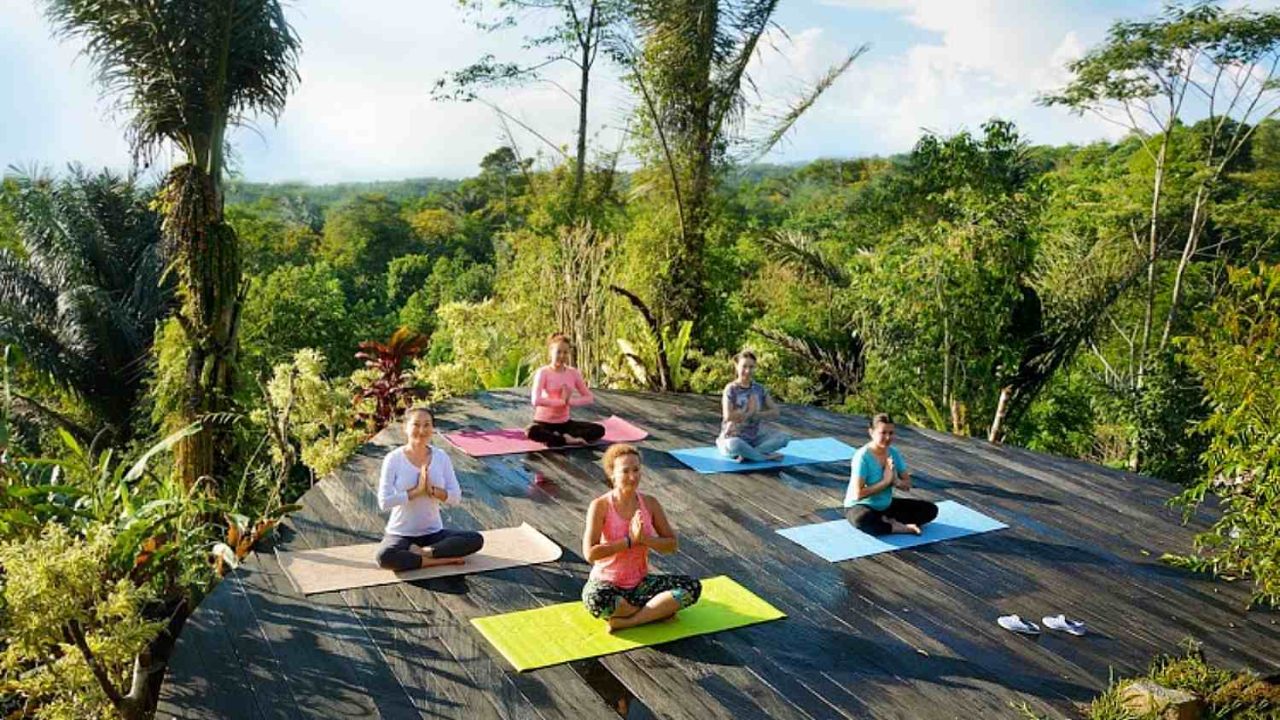
More than 5 million international visitors traveled to Bali in 2023, and a growing share of them weren’t coming for the nightlife. They came to breathe, to stretch, to sit in silence on a rice paddy terrace and figure out what went wrong somewhere between their last promotion and their first panic attack.
That shift isn’t accidental. It’s the result of deliberate policy, ancient spiritual infrastructure, and a global wellness industry now valued in the trillions. Bali didn’t stumble into becoming a yoga mecca. It was built for it, and now the Indonesian government is doubling down.
Sanur’s Health SEZ and the Government Bet on Wellness Tourism
In a move that surprised many travel analysts, Indonesia designated Sanur, a coastal district in southern Bali, as a Health Special Economic Zone. The SEZ framework gives developers and wellness operators tax incentives, streamlined licensing, and infrastructure support to build world-class medical and holistic health facilities.
It’s a significant policy signal. Governments don’t create special economic zones for industries they consider marginal. Indonesia is betting that wellness tourism, combining yoga, detox programs, spiritual retreats, and integrative medicine, will become one of Bali’s most durable economic pillars.
The timing aligns with a global trend. The Global Wellness Institute has tracked consistent double-digit growth in wellness tourism for the better part of a decade. Post-pandemic travelers, in particular, are prioritizing mental and physical restoration over pure sightseeing.
Ubud: The Spiritual Capital That Yoga Built
If Sanur is the policy engine, Ubud is the soul. Nestled in Bali’s central highlands, surrounded by terraced rice fields and dense jungle, Ubud has functioned as a spiritual and artistic center for centuries. Today it’s also the beating heart of Bali’s yoga retreat economy.
Ubud hosts an annual wellness and yoga festival that draws practitioners, teachers, and healers from across Asia, Europe, and North America. The event has become a calendar fixture for the global yoga community, drawing participants who often extend their stays into multi-week retreat programs.
Retreats in Ubud range from stripped-down meditation intensives to elaborate healing immersions. Udara Bali describes itself as an integrated healing yoga resort offering retreat, wellness, and detox lifestyle programs designed to address the stress of modern living. That framing, practical, medically adjacent, and rooted in daily routine, reflects how Bali’s wellness industry has matured beyond simple spa tourism.
| Retreat Type | Typical Duration | Price Range | Primary Focus |
|---|---|---|---|
| Yoga Immersion | 7–14 days | $1,000–$2,500 | Asana, breathwork, meditation |
| Detox and Wellness | 5–10 days | $1,500–$3,000 | Nutrition, cleansing, rest |
| Spiritual Healing | 7–21 days | $1,200–$3,000 | Reiki, energy work, ceremony |
| Teacher Training | 21–30 days | $2,000–$4,500 | Yoga certification, pedagogy |
What Sustainable Wellness Actually Looks Like on the Ground
The word “sustainable” gets attached to almost everything in travel marketing now. In Bali’s wellness sector, though, it carries specific meaning, and some operators are making it count.
Several retreat centers in Ubud have adopted zero-waste kitchen policies, sourcing produce from nearby organic farms and eliminating single-use plastics entirely. Others have partnered with local Balinese healers, ensuring that traditional practices like Balinese massage, Jamu herbal medicine, and water purification ceremonies remain in the hands of community practitioners rather than being appropriated by outside operators.
This matters economically. When a retreat center employs local healers, sources local food, and trains local yoga teachers, the revenue circulates within the community rather than flowing back to foreign-owned hospitality corporations. It’s a model that the UN World Tourism Organization has identified as critical to making tourism genuinely regenerative rather than extractive.
“Bali is one of the destinations that draws yoga teachers, healers, and other wellness professionals from around the world. The spiritual culture, lifestyle choices, and natural beauty of the island create a setup that genuinely supports self-care and personal growth.”
— Wellness retreat industry assessment, People Also Ask
The Cultural Foundation That No Marketing Budget Can Replicate
Here’s what separates Bali from every other tropical wellness destination trying to claim the yoga retreat market: the spiritual infrastructure was already here.
Bali is the only Hindu-majority island in the world’s largest Muslim-majority country. Its religious calendar is dense with ceremony. Temples dot every village. Offerings are placed at doorways, roadsides, and rice fields every single morning. The concept of Tri Hita Karana, harmony between humans, nature, and the divine, is woven into Balinese architecture, agriculture, and daily life.
That’s not a backdrop you can manufacture. When a retreat participant sits in meditation at dawn in Ubud and hears gamelan music drifting from a nearby temple, they’re not consuming a curated wellness experience. They’re touching something genuinely old.
Global Gallivanting describes Bali as “filled with beauty, culture, heritage and spirituality,” noting that its yoga retreats rank among the best in the world. That assessment isn’t hyperbole. It reflects the rare alignment of physical environment, cultural depth, and professional wellness infrastructure that Bali has achieved.
What Rising Tourist Numbers Mean for Bali’s Wellness Identity
Growth creates pressure. As wellness tourism to Bali accelerates, the risk of overcrowding, cultural dilution, and environmental degradation grows alongside it. Ubud’s roads are already strained. Water usage at large resort complexes has drawn criticism from local farmers who depend on the same aquifers.
The Sanur Health SEZ is partly a response to this pressure. By concentrating high-end wellness development in a designated zone with regulated infrastructure, Indonesian authorities hope to prevent the sprawl that damaged Kuta and Seminyak in earlier tourism waves.
Whether that strategy works depends on enforcement and political will. Special economic zones are only as effective as the regulatory frameworks that govern them.
What Travelers Are Actually Getting for $1,000 to $3,000
A week-long Bali retreat at the mid-range price point typically includes private or shared accommodation in a villa or eco-lodge, three plant-based meals daily, morning yoga sessions, afternoon workshops covering breathwork or meditation, and at least one traditional Balinese healing ceremony.
Higher-end programs add personalized nutrition consultations, one-on-one sessions with resident healers, and excursions to sacred sites. Swell Retreats notes that the appeal goes beyond the physical practice: travelers get to engage with a new culture, meet a community of like-minded practitioners, and explore schools of yoga they wouldn’t encounter at home.
Customization is increasingly standard. Many centers, including those offering Reiki alongside yoga, allow participants to build programs around specific needs, whether that’s grief processing, burnout recovery, or simply learning to sleep again.
The question of value is ultimately personal. But for travelers who are genuinely ready to invest in their own restoration rather than just adding a destination to a list, Bali’s retreat ecosystem offers something most tropical islands cannot: depth.
The real measure of Bali’s wellness revolution won’t be the number of retreats or the size of the SEZ. It will be whether, a decade from now, the rice fields are still there, the healers are still Balinese, and the silence at dawn still means something.
Frequently Asked Questions

You Might Also Like
Why Travellers Choosing Indigenous Cultural Tourism Are Changing Canada’s Travel Story
Indigenous cultural tourism has quietly climbed to become one of the top three experiences sought…

Lufthansa Just Pulled Six Major Airlines Into One Bold 2026 Cabin Overhaul
Six of the world’s most recognized airlines are preparing to overhaul what passengers actually experience…
Kenya Airways and JetBlue Are Connecting East Africa to the US in 2026
A new codeshare agreement between Kenya Airways and JetBlue is set to reshape how travelers…
Leave a Reply