
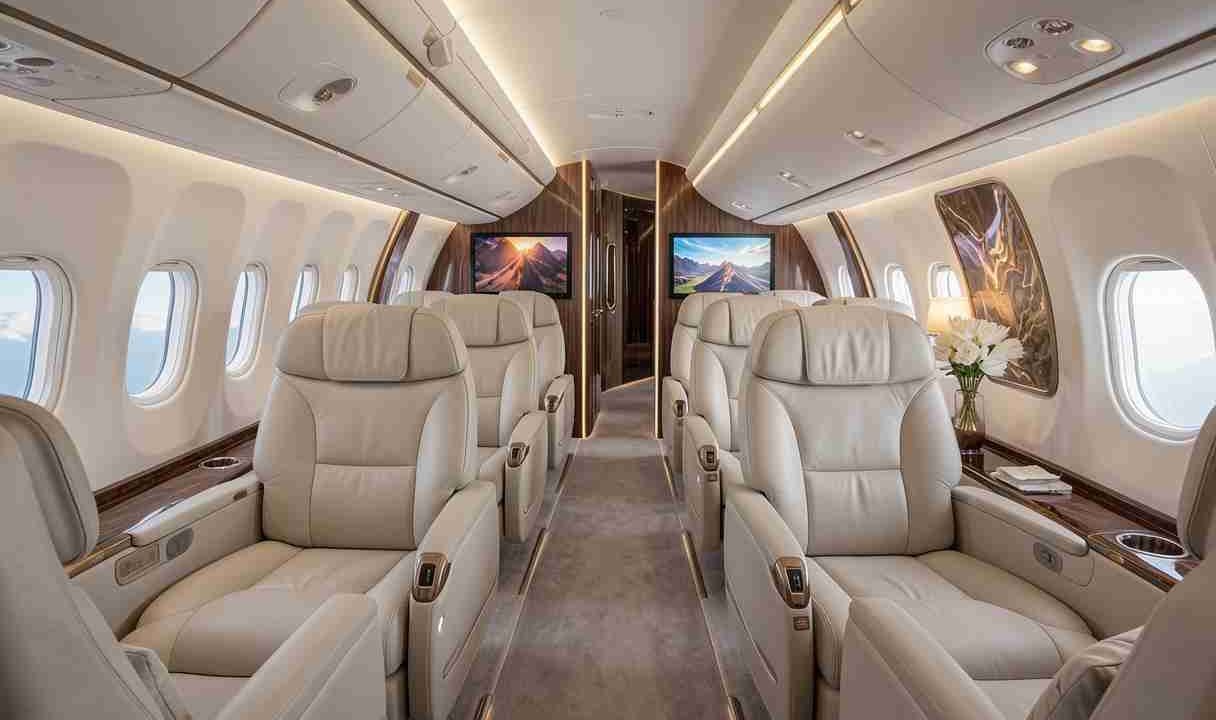
Six of the world’s most recognized airlines are preparing to overhaul what passengers actually experience when they board a plane — and the changes are aimed at every class of travel, not just the premium seats up front.
Lufthansa, Air France, Emirates, Qantas, Air India, and SWISS are each advancing plans to transform their cabin products in 2026, with a focus on larger, more private, and more technologically sophisticated environments across both luxury and economy categories. The scale of this collective push is unusual — rarely do so many major carriers move simultaneously toward a fundamental rethinking of the flying experience.
For most travelers, the promise of a better economy seat feels distant and often goes unfulfilled. This time, the stated ambition includes economy passengers alongside those booking premium cabins — a distinction worth paying attention to.
What the 2026 Cabin Transformation Actually Involves
The core of what these airlines are pursuing centers on three things: more space, more privacy, and more technology woven into the seat and cabin environment itself.
Luxury suite products — the kind that fully enclose a passenger in a private compartment — have been a competitive battleground among premium carriers for several years. Emirates has been among the most aggressive in this space, but the 2026 wave is expected to see Air France, Lufthansa, and SWISS each push forward with their own distinct design philosophies rather than converging on a single look.
What makes this round of upgrades notable is that economy and premium economy are explicitly part of the conversation. Airlines have historically treated economy as a cost-management category rather than a design priority. The 2026 transformation signals a shift in that thinking — with larger cabins, enhanced services, and innovative features described as part of the broader overhaul rather than an afterthought.
Air India’s inclusion is significant in its own right. The carrier has been in the middle of a wide-ranging modernization effort, and its participation alongside established premium brands signals how far its ambitions have grown under new ownership.
What Each Airline Is Bringing to the Table
While the specifics of each carrier’s new product have not been fully detailed in available information, the directional commitments from each airline point to distinct priorities:
- Lufthansa — pursuing a blend of luxury and economy improvements, positioning itself as the anchor of this broader industry shift
- Air France — bringing its own design sensibility to new premium and economy cabin configurations
- Emirates — continuing to push the boundaries of private suite travel while expanding comfort across cabin classes
- Qantas — contributing its perspective as a long-haul carrier for whom passenger comfort over extended flight times is a defining challenge
- Air India — participating as part of its broader modernization, signaling elevated ambitions in the global premium travel market
- SWISS — adding a precision-focused design approach consistent with its brand identity
| Airline | Region | Cabin Focus | Notable Angle |
|---|---|---|---|
| Lufthansa | Europe | Luxury and Economy | Leading the collective transformation push |
| Air France | Europe | Premium and Economy | Distinctive French design philosophy |
| Emirates | Middle East | Luxury Suites and Wider Cabins | Established leader in private suite travel |
| Qantas | Asia-Pacific | Long-Haul Comfort | Ultra-long-haul passenger experience focus |
| Air India | South Asia | Full Cabin Modernization | Part of sweeping post-privatization overhaul |
| SWISS | Europe | Luxury and Premium | Precision-led design identity |
Why This Matters for the Traveler in Seat 34B
Premium cabin upgrades tend to generate headlines, but the more meaningful story for the majority of passengers is what happens in economy. When airlines redesign economy seating with genuine investment — more legroom, better recline mechanisms, improved in-flight entertainment, and smarter use of cabin space — the effect is felt by the vast majority of people on any given flight.
The framing of this 2026 push as a “luxury and economy suite transformation” rather than purely a business-class story suggests that carriers are responding to what passengers have been asking for: better conditions regardless of where they sit on the plane.
For frequent flyers who have watched economy conditions erode over the past two decades — thinner seats, tighter rows, fewer amenities — a genuine commitment to improvement across all cabins would represent a meaningful reversal.
There’s also a competitive dimension that benefits consumers directly. When six major airlines simultaneously invest in cabin upgrades, carriers that don’t participate face pressure to respond. That competitive dynamic tends to raise baseline standards across the industry over time.
- Economy treated primarily as a cost-management category with minimal design investment or innovation.
- Luxury suite upgrades historically reserved for business and first-class passengers only.
- Limited technology integration in standard seating, with basic in-flight entertainment options.
- Economy explicitly included in the 2026 transformation push alongside premium cabin upgrades.
- Six major airlines — Lufthansa, Air France, Emirates, Qantas, Air India, and SWISS — investing simultaneously across all cabin classes.
- Innovative features, enhanced services, and more spacious cabin environments planned for all passenger categories.
What Happens Between Now and Takeoff
The 2026 timeline positions these cabin upgrades as either already rolling out or arriving within the near term. For passengers booking flights with any of the six carriers, it is worth checking which aircraft and routes will feature the new cabin configurations first — premium routes between major hubs typically receive new products ahead of secondary destinations.
Airlines usually phase new cabin products across their fleets over multiple years, meaning the full transformation will be gradual rather than overnight. Travelers on long-haul international routes — where the investment in new seating and services is easiest to justify — are likely to see changes first.
For those planning travel in 2026 and beyond, paying attention to aircraft type and seat maps when booking will be more important than usual. The gap between the newest cabin products and older configurations on the same airline can be substantial.
The broader industry signal is clear: after years of incremental adjustments, the airlines that carry the most passengers globally are making a coordinated bet that the physical experience of flying is a competitive priority again — not just for the front of the plane, but for everyone on board.
Frequently Asked Questions
Which airlines are involved in the 2026 cabin transformation?
The six carriers involved are Lufthansa, Air France, Emirates, Qantas, Air India, and SWISS, each bringing distinct design approaches to the upgrades.
Does this transformation affect economy passengers or only premium cabins?
The stated ambition explicitly includes economy alongside luxury suites, with larger cabins, enhanced services, and innovative features described as part of the broader overhaul.
When will passengers start seeing these new cabin products?
The transformation is framed around 2026, though specific rollout timelines for individual airlines and routes have not been confirmed in available information.
Is this a formal partnership between the six airlines or separate parallel efforts?
The precise nature of the relationship between the carriers — whether a formal agreement or parallel independent efforts — has not been fully detailed in available information.
Why is Air India’s inclusion considered significant?
Air India has been undergoing a wide-ranging modernization effort, and its participation alongside established premium brands reflects how significantly its ambitions have grown in recent years.
Will all routes and aircraft get the new cabin products at the same time?
Airlines typically phase new cabin configurations across their fleets over time, with long-haul international routes on major hubs generally receiving upgrades before secondary destinations.


Leave a Reply