
Roughly 200 wineries now operate across the Okanagan Valley — a wine region literally carved from glaciers and ancient volcanoes. Most travelers have never heard of it. That gap between what British Columbia actually offers and what the world knows about it is exactly what Destination BC is targeting in 2026, with a content strategy unlike anything the province has attempted before.
The Common Assumption: FIFA Is Driving BC’s 2026 Tourism Surge
Ask most travel journalists why British Columbia is suddenly everywhere in 2026, and you’ll get one answer: the FIFA World Cup. Vancouver is co-hosting matches this summer, and the city has dominated international sports media for months. It’s a reasonable assumption. Major sporting events reliably spike destination searches and hotel bookings.
The logic feels airtight. Vancouver gets global eyeballs, visitors fly in for matches, they spend money, they leave. Tourism numbers rise, everyone celebrates, and the story ends there.
But that framing misses something significant — and Destination BC has been quietly building an entirely different kind of campaign to prove it.
The Crack in the FIFA Narrative: Two New Iconic Journeys Launch in 2026
Earlier this year, Destination BC announced two new flagship content programs: The Infinite Coast and Valleys and Vineyards. Neither one mentions football. Neither one centers Vancouver. Both are built around immersive storytelling designed to reach international audiences who may never have considered BC as a primary destination.
The Infinite Coast focuses on Vancouver Island’s rugged western shoreline, its temperate rainforests, and its mountain corridors — environments that support whale watching, surfing, and multi-day hiking in the same weekend. Valleys and Vineyards pulls travelers inland toward the Okanagan, where Kelowna’s waterfront, 150-plus vineyards, and orchard landscapes offer something the coastal narrative rarely captures: slowness.
| Campaign | Focus Region | Key Experiences | Target Traveler |
|---|---|---|---|
| The Infinite Coast | Vancouver Island | Whale watching, surfing, rainforest hiking | Adventure-focused international visitors |
| Valleys and Vineyards | Okanagan Valley | 200+ wineries, glacial lakes, orchards | Slow-travel and culinary tourists |
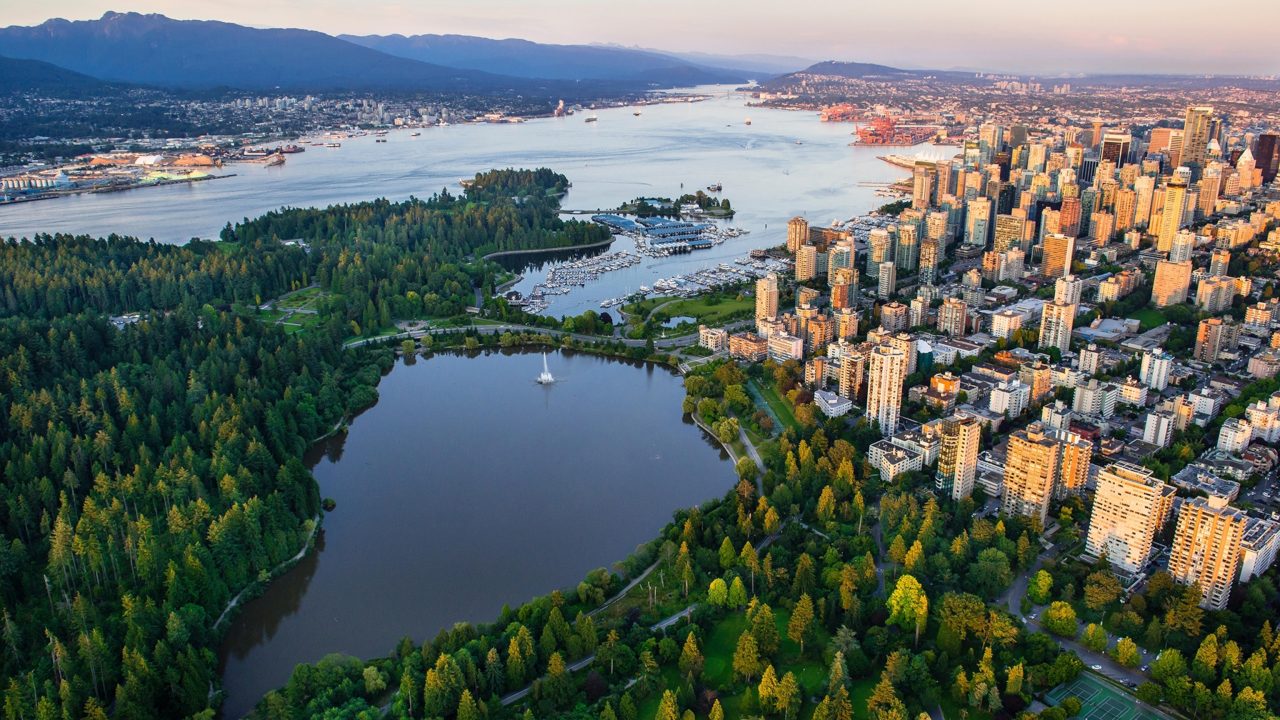
| FIFA Vancouver Halo | Metro Vancouver | Stanley Park, dining, urban culture | Sports tourists and city travelers |
These aren’t brochures. They’re content ecosystems, built for social platforms, long-form editorial, and video — the same formats that shape travel decisions for the under-45 demographic that now drives international leisure spending.
Why the FIFA-First Story Underestimates BC’s Actual Strategy
National Geographic named Vancouver one of its Best of the World destinations for 2026, citing the World Cup co-hosting as a hook. But the editorial detail that followed was telling: the publication spent more words on where to eat and what neighborhoods to explore than on any match schedule.
That’s not an accident. Destination BC has spent years cultivating relationships with international media, and the 2026 content programs are the payoff. The province appears on Lonely Planet’s Best in Travel list for 2026, with local correspondents filming kayak tours through lush coastal landscapes. That coverage has nothing to do with FIFA.
“Visitors can sample BC at a gentler pace, from Kelowna’s waterfront to the Okanagan’s lakes, orchards and 150-plus vineyards, the quiet charm of a region that rewards those who slow down.”
— Destination BC, via karryon.com.au
The Okanagan alone now has more than 200 wineries, a number that rivals established European wine regions. The geological story underneath it is extraordinary: this valley was shaped by glaciers retreating over ancient volcanic rock, creating soil compositions that produce wines with a character found nowhere else in North America.
Most international travelers have no idea this place exists. The 2026 content campaigns are designed to change that, specifically by reaching audiences in markets where BC has historically been invisible.
What Destination BC’s Iconic Journey Framework Actually Does
The Iconic Journeys framework isn’t new — Destination BC has used it before to structure multi-day travel narratives. What’s different in 2026 is the international amplification. The programs are explicitly designed to increase global travel interest, not just domestic Canadian awareness.
The Infinite Coast campaign leans into Vancouver Island’s contradictions. This is a place where you can surf cold Pacific swells in the morning, hike through a temperate rainforest in the afternoon, and watch humpback whales from a kayak before dinner. The island’s rugged western coastline is one of the few places in North America where all three experiences happen within the same geography.
Valleys and Vineyards takes a different approach. It’s slower, more sensory. The campaign builds an itinerary around Okanagan Lake, the glacial origins of the valley, and the specific microclimate that makes this region produce world-class Pinot Noir and Riesling. It’s wine tourism with geological context, which is a genuinely unusual combination.
Stanley Park still anchors Vancouver’s identity in global perception. It remains, by most measures, BC’s single most visited attraction, a 400-hectare urban forest that sits at the edge of downtown Vancouver with ocean views, ancient Douglas firs, and a seawall that draws millions of walkers and cyclists annually. The 2026 campaigns don’t ignore it; they use it as a gateway narrative that then pulls visitors outward toward lesser-known regions.
What This Means for Travelers Planning a BC Trip in 2026
The practical implication is straightforward: 2026 is an unusually good year to visit British Columbia, but not primarily because of the World Cup. The FIFA matches will concentrate crowds in Vancouver during specific weeks in June and July. The rest of the province will be operating at normal capacity, with Destination BC’s content campaigns actively directing curious travelers toward it.
The Okanagan in summer is genuinely uncrowded by international standards. Kelowna’s waterfront, the orchard roads between wineries, and the lake itself are accessible without the planning friction that plagues more famous wine regions. You don’t need a reservation six months out. You don’t need a car convoy and a tour group.
Vancouver Island’s west coast, particularly the Tofino and Ucluelet corridor, has developed sophisticated infrastructure for adventure tourism without losing the wildness that makes it worth visiting. Surf schools, whale-watching operators, and rainforest guides have all expanded capacity in anticipation of increased 2026 interest.
Destination BC’s 2026 content programs are, at their core, a bet that international travelers are ready to see Canada’s westernmost province as more than a gateway to a sporting event. The Okanagan’s glacial wine valleys and Vancouver Island’s whale-watched coastlines have always been there. The question has always been whether the world was paying attention.
This year, for the first time, the marketing infrastructure exists to make sure it does. Whether that translates into lasting international recognition — or fades when the tournament ends — is the real story worth watching.


Leave a Reply