
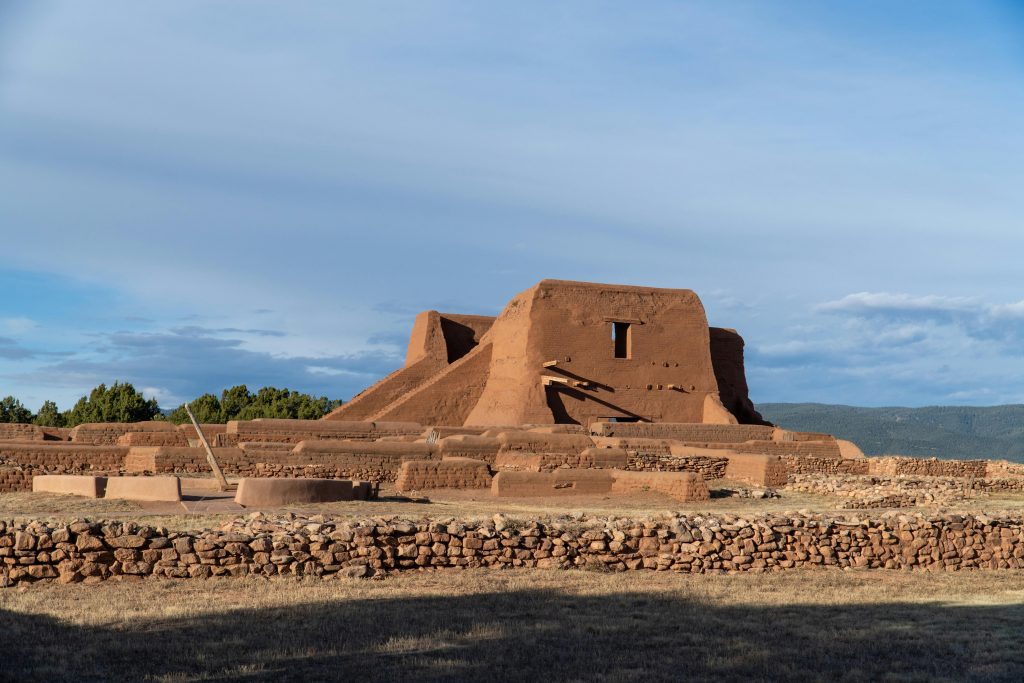
What do you actually know about the people who lived in North America before European contact? Not the general idea of Native tribes — but cities. Architecture. Population centers. Urban planning. If your answer feels thin, you’re not alone, and you’re not entirely to blame.
Because roughly 15 miles east of the Gateway Arch in Collinsville, Illinois, there is a place that should be in every American history textbook, on every road trip list, and in the same sentence as Machu Picchu and Angkor Wat. Instead, it draws fewer than 300,000 visitors a year to a site that was once home to a civilization more populous than medieval London.
Its name is Cahokia Mounds. And the story of why you’ve probably never visited it says as much about us as it does about them.
The Story We Were Told About Pre-Columbian America
The common narrative goes something like this: before Europeans arrived, the land that would become the United States was inhabited by loosely organized tribes — hunter-gatherers, smaller agricultural communities, people living in close relationship with the land but not building anything resembling civilization as we recognize it. The grand pre-Columbian cities, the engineering, the astronomy — that was Mexico, Central America, Peru.
North America, by implication, was a kind of vast, quiet wilderness waiting to be discovered and organized.
This is not a fringe misconception. It shaped federal policy, school curricula, and the cultural imagination of the United States for generations. The monuments we build, the history we memorialize, the places we designate as important — all of it reflects a story that starts roughly in the 1600s on the Eastern Seaboard and moves west.
Cahokia doesn’t fit that story. Which is perhaps why so few people know it exists.
The Crack in the Narrative: A Pyramid With a Bigger Footprint Than Giza
Stand at the base of Monks Mound on a clear morning and look up. The structure rises 100 feet — ten stories — above the Illinois floodplain. It was built entirely by human hands, one basket of earth at a time, over the course of roughly 300 years.
The base of Monks Mound covers approximately 14 acres. The base of the Great Pyramid of Giza covers about 13 acres. This earthen structure in southwestern Illinois, built by a civilization most Americans couldn’t name, is physically larger at its foundation than one of the Seven Wonders of the Ancient World.
According to the UNESCO World Heritage designation granted to Cahokia Mounds in 1982, the site encompasses approximately 4,000 acres and contains 109 surviving earthen mounds — remnants of what was originally more than 200. It is one of only 24 UNESCO World Heritage Sites in the entire United States.
The site is located in Collinsville, Illinois — Madison County — just off Illinois Route 111. From the Gateway Arch in St. Louis, it’s a 15-minute drive across the river. You can see the St. Louis skyline from the top of Monks Mound on a clear day, which creates one of the stranger juxtapositions in American geography: a modern city’s steel-and-glass profile framed by an earthwork older than Notre Dame Cathedral.
What Cahokia Actually Was — and Why It Disappeared
The people who built Cahokia are part of a cultural group archaeologists call the Mississippian culture, a broad term for a number of related Southeastern and Midwestern agricultural societies that flourished from roughly 800 AD to 1600 AD. The specific inhabitants of Cahokia are not definitively identified with any modern tribal group, though the Osage, Quapaw, and several other nations have claimed cultural connections to the site.
At its height — roughly 1050 to 1150 AD — the city was a genuine metropolis. Residential neighborhoods surrounded a central plaza larger than 40 football fields. A massive stockade of 20,000 wooden posts enclosed the ceremonial core. Craftspeople produced copper ornaments, shell beads, and ceramics that have been found at sites as far away as the Great Lakes and the Gulf Coast, suggesting a trade network of enormous reach.
Then, somewhere between 1300 and 1350 AD, Cahokia was abandoned. Archaeologists debate the reasons, with leading theories including:
- Environmental degradation — deforestation for construction and fuel, combined with flooding of the American Bottom floodplain
- Political fragmentation — evidence of increased warfare and social unrest in the late period
- Climate shift — a prolonged drought across the central continent around 1200-1350 AD
- Agricultural collapse — overfarming of maize in the floodplain soils
No single cause has been proven definitive. The city simply emptied — over decades, not overnight — and the mounds were left to grass over, their wooden structures to rot, their builders to scatter into the broader Mississippian world.
The Site Today — and the Tourism Gap That Doesn’t Make Sense
Cahokia Mounds State Historic Site, managed by the Illinois Historic Preservation Agency, currently draws an estimated 200,000 to 300,000 visitors annually. Compare that to roughly 3 million annual visitors to Gettysburg National Military Park, or the 4.7 million who visited the Grand Canyon in 2023 according to National Park Service data.
The disparity isn’t about accessibility. Cahokia sits minutes from a major interstate hub (I-55/I-70), adjacent to one of America’s most visited cities. It’s free. It’s visually extraordinary. The interpretive center is well-designed and the grounds are walkable year-round.
What it lacks is cultural presence — the kind of gravitational pull that comes from decades of being included in school field trips, history documentaries, tourism campaigns, and the general American story.
What It Means to Finally Look at This Place Honestly
There’s a particular feeling that comes from standing on top of Monks Mound and doing the math. The year is 1100 AD. Below you, 10,000 to 20,000 people are going about their lives — farming, trading, building, governing, burying their dead with ceremony. At that same moment, London has a population of roughly 15,000. Paris is smaller. The city beneath you is, by most definitions, one of the great urban centers of the medieval world.
And it is in Illinois. In the United States of America. Built by people whose descendants still live on this continent.
According to the Illinois Historic Preservation Agency, ongoing archaeological research at the site continues to expand understanding of Cahokia’s social complexity. Recent ground-penetrating radar surveys have revealed structures and features beneath the mounds that haven’t yet been excavated, meaning the site is still actively yielding new information about its builders.
The question of why Cahokia remains so peripheral in American cultural memory doesn’t have a comfortable answer. It predates the nation by centuries and belongs to no founding mythology. Its builders left no written records that survive. There is no constituency lobbying for its prominence, no film franchise set within its plazas, no presidential connection to leverage. It exists outside the story we have chosen to tell about ourselves.
That gap between what Cahokia was and how we treat it is itself a kind of historical document — a record of which pasts we decide to carry forward and which we let grass over.
The mounds, for their part, are not going anywhere. They have been here for a thousand years. They will be here when you drive out next weekend. The question is whether you will.
Related: I Stood at Kempty Falls Among a Thousand Strangers — Then Found the Waterfalls Near Mussoorie Nobody Talks About
.pvv-faq-section details summary::-webkit-details-marker{display:none}.pvv-faq-section details summary::marker{display:none;content:””}.pvv-faq-section details[open] summary .pvv-faq-arrow{transform:rotate(90deg)}



Leave a Reply