
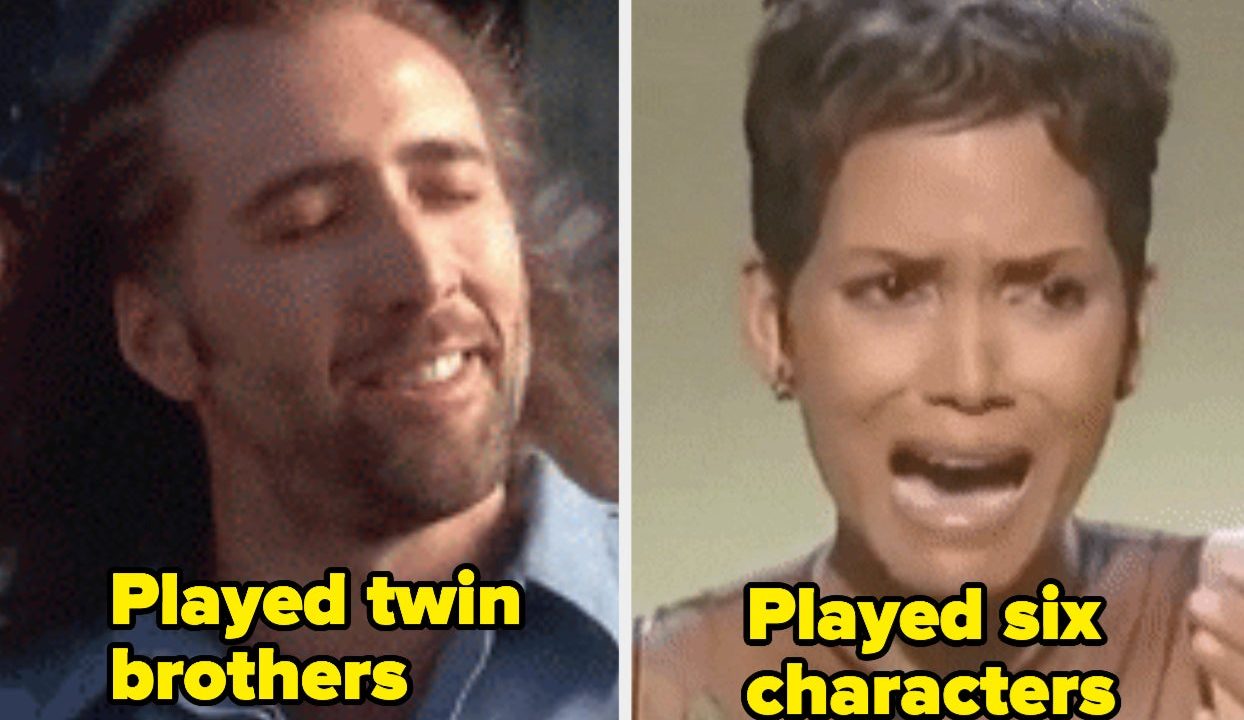
Playing one character convincingly is hard enough. Playing two — or more — in the same film, while making each feel like a completely different person, is one of the rarest and most demanding feats an actor can pull off on screen.
It’s a challenge that goes far beyond costume changes and wigs. The best dual-role performances require an actor to build entirely separate inner lives, distinct body language, different vocal rhythms, and unique emotional worlds — all while keeping both characters believable within the same story. When it works, audiences often forget they’re watching the same person twice.
Film history is full of memorable examples, from comedic masterclasses to deeply dramatic turns. Here’s a look at some of the most celebrated performances by actors who took on multiple roles in a single movie — and why those performances still hold up.
Why Playing Multiple Roles Is Such a High-Wire Act
The dual-role format has been a fixture of cinema almost since the medium began. It shows up in comedies, thrillers, dramas, and science fiction — anywhere a filmmaker wants to explore themes of identity, duality, or mistaken identity.
But the format is unforgiving. If the two characters feel too similar, the whole concept collapses. If the actor leans too hard into the gimmick, it becomes a novelty rather than a performance. The performances that endure are the ones where the actor disappears so completely into each role that the seams are nearly invisible.
What separates a great dual performance from a forgettable one usually comes down to specificity — the small, precise choices that make each character feel like they have their own history, their own way of moving through the world, their own fears and desires. That level of detail is what audiences respond to, even if they can’t always articulate why.
What Makes a Dual Performance Genuinely Great
There are a few qualities that consistently show up in the performances most celebrated for this kind of work:
- Physical distinctiveness — Great dual-role actors change more than their appearance. They alter posture, gait, gesture, and the way they occupy space.
- Vocal differentiation — Pitch, pace, accent, and cadence can make two characters feel like they come from completely different worlds, even when the same voice is producing them.
- Emotional specificity — Each character needs its own emotional logic. The best performers don’t just play “the good one” and “the bad one” — they find the full humanity in each.
- Commitment to the premise — Dual-role performances only work when the actor is fully invested in both characters equally, not treating one as the “main” performance and the other as an afterthought.
- Scene interaction — When the two characters share screen time through split-screen or digital effects, the actor has to perform against themselves convincingly — one of the most technically demanding things a performer can do.
A Look at the Craft Across Different Genres
The dual-role tradition spans every corner of cinema. In comedy, the format has produced some of the most physically inventive work ever put on film, with actors using exaggerated contrast between characters to generate laughs while still keeping each role grounded in its own reality.
In drama and thriller territory, the challenge shifts. The differences between characters often have to be subtler — a slight change in eye contact, a different way of holding tension in the jaw — because the story demands that audiences believe in both people as real, flawed human beings rather than comic archetypes.
Science fiction has become particularly fertile ground for this kind of performance in recent decades, as advances in digital filmmaking have made it easier to put two versions of the same actor in the same frame simultaneously. That technical freedom has raised the bar for what audiences expect from these performances.
| Genre | Key Challenge for the Actor | What Audiences Respond To |
|---|---|---|
| Comedy | Maximum contrast while staying grounded | Physical invention and comic timing across both roles |
| Drama | Subtle differentiation that still reads clearly | Emotional authenticity in each distinct character |
| Thriller | Maintaining tension and ambiguity across roles | The unsettling feeling of not being sure who is who |
| Science Fiction | Acting against oneself in shared scenes | Seamless technical execution plus genuine character depth |
Why These Performances Still Matter to Audiences
There’s something uniquely compelling about watching an actor inhabit two people at once. It strips away the comfortable illusion that performance is easy. You can see the craft exposed in real time — the deliberate choices, the physical and emotional discipline required to keep two characters alive simultaneously.
For audiences, it also taps into something deeper than technical admiration. Stories built around dual identities tend to ask big questions: about who we are when no one is watching, about how much of our personality is fixed versus performed, about the gap between who we present to the world and who we actually are. The best actors playing multiple roles don’t just demonstrate skill — they make those questions feel urgent and personal.
That combination of craft and meaning is why the greatest dual-role performances tend to outlast the films that contain them. They become reference points — shorthand for what’s possible when an actor is given the freedom and the material to fully stretch.
Frequently Asked Questions
What does it mean for an actor to play multiple roles in the same movie?
It means a single actor portrays two or more distinct characters within the same film, requiring them to build separate personalities, appearances, and emotional lives for each role.
Why is playing multiple roles considered such a difficult acting challenge?
Each character must feel fully realized and distinct — different in physicality, voice, and emotional logic — while the actor maintains equal commitment to both, often performing against themselves in shared scenes.
Which genres most commonly feature actors in dual or multiple roles?
Comedy, drama, thriller, and science fiction all have strong traditions of dual-role performances, each presenting different technical and emotional demands for the actor.
How do filmmakers shoot scenes where an actor appears as two characters at once?
Techniques include split-screen editing, digital compositing, and body doubles, all of which require the actor to perform each role separately and then have the footage combined in post-production.
What separates a memorable dual-role performance from a forgettable one?
The most celebrated performances rely on physical specificity, vocal differentiation, and genuine emotional depth in each character — rather than treating one role as the main performance and the other as a gimmick.
Has this type of performance been recognized by major awards bodies?
Dual-role performances have historically received significant critical attention and awards consideration, though the specifics depend on the individual film and performance in question.

Leave a Reply